Guy Newton: The 1-3-1 Method Every Business Leader Should Know
In this episode of Better Business, Better Life, Debra Chantry-Taylor is joined by Guy Newton, an experienced EOS® practitioner and an EOS Implementer, to explore how the 1-3-1 Method can help teams make better decisions, build confidence & reduce leadership bottlenecks.

 Spotify

 YouTube

 Amazon Music

 Apple Podcasts

 RSS Feed

 iHeartRadio

 PocketCasts

 RadioPublic
In this episode of Better Business, Better Life, Debra Chantry-Taylor is joined by Guy Newton, an experienced EOS® practitioner and an EOS Implementer, to explore how the 1-3-1 Method can help teams make better decisions, build confidence & reduce leadership bottlenecks.
Guy shares his unconventional career journey from jackaroo work and mining into IT, leadership & business operations. After more than 20 years in IT and helping to build and run a building company, he discovered EOS and spent around eight years applying the tools inside businesses before becoming an EOS Implementer himself.
Throughout the conversation, Guy explains why EOS works best as an integrated system rather than a collection of individual tools. He highlights the Level 10 Meeting as one of the most powerful tools, showing how its consistent structure brings together the Accountability Chart, Scorecard, Vision/Traction Organizer (V/TO) & Issues List to turn discussion into action and keep teams moving forward.
A key focus is the 1-3-1 approach: identify one Issue, come up with three possible options & recommend one.
Guy explains how this simple method encourages people to think through problems themselves rather than immediately escalating every decision to their manager. Over time, it builds confidence, ownership & better decision-making throughout the organisation.
This episode is a practical look at how EOS can help businesses make faster decisions, strengthen accountability, reduce bottlenecks & develop teams that take genuine ownership of solving problems.
CONNECT WITH DEBRA:
___________________________________________
►Debra Chantry-Taylor is a Certified EOS Implementer® | Entrepreneurial Leadership & Business Coach | Business Owner
►Connect with Debra: debra.chantry-taylor@eosworldwide.com
►EOS Worldwide Website: Debra Chantry-Taylor | EOS Implementer | EOS Worldwide
___________________________________________
GUEST’S DETAILS:
► Guy Newton – LinkedIn: https://www.linkedin.com/in/guy-newton
► Website – EOS® Implementer – https://implementer.eosworldwide.com/guy-newton/
Ep 294 Chapters:
00:00 – Introduction
00:37 – Guy Newton’s Background
06:25 – The Power of EOS Tools
09:13 – Integrator vs Implementer Roles
11:05 – Implementing Effective Leadership
22:27 – Managing Visionaries and Values
30:18 – Getting Started with EOS
She is based in New Zealand but works with companies around the world.
Her passion is helping Entrepreneurs live their ideal lives & she works with entrepreneurial business owners & their leadership teams to implement EOS (The Entrepreneurial Operating System), helping them strengthen their businesses so that they can live the EOS Life:
- Doing what you love
- With people you love
- Making a huge difference in the world
- Bing compensated appropriately
- With time for other passions
She works with businesses that have 20-250 staff that are privately owned, are looking for growth & may feel that they have hit the ceiling.
Her speciality is uncovering issues & dealing with the elephants in the room in family businesses & professional services (Lawyers, Advertising Agencies, Wealth Managers, Architects, Accountants, Consultants, engineers, Logistics, IT, MSPs etc) - any business that has multiple shareholders & interests & therefore a potentially higher level of complexity.
Let’s work together to solve root problems, lead more effectively & gain Traction® in your business through a simple, proven operating system.
Find out more here - https://www.eosworldwide.com/debra-chantry-taylor
Debra Chantry-Taylor 00:00
Great businesses make decisions quickly. You can always change. You can always change your mind. You can always, as you say, fail fast, pivot, do something different. But you have to decide.
Guy Newton 00:07
The difference with being an implementer is coaching from the outside the business, which gives you that unique perspective, and you know, gives you that ability to ask much different questions and not tainted by preconceived notions. When people come to you with a problem, it's what's the one issue? Really narrow it down. What's the three options, and which one would you recommend?
Debra Chantry-Taylor 00:34
Welcome to another episode of Better Business, Better Life. I'm your host Debra Chantry-Taylor and I'm passionate about helping entrepreneurs lead a better life by creating a better business. Myself, I'm a certified US implementer, an FBA credited family business advisor, and a business owner with several business interests. So I don't just speak about things from theory; I speak about things from real life experiences. The same with my guests. I bring people onto the show who have actually lived and walked in your shoes, so they can share those experiences, so that hopefully you can learn from them and not make the same mistakes. So today's guest is pretty exciting for me. I work with him. He is-he's come from being a jackaroo in the outback chasing cows to working in the mines, which turns out really wasn't for him, and then he accidentally fell into IT, and that's when he discovered EOS. Today, we're going to talk about why he became an EOS implementer and what he's learned from being an EOS integrator in multiple businesses, and really just a bit of a sense of you know why EOS is a great tool for helping businesses grow. I'd love to introduce to you Guy Newton, who is a professional EOS implementer. Guy, welcome to the show. So welcome to the show, Guy. It's kind of funny having you on the show because we work together so closely, so often, and now I'm suddenly interviewing you. But it's great to have you here.
Guy Newton 02:01
Thanks to everyone enjoying it, enjoying every minute.
Debra Chantry-Taylor 02:04
Excellent. So, for for those of you who are joining us, I have known Guy for a number of years now. He has been involved in the EOS community for a number of years. Guy, can you give people a bit of a background as to you know who you are, where you came from, and how you got to where you are right now.
Guy Newton 02:22
As a kid, I was very nomadic in our fam. In our family, we'd travel around a lot, lived all over East Coast Queensland, non-territory Victoria. Started my career working as a jackaroo out in the outback chasing cows. Migrated into the mining industry that wasn't suiting me, and accidentally fell into IT, where I spent 20 odd years working in the IT industry and various roles, and through that grew into leadership. Had a small hiatus of running my own business that didn't go so well, and then helped a mate of mine build a company where we sort of we learned about all the hard ways of running a business, not you know not doing it easy, and then went back into the IT industry, and you know through that found EOS. And when I read, when I sat in our first session of EOS, I just looked at it and got went, "Oh my God, where have you been all my life? That's exactly. If I hadn't known this a few years before, my life would have been completely different. And I remember Anthony would, you know, I was watching him present, and in our very first EOS session, I said that I'm gonna I'm gonna do that, and spent the last eight years just honing those skills inside of businesses that are running on EOS, and most recently in the last boot camp, become an EOS implementer.
Debra Chantry-Taylor 03:55
Congratulations, you got to where you you wanted to go. So I'm really interested in terms of, I believe that you know there's never never such a thing as a failure. As long as we take lessons from it, it's always part of our learning and our journey. So I'm interested. What was your business? What was the business that didn't go so well that you started? Well, the funny thing is that business is still actually going. So my best mate and I, we sat around a kitchen table and built. Yeah, he goes, I want to build a building company, and I said, sure, okay. Well, I'll help you do that while I'm building my IT business over on the side, and
Guy Newton 04:30
then I think I did every role in the business except for being the official builder on the project. I was like, ah, can you do this? Can you do that? Yeah, sure. I was, you know, doing finance admin. I was doing all sorts of stuff, and then at one point he just goes, "I've had enough of running this. Can you run it? Come back to the to Shepparton, and and yeah, I ran it for a year, and then I got a very attractive offer from some other mutual friends. And Jenny Clift, and they said, "Hey, come and be our. I was also subcontracting, so they said, "Come and be our IT support manager. And I went, "Okay, I'll do that. But we handed that business off to the boys, Cam and Andy, and they they've run with it. Like they've kept it going last 10 years, when I found out about EOS, the first thing I did was I rang them. I sent them, or like I just said, "Here, you guys got to do this, and they've been yeah been working on EOS ever since, and yeah, and using those tools to help better the business. But like I said, we did it the hard way initially. You know, it was it was all pain, suffering, and burnout, just trying to get everything aligned, and you know, trying to get people behind a vision that didn't exist, right? Which was yeah, so difficult, so hard. Lots of learnings, and if I hadn't gone through that experience, I wouldn't know what to look for, and so hence, when I saw the OS book, I was like, "Oh yes, that's it. I love it.
Debra Chantry-Taylor 06:07
I've heard that story quite a few times from people. That book has kind of been like, "Oh my goodness, if only I'd found this a whole lot earlier. And it's true, you know. I think all of us who've kind of run some sort of business have gone through the ups and the downs, and and really had to learn the hard way. I mean, I've had a couple of great business successes and a couple of massive failures as well. And I, I do think they're not really failures because they just certainly help me to learn. But as long as as long as I can help people not have to go through that, that's my that's my passion. Yeah. So the EOS. I mean, just I mean, obviously, people listening in have probably heard of EOS, but you came across the traction book. You kind of went, "This looks amazing. What was it about it that really appealed to you?
Guy Newton 06:46
So I'd read the book Scaling Up, and you know, seen a few other, you know, different ways of running businesses. But I think it was just the practical sense, the practicality of all the tools, and when we started implementing them, we're like, you know, they all complement each other and then enable you to make decisions effectively and move forward quickly, rather than procrastinate. You know, I remember sitting in meetings and spending so much time listening about the same things that we were talking about six months ago that still haven't been solved, and we're getting no further forward. And then you go into a level 10 meeting, which is one of the tools of the OS books, and you're like, okay, there's some clear actions that are going to happen, and we're going to move this thing forward. Or alternatively, now's not the right time. That's a pretty shiny object. Let's just park that over there for now, and in the long-term issues list, and we'll revisit it at the appropriate time. Simple things like that just made it so easy to to grow the businesses that I've been working in and and make decisions fast. Sometimes we fail fast, which is great too, because you go, "Oh, that didn't work. Let's try something else. But ultimately, it's you know creates that efficiency, that accountability, and yeah, I love it.
Debra Chantry-Taylor 08:16
Um, it is. I think it's interesting. I think it's in the book Decide that the book that Gino Wickman wrote that talks about you know great businesses make decisions quickly. You can always change. You can always change your mind. You can always, as you say, fail fast, pivot, do something different. But you have to decide. And I think that's where a lot of businesses get stuck is they get into this indecision because they talk a lot about things, but they don't actually take action and actually do something with it, or they can't make decisions because they're not clear on what the end game is, and if you don't know where you're going, any rep will get you there. So you have to be very, very clear on that. And it might exist in the owner's head, but it's not until you get it shared by everybody that you can actually start to move towards that.
Guy Newton 08:53
And also accountability, right? Like the accountability of who's going to do that, right? So you lean into the accountability chart where it makes that decision. That decision's already made in the past, so we just look it up and go, oh, you know, Guy's going to take care of that because that's under his purview. There you go, Guy. Here's all the info. Way you go.
Debra Chantry-Taylor 09:15
Yeah, that's so true. Okay, so you you spent many many years using EOS working in other people's businesses as an integrator, right? So, for those who are listening in, what is the role of an integrator in a business? Because we talk about integrator and implementer, we're we're both implementers, but we also have both been integrators and still do some integration work as well. So, what is the difference?
Guy Newton 09:36
I think the difference for me is that you're in the business and you're creating harmony across the departments while holding fast to the the routines of EOS, so that you're you're making sure that you're doing things in the most. Way for the business. The difference with being an implementer is coaching from the outside the business, which gives you that unique perspective, and you know gives you that ability to ask much different questions and not tainted by you know preconceived notions or ah we tried that 10 years ago. Yeah, okay, that was 10 years ago, but what about now? Is that still applicable or not? And I think that's the the the main difference is that different perspective. But as far as working in the business as an integrator, it's you know just holding steadfast that cool, calm, collected nature that you need to, you know, not, you know, create chaos. You want to, you want a steady, nice, calm ship, and and I found that's what served me well over my years as as an integrator is the the fact that I've got a fairly calming nature, and we can, you know, talk about things effectively and and solve problems efficiently, and then move forward in a steady, controlled manner, rather than oh no, yeah, the world's on fire. Let's go and chase them. We put that fire out. Oh no, there's another world on fire over here. Let's go and fix that. And you know, it's like okay, hang on a minute, slow down. All right, you guys go and just sort that one out for us, and this team here is going to sort this one. And you know, whereas yeah, implementer is outside of all of that, doesn't get involved in the the chaos or the day to day, and then can really coach and and mentor. And I've had some great, you know, as as you imagine, being in the ecosystem for quite a while. I've worked with a number of implementers, and they have their unique styles. But the thing I love most is that they all say the same thing, predominantly at the core root. They're all teaching the same lessons, and and I really appreciate that.
Debra Chantry-Taylor 11:56
And it's part of what appealed to me was either that simplicity and the fact that there is a a proven framework, as opposed to having to kind of reinvent it every single time. So, in the businesses that you worked in that used EOS, what were the biggest changes that you saw in those businesses?
Guy Newton 12:12
Biggest bang for your buck is probably that level 10 meeting. I have so I still love even today rolling out level 10 meetings to departments because and and it's probably you know detriment to myself because I I want to be involved in that learning with them, but sometimes you got to let them fail to then know what good looks like. But I did one just last week where we sat in. It was their second level 10, and they were just starting to get the level 10 meeting, and it actually run really well. And we rated it like for the second, I rated it a nine out of 10, right? And that I think is the biggest thing that comes from that is that there's a framework that's the same, starts the same, finishes the same. You know, like it's consistency, and and I love the the aha moments that people get when the penny drops. It goes off. We just do it this way, then we'll actually get great outcomes, and we'll move the needle really quickly in the business.
Debra Chantry-Taylor 13:17
Yeah, it is. It is. It certainly. It's a. It's a really yeah people most people dread meetings right. If you think about when you work say, oh, let's have a meeting. Oh god, here we go again. We're going to waste all this time. We're going to and I know certainly from my days in government, meetings were like the death of everything. You can guarantee if we're having a meeting about it, it was never going to happen. Yeah, it's exactly yeah. Whereas the level 10 meetings, he said, "Brings that structure. It brings discipline, and suddenly people realise that meetings can be fun. They can be exciting. They can actually lead to actions, which is which is really which is really good. Yeah. Okay. So, is that your favourite US, Tom?
Guy Newton 13:54
I think it is my favourite, but the and I think that's because you actually need all the foundational stuff underpinning it, and I love when you go, ah, who's going to be accountable for that, and you whip out the accountability chart, and and then you've got the scorecard, and you know, like all the all the it sort of pulls together a lot of the core things that your EOS tools into that one session that you can then rely on, you know. Ah, are we going to tackle this problem right now or this opportunity? And then you pull out the VTO and it says, "Hang on a minute, that's not even in our three-year picture, not let alone our one-year plan. So, guess what? Guess what? I don't think we're tackling that right now, right? So, I think that's why it's my favourite tool, is because it just brings all those other pieces and makes them really usable in a in a great way, and you know you don't and you you end up more consistency with people rowing the boat in the same direction rather. Than running off doing their own things.
Debra Chantry-Taylor 15:01
So tell me, I mean, having been an integrator for many, many years, what do you think that brings to you now being an implementer?
Guy Newton 15:09
So I'm think I've been thinking about this one a little bit, and I think it gives me that unique insight to when someone goes, "I'm struggling with this, I go, "I I've struggled with that. Like I've been there. I I've I've experienced that, and I think it's. I hear Adam say it often. You know, he goes. Someone in this room is either. What is it? Going to experience this challenge? Is experiencing it right now, or has experienced it in the past, and I think I can, you know, give perspective to that. On the flip side, I also got to stop myself from wanting to just solve it for them, right? Because some some of my greatest learnings comes from the fact that I failed at something, or it didn't work, and okay, well, I won't do that again. And I think, oh, I could save someone from that, but really, we get to a lot better outcome sometimes by letting them experience some of that, but still offering them the alternative perspective, right? So it's a yeah.
Debra Chantry-Taylor 16:19
I think that's a really great lesson, though, though, for all leaders and particularly visionaries as well. I think that you know this whole thing of letting go. We often don't want to let go because you know that they won't do it the way that we expect them to do it. They won't necessarily come with the same answers that we would, and also they might fail. But it's okay because unless it's something like major that's going to completely destroy the business, the best way is to actually allow them to come up with a solution, allow them to actually implement that solution. And if it doesn't quite work out the way that it expected, there's a learning for them to be had from that. But if you don't let them do it and you just tell them, then they don't get to that same level of learning and understanding. But it's hard. It's tough as a leader, right? Letting go, like trying to, because we we desperately as humans, I think not just leaders, but as humans, we don't want to see anybody suffer, and so we almost want to jump in and rescue them. But jumping in and rescuing them is is the worst thing I think you can do.
Guy Newton 17:08
There was another tool that I picked up along the way, and I can't yeah can't remember who to credit it to, but it's the 131, right? When I when when I read or learnt that tool, and what it is is when people come to you with a problem, it's what's the one issue, really narrow down. What's the three options, and which one would you recommend? And when I started applying that to people that you know I was, you know, reporting to me, what happened is they become more empowered because I would invariably say, "Yeah, go with the one you recommend, unless, of course, it was going to, you know, cause a major issue. But even if I knew, oh, if I thought, oh, maybe that's not going to work, they'd go away, they'd do it, they'd come back to me, go, "Oh, that didn't work. What are we going to try next? And and you know, let them actually experiment and try that in a safe manner. That's not going to cripple the business. But what that then did was empowered them to start making their own decisions, and I stopped becoming the bottleneck for all the answers. Right. So it was, yeah, it was a good tool. I I love it. I still use it today regularly. There wouldn't be a week that goes by that I'd even go, okay, what's what's the issue we're talking about? What are the three options, and and what one would you recommend? Okay, let's try that out. Let's see what that happens.
Debra Chantry-Taylor 18:33
Yeah, I saw you wrote about LinkedIn the other day. It was great. It was a really good reminder. And you're absolutely right. It's like as it is a it is a skill that we have to learn. And I suppose it's you know, this happens a lot in businesses. Is that people go into a business, whether it be the owner or somebody in the team, they may not have done this role before, and they have to learn themselves how to become a really great leader, how to become a really great manager. And what I love about EOS is it gives you frameworks to to be able to embrace that, and takes a lot of the emotion out of it because, as you know, I'm I'm a visionary and an integrator. One of the few people who scores highly on both. But when I'm in my visionary hat, oh my gosh, I can get emotional. I can go. I can you know I can flip from being calm as to being completely off the planet in in a millisecond, and you know all sense of logic kind of disappears, and what I love about that EOS framework is it brings you back to a sort of hold on a second, like you said, does it fit in with a VTO? Look, using the people analyzer, is it actually the people issue, or is it something deep deeper than that? Looking at issues list, we're joining the dots. What's actually underlying all of this, as opposed to looking at things individually, so yeah, it's a it's a there's a there's a great bunch of tools for bringing that that non emotional element
Guy Newton 19:49
to it. Oh, it it just becomes simple to answer, right? I know I had one visionary that would ask every quarter if they could have a robot in the office.
Debra Chantry-Taylor 20:00
I know. I know that vision, Reed.
Guy Newton 20:01
And the answer was like, no, no, we can't. No, you know, it's not on our VTO. It's not, you know, it's not on on our goals for the year. It's not on our quarterly rocks. So the answer would be no, and it wasn't me saying no. It was this is what we. The business has decided that that that's not an objective. So I did recently check in. They, it's still on the agenda of every 90 that he's in. So
Debra Chantry-Taylor 20:32
and and as you said right at the beginning, and I say it all the time. Just because it hasn't worked in the past doesn't mean it may not work now. So there may one day be a need for that robot, and they might kind of go right now is the right time. And I suppose the great thing about having the long term issues list is that you can keep it on there, and one day it might be appropriate. What has been sort of the biggest turnaround you've seen in a business? Without giving away secret sauce and things, but you know, working with many businesses, what's been the biggest turnaround for a business using EOS that you've seen.
Guy Newton 21:03
What I've seen is there was a visionary running the business, and they were so infectious that every time they suggested something, everyone would just start running down that road trying to do that thing, whatever it was, and and sometimes it'd just be a conversation. They were wanting to spitball something with someone, and you know, have a conversation, and then suddenly turned around, and you know that that individual has spent 20 hours building it, or you know, putting it, and they're like, "Oh, I was just talking. Like,
Debra Chantry-Taylor 21:37
so as a visionary, I can say we do. We talk out loud, and I had to try and explain this to my my ex husband many years ago. It's like just because I start talking about something doesn't mean that I'm actually committed to it, or that it's just me. I speak it out loud, and I work through the solution by speaking it out loud.
Guy Newton 21:53
And so, by them putting an integrator in, what happened there is they become a platform for all those ideas, and the same page meeting was perfect for that. You know, gave them a whiteboard marker with. They had a big piece of glass, you know, into their office, and they just wrote up all the ideas they had, and then we'd sit down and we'd go, which one of these is significant enough to that it's going to change the business, or it's going to lead us into the next direction, or or is this going to fix these five problems? Great, let's let's tackle these three or four, not the 200 that were listed, because they can visionaries. They're superpowers. They come up with great ideas, but they're about 20 a day at least, and you know you can never keep up with those ideas. So stopping the business from flip-flopping and running and just creating that consistency was the biggest change I saw in a business, which then gave the laser focus, and then you know the business grew, you know, steadily, and and and people were a lot more happy in the business because they weren't, you know, like oh no, I'm everywhere. Oh no, we're doing this. Yep, we'll just stick to it.
Debra Chantry-Taylor 23:07
Organisational whiplashing. I mean, that happens a lot, and you see it. And it's true. I mean, you said that yeah, the visionary can often be hugely engaging, hugely inspiring, and people do get caught up in in in that infectious kind of energy and and want and also want to please the boss. So you know, like they've got a person who's got this infectious energy, and you want to please them. And before you know it, you've got you know the whole leadership team running around chasing their tails, doing all these things that the that the visionary is throwing in at them, which can make it really challenging.
Guy Newton 23:34
And I think EOS also provides that that framework and platform to have direct conversation. with the with the visionary, right? Yeah, e.g. we can't have a roadblock because we've we've already agreed that that's not part of the vision of this organisation. So it doesn't become a personal thing. It doesn't become a you know a person that works for them going, I I want to say no, but I can't. They can just go. Oh, what does the VTO say? Or
Debra Chantry-Taylor 24:05
what did we decide as a business for the greater good?
Guy Newton 24:08
Yeah,
Debra Chantry-Taylor 24:08
and it's really interesting. I mean, yeah, the books like Science of Scaling and Scaling Up, all those things-they all talk about the businesses that are successful are the ones that stop doing, as opposed to start doing. You know, that less is more, and having that laser sharp focus, and I think it's very easy to keep adding all the time. Let's keep adding this. Let's keep doing something more, something more. But businesses that are successful generally are much better at stopping things. What do we stop doing? What is actually distracting us from what we should do? And how do we keep that laser sharp focus? I think you're right. The EOS framework gives you a chance to take the emotion out of it, but go. What is the most important thing, and decide as a team, because that's the other thing. Is like if you can get the buy-in of the entire team into that vision and the plan, and and they they are involved in that decision making, they understand why we've got there rather than just being told we're doing this.
Guy Newton 24:57
Ah, the buy-in from the leadership. And as goes the leadership team, so does the rest of the organisation. So you know, using the followed by all mantra, you know, regarding where we're going, what we're doing with the business. If everyone's rowing the boat in the same direction, you get there a lot faster. And and if you're not focused on 10,000 things, then it you know we can actually succeed at the four or five that we're trying to achieve. That's amazing.
Debra Chantry-Taylor 25:25
Have you ever had a tough, tough decision that had to be made, and that you actually use the EOS framework? Could have been a people, have an issue, whatever. Can you give us an example of a really, really tough thing that had to be dealt with?
Guy Newton 25:38
Yeah, talking to the visionary and and having a conversation with them in a quarterly session to say, you know what, you're not the best sales manager, and I think we need to sack you, right? And then we were like, like that was a quite a difficult conversation. Another one was a visionary had set up these values that they were that you know they started when they first started the business and and it was a long term business and I was like these values they don't they they kind of reflect what we how we are or my like, I come into the organisation. I like that kind of reflect, but they're also written in a way that they're not very usable for the for the team, and had a very you know difficult conversation and and a lot of emotion around the legacy of those values because they'd been there for so long, but when we come out the other side of it, we were like, "Here's a refresh of the values, still with the same ethos, but written in a way that we could actually use them on a day-to-day basis. And then, yeah, that became the the foundation for, you know, recognition. Yeah, difficult conversations. They're all based around the values of the organisation. So if someone was doing the wrong thing, we pointed out using the values. And and the yeah, in my 20s, when people talk to me about values, I was like, oh yeah, yeah, whatever. Like yeah, but yeah, yeah. And we're just as things that stick up on the wall, and no one pays any attention. But when you actually work and live and breathe an organisation that lives and dies by their values, decision making actually becomes really easy, right? You know, you're having a difficult time with a particular customer. You can go right. Does this customer align with our core values? Yes, they do. All right. Well, what are we going to do to make this better? What are we going to do to make this? Or alternatively, no, they don't. They, they, you know, they're trampling. They're being rude to our staff. They're trampling all over us. They're pushing us. Do we actually want to be engaged in working with these type of people? No, we don't. Okay, well that's an easy decision because we can pull the values out and go. Is there some alignment? And conversations then become different, right? Like it's like, okay, this isn't working for us. It's not working for you. How can we part ways? Is there someone we could introduce you to? Yeah, similarly with staff members, or you know, yeah, looking at it from both. But values underpins everything, and and I wish I had learnt that a lot lot sooner. Yeah,
Debra Chantry-Taylor 28:32
and I think it's interesting the example you just gave. I've had a similar kind of situation myself where you know the visionary had come up with the values, and yeah, they they sort of made sense. You could sort of see them being embraced in the organisation, but people didn't understand where they had come from, and it wasn't in language that they truly understood either. And so he was very the vision was a he. He was very much against wanting to revisit them, but I said we just need to. You have to trust me and trust the process that will get to the right outcome, and it probably won't be a million miles away from where you are now. And in fact, it might even be exactly the same as I. But what will happen is the team will understand how we got to them, what they mean, and it was just a little tiny, tiny little tweaks that we made that didn't fundamentally change what those values meant, but it meant that they were now meaningful, and the fact that we brought the leadership team on the journey of that, the where they came from, that suddenly it had more meaning for them. And I think that's what I love about the EOS process: is that yeah, it is a proven process. It's not designed to be rigid, but it just helps to bring everybody on that journey, so they all have a common understanding and a common language,
Guy Newton 29:41
and like I said, you know that example I gave where the you know visionary was set on their values, but the leadership team bought into the new ones collectively, and they actually got used a lot more widely in the organisation because of that. So even like I said. Similarly, they didn't land too far away from the underpinning ethos of the original values. It was just that we we could, yeah, a buy into it, but also use it in a more practical sense, which was great.
Debra Chantry-Taylor 30:15
Okay, so for people here listening, kind of thinking, yeah, actually, I I'd love to kind of implement EOS into my business, but I'm not really quite sure where to start. What does it look like? I mean, I know because I'm anyway asymptomatic, but I'd love to hear, you know, from you. You're you're you're starting on your journey. I know that you've been talking to some people. What what happens?
Guy Newton 30:32
Ah, look, first and foremost, retraction and or get a grip. Actually, I'd say and get a group. Those two books were the ones that inspired me the most. And then you can do a free 90, what we call a 90-minute session with an EOS implementer. Reach out to an EOS implementer, and they'll come and do a free 90-minute session. We'll talk to you about some of the tools, explain to you, show you what it's about, so that you can then determine whether EOS is right for your business, and/or whether they're the right EOS implementer to help you. But there are, I think, what they estimate about 300,000 businesses using the EOS tools worldwide, and I think it's something 30, nearly 40,000 of them are working with an EOS implementer. So yeah,
Debra Chantry-Taylor 31:31
but I think there's a really important point in that. You know, the 90-minute meeting. Yes, it's about it's not a sales call, and that's what I always loved about the EOS methodology. There's no sales in it whatsoever. It's about showing you the model, the tools, how it works, giving you some real life examples and some examples of how it might help within your business. And as you said, it's a twofold meeting. Like the first one is to understand is EOS right for you? Is your team ready to embrace it? Because it's not easy, right? I mean, it's simple, but it's not easy, and you have to be committed committed to it, so you have to make sure that the entire team is on board with doing it. And the second one is, and I always say to anybody who comes to me, speak to a couple of implementers because this is a really, really important relationship. You know, there'll be people who will absolutely love me, and there'll be people who will absolutely hate me, and that's okay because my style is very unique. Your style is very unique, and you want somebody that you feel really, really comfortable with, and that you know you can trust and can work with. So all the EOS implementers are amazing, without a doubt. You know they all come from amazing backgrounds. They all have great things to offer, but it is a relationship, and it's a relationship that goes on for you know generally two, three. Some of my clients we've been with for six years now, so it goes on for quite some time, and it's got to be something that you feel really comfortable with.
Guy Newton 32:46
Or like me, built a lot of relationships, worked with different implementers throughout the last eight years, and yeah, they've supported me amazingly. And on my next journey, right, which is to become an EOS implementer, you know yourself and Adam giving you that little push to go. Why? Why are you waiting? Why not start now? Get get out there. Get you know. Get into it. Get get it done.
Debra Chantry-Taylor 33:10
It's an amazing community. I mean, I think if you think about it from an outsider's point of view, there are I think there's something like 900 EOS implementers around the world now. There's something like 4647, or something, 48, maybe 48 in the APAC region, and in reality, we're all doing the same thing, and so we're all effectively competition. But that is not how the community views it. We we view every every one of us as being important within that community. We're all here to make a huge difference in the world, and we support each other to actually do that. And I think that's one of the things that I loved about the EOS community is that it is there. We work together, and as you said, you know, working with yourself and with Adam, if we don't know something, we can reach out to other implementers. We can get that information. We're not afraid to say, "Hey, look, I don't think you're the right fit for me, but you should speak to Guy because I think he'd be perfect for you, and that's pretty special.
Guy Newton 34:03
You don't see it in many other organise industries where that yeah that's the case, and and you know being a fresh cat a cab off the ranks, I've had numerous implementers reach out to me, check in on me to say, hey, how you going with your first few weeks? How you going with the first month, you know, and can it offer some support, or and you don't see that in a lot of other industries where your competitors are actually trying to help you be successful, and I think that just speaks to the ethos of yeah the the EOS yeah community.
Debra Chantry-Taylor 34:37
Yeah, absolutely. I'm going to ask you for a second for your three top tips or talks, but I will just say you know I have I have worked with Guy for a while now and I he's working with a couple of my has worked with a couple of my clients and I just you know I see the calmness that you talked about the ability to yeah you're a little bit different to me personality wise and I think it's it's been really great to see that so you know if you're looking for somebody who is calm who is. Steady, who's been there, done that, got the t-shirt, and wants to work with you. I would highly recommend having a conversation. So, before we kind of wrap up, I just want to. I always ask for three top tips or tools, and so I know you've been involved in this community now for a long, long time. You've been involved in business for a long, long time, and you've had some successes and you've had some learnings along the way. So, what would be your three top tips or tools?
Guy Newton 35:20
I only spoke about a couple of them. The values, if you understand how you want to present yourself to the company, to the world, you know, inside and outside of your business, then that will go a long way. It underpins everything. And then the other tool that I highly recommend that you adopt is the level 10 meeting, but yeah, the the sneaky bit there is that you actually need to you know underpin that with a lot of the other tools already. So that's kind of cheating a little bit. And then the the the 131 that I spoke about, like that has served me so well over the years. Yeah, what's the one issue? Three options, and what would one would you recommend? I my passion has always been seeing others around me be successful, and I think that tool alone has helped me, yeah, grow people that report to me or or leadership teams to be empowered. So if you've got someone that's lacking confidence, use that tool when they come to you with a problem or issue, and you'll see them grow exponentially over the yeah over time.
Debra Chantry-Taylor 36:32
Yeah, I love it. That's great. Okay, so yeah, values values underpin everything, and you've got to get those right. But they have to be more than fluffy words on a on a on a wall. They have to be something you actually live and breathe. Higher, far reward by level 10 meeting. Yeah, the interesting thing about the level 10 meeting is actually it cannot work without all the other bits. Like it can work in a, it can work to a certain level, but without having the accountability chart, without having your rocks, without having your VTO, without having your scorecard, it it doesn't work. So it it is the thing that holds it all together, but it does fundamentally change the way you run the business. And yeah, the 131, great, great tip. You know, make sure that you give people full accountability because that's what accountability is, right? It's your accountability. You get get them to think about how they would do it, and we coach and we guide. But it's really we lead and we manage, but it's actually up to them to to make the decision because it's their accountability. Perfect. Hey Guy, look, thank you so much for coming on the show and sharing your wisdom and expertise with us. We will have all of your contact details in the podcast notes. If you want to get in contact with Guy, have one of those 90 minutes meetings. I highly recommend it. You can also go to EOS Worldwide and look at the EOS implementer index on there and find people on there, but yeah, I would highly recommend having a conversation.
Guy Newton 37:46
Thanks, Darrow. Really appreciate it the time today.
Debra Chantry-Taylor 37:48
Yeah, good to see you, and I'll see you. I'll see you soon.
EOS Implementer | Entrepreneurial Leadership Coach | Workshop Facilitator | Keynote Speaker | Author | Business Coach
Debra Chantry-Taylor is a Professional EOS Implementer & licence holder for EOS Worldwide.
As a speaker Debra brings a room to life with her unique energy and experience from a management & leadership career spanning over 25 years. As a podcast guest she brings an infectious energy and desire to share her knowledge and experience.
Someone that has both lived the high life, finding huge success with large privately owned companies, and the low life – having lost it all, not once but twice, in what she describes as some spectacular business train wrecks. And having had to put one of her businesses into receivership, she knows what it is like to constantly be awake at 2am, worrying about finances & staff.
Debra now uses these experiences, along with her formal qualifications in leadership, business administration & EOS, to help Entrepreneurial Business Owners lead their best lives. She’s been there and done that and now it’s time to help people do what they love, with people they love, while making a huge difference, being compensated appropriately & with time to pursue other passions.
Debra can truly transform an organisation, and that’s what gets leaders excited about when they’re in the same room as her. Her engaging keynotes and workshops help entrepreneurial business owners, and their leadership teams focus on solving the issues that keep them down, hold them back and tick them off.
As an EOS implementer, Debra is committed to helping leaders to get what they want and live a better life through creating a bet… Read More
EOS Implementer
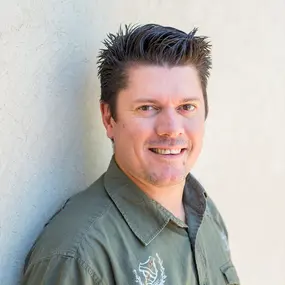
As a kid we were very nomadic moved around a lot attended 13 different schools I learnt how to blend in quickly. I started my working career in the outback chasing cows on the stations, migrated to the mining industry. Then somehow fell into IT spent 20 years in IT building up to Leadership. I started and shutdown my own business and came to the realisation that I didn't like being the face of the business, however exceled at being the engine behind it. Over the last few years, I have been working inside of companies running on EOS® honing my skills and now am an EOS Implementer®. And I always have time to talk about motorcycles adventures my other passion.