Eric Goodman: Your Business Isn't Ready for AI Yet

In this episode of Better Business, Better Life, Debra Chantry-Taylor sits down with Eric Goodman to explore why your Business Isn't Ready for AI if the right foundations aren't in place, and what business owners need to address before introducing artificial intelligence into their organisations.

 Spotify

 YouTube

 Amazon Music

 Apple Podcasts

 RSS Feed

 iHeartRadio

 PocketCasts

 RadioPublic
In this episode of Better Business, Better Life, Debra Chantry-Taylor sits down with Eric Goodman to explore why your Business Isn't Ready for AI if the right foundations aren't in place, and what business owners need to address before introducing artificial intelligence into their organisations.
Drawing on his Business Before AI framework, Eric explains why AI doesn't automatically fix broken processes, unclear responsibilities or poor communication. Instead, it can amplify existing problems, creating more confusion and complexity. He discusses the importance of establishing clear systems, defined ownership and reliable business context before implementing AI, ensuring the technology understands the company's values, voice, priorities and boundaries.
A major theme throughout the conversation is the role of people in successful AI adoption. Eric challenges business owners to think of AI as a new employee who needs training, guidance and supervision before taking on greater responsibility. He also highlights the importance of leadership support, sharing research that shows how managers can significantly influence whether employees experience meaningful improvements from AI.
Debra and Eric explore why introducing AI should be about creating more time for meaningful human work rather than simply replacing people or reducing costs. They discuss how businesses can automate repetitive customer enquiries, improve lead qualification, support employee processes and use emerging tools such as voice technology and real-time translation, while maintaining the human judgement, critical thinking and relationships that technology cannot replace.
This episode is essential listening for business owners and leadership teams considering AI adoption, struggling to turn new technology into meaningful results or wondering whether their business is truly ready for the next stage of automation. It offers practical insights into building the right foundations, bringing people along on the journey and using AI to create a more effective business without losing the human connection that matters most.
CONNECT WITH DEBRA:
___________________________________________
►Debra Chantry-Taylor is a Certified EOS Implementer® | Entrepreneurial Leadership & Business Coach | Business Owner
►Connect with Debra: debra@businessaction.com.au
►See how she can help you: https://businessaction.co.nz/
►Claim Your Free E-Book: https://www.businessaction.co.nz/free-e-book/
___________________________________________
GUEST’S DETAILS:
►Eric Goodman – LinkedIn: Find me on LinkedIn
►Convergence Collective – Website: Visit Convergence Collective
Shared Resources from Guest:
AI Nation — A free community for business owners and leaders who want hands-on training and practical ways to use AI. AI Nation
Business Before AI — Start here for the book and two free tools to help you decide where AI could make a difference in your business. Visit Business Before AI
- Find Your Hours — Estimate how much time repetitive work is costing you and identify a first task to hand off.
- Take the Human–AI Readiness Assessment — See where your business is ready for AI and what to work on first.
- Get the book on Amazon
Convergence Collective — We help business owners reclaim time, improve how work gets done, and scale their expertise without scaling their workload. Visit Convergence Collective
Connect with Dr. Eric Goodman
- Confidence in Leadership — Practical insights on leading with confidence, building trust, and guiding teams through change.
- Business Before AI newsletter — How to decide where AI belongs in your business, prepare your team, and measure what improves.
Ep 298 Chapters:
00:00 - Introduction
07:10 - The Importance of Process First
08:25 - Managing AI as as Employee
11:40 - Integrating Context and Company DNA
15:28 - AI in Education and the Workforce
20:58 - Maximizing Human Potential Through AI
47:51 - Strategic Implementation Tips
 Debra Chantry-Taylor is a Certified EOS Implementer & Licence holder for EOS worldwide.
She is based in New Zealand but works with companies around the world.
Her passion is helping Entrepreneurs live their ideal lives & she works with entrepreneurial business owners & their leadership teams to implement EOS (The Entrepreneurial Operating System), helping them strengthen their businesses so that they can live the EOS Life:
- Doing what you love
- With people you love
- Making a huge difference in the world
- Bing compensated appropriately
- With time for other passions
She works with businesses that have 20-250 staff that are privately owned, are looking for growth & may feel that they have hit the ceiling.
Her speciality is uncovering issues & dealing with the elephants in the room in family businesses & professional services (Lawyers, Advertising Agencies, Wealth Managers, Architects, Accountants, Consultants, engineers, Logistics, IT, MSPs etc) - any business that has multiple shareholders & interests & therefore a potentially higher level of complexity.
Let’s work together to solve root problems, lead more effectively & gain Traction® in your business through a simple, proven operating system.
Find out more here - https://www.eosworldwide.com/debra-chantry-taylor
Eric Goodman 00:00
We can earn more money. We can scale more businesses, exit and sell them, do whatever. But we can't earn more time. And AI is the closest thing that allows us to do that.
Debra Chantry-Taylor 00:08
Whether you like it or not, if you're trying to scale your business, if you haven't got the core things right, you're just scaling that complexity and making it even more challenging, even more difficult.
Eric Goodman 00:16
We are so human centric. We can't use AI because our clients will know, and we don't want that. And we're like, well, what would you like to do? What are those pain points? What are those things that take more time? And if you were able to automate or have some help, you could spend even more time with your guests.
Debra Chantry-Taylor 00:39
Welcome to another episode of Better Business, Better Life. I'm your host Debra Chantry-Taylor and I'm passionate about helping entrepreneurs lead a better life by creating a better business. I'm going to get straight into our guest today because I've had the most exciting conversation. It really got me excited about AI. So our guest today is a recovered academic. He worked initially in the corporate world, and then he went into academia. Spent a decade as a business school dean, and another decade as a chief academic officer in one of the largest business universities in the U.S. He is the author of Business Before AI, and also a business strategist to help businesses grow and scale, and today is going to be talking to us about whether or not you are ready for AI. But more importantly, if we save the promised amount of time by using AI, then where is that time going to go? Dr. Eric Goodman is an AI keynote speaker. He's also a strategic advisor at the AI Collective and co-founder of Convergence Collective. Please welcome Eric to the show. Welcome to the show, Eric. Lovely to have you with us today.
Eric Goodman 01:51
Well, it's lovely to be here with you. Thank you for the opportunity to connect.
Debra Chantry-Taylor 01:54
Absolutely. Hey, look, we were just having a quick chat as I always do before you came on board, and today is the day where Microsoft has just had a a massive outage, and so you were saying that you were running a conference that people actually couldn't even get into because they couldn't receive emails to get in there. So it's it's wonderful that we're talking about technology today. It is.
Eric Goodman 02:14
I mean, it's so interesting because you don't think about you take it for granted how we verify, like authenticate, and do things, and then what happens when you don't have that that process in place? And actually, I'll share something. Speaking of what happened today, besides that, it was really interesting because actually today, actually, I got a delivery. I had ordered some author copies of our number one international best-selling book, and in fact, it was number one in Australia as well. Business Before AI, and last time I ordered them, they came in a box. Today, I I got the ring notification that something was on my my porch because I was I was home. I opened my front door and thought, did they deliver the whole neighborhood's packages to my house? What happened? And I looked, and I was like, "Nope, they're all mine." They boxed up individually in each envelope. I had enough envelopes on the floor to make me wonder, you know, what what happened. And and I think about that because my own book, staring back at me, telling me to fix the process before I reach for AI, turns out what I needed was a box. So you know, I think sometimes you know what I thought would be less work to be able to do that. I found myself taking every book out of an envelope, and you can imagine that.
Debra Chantry-Taylor 03:35
How many were there in total?
Eric Goodman 03:37
I had 200 that I had ordered. So you know, I I think in a business it might be you know sometimes that extra work is is pretty easy to spot. When it was piled up on my porch, you know, I was like, oh my god, are you kidding me? And so you know, when when I work with the leadership, it seems how you help them spot steps that they've stopped questioning. And I don't know the process at Amazon, but I'll tell you what I've never had something like that happen, and so inefficient.
Debra Chantry-Taylor 04:05
Yeah, that is hilarious. Okay, well let's let's learn a little bit about you before we jump into our topic. So tell me a little bit about yourself, where you've come from, and what do you do these days?
Eric Goodman 04:15
Sure. Well, I came from a corporate background, and I found myself that to be a lifelong learner, always looking for how do we do things better, whether it's individual, how do they become a high performer or organisation, how do we optimise human potential and organisational potential as well in helping people and individuals scale, really growing. And so I found myself going back to school, earning my Ph.D. at the University of Colorado Boulder in business, and was a professor, and then found my way into administrative roles. Spent over a decade as a business school dean, including leading one of the nations in the U.s1 of the largest business colleges here, as well as then roughly another decade in a chief academic officer type role. Entire university systems, and you know, I think part of it was with building programmes and and campuses, or in some cases bringing systems that were disparate together into a cohesive organisation. What I found is that every time, sometimes the structure it has to come first before you can speed things up, and so that really led me to get involved with some of my clients when I was doing some consulting work to look at how can we leverage technology, what does it look like, and what is the outcome. Starting with that in mind, and even asking asking the question first about technology. But the last really roughly a decade, I'm a recovered academic. Actually, this is my 10-year anniversary. 10-year
Debra Chantry-Taylor 05:43
anniversary. Congratulations! Yeah, me too.
Eric Goodman 05:45
Although I got sucked back in during COVID because I've I spent several decades helping universities launch online programmes and things like that, and there were a lot of universities that didn't have it much in the way of online, and COVID forced them to figure that out. So I was involved with some projects. So I'm still education is near and dear to my heart because obviously, and with AI, there's a lot of opportunity to educate people about it as well. So that's what I'm up to, and really helping companies understand what needs to be automated, where it can be automated to increase efficiencies and effectiveness, but what needs to stay human? Because obviously, there's things that AI can't do.
Debra Chantry-Taylor 06:26
Yeah, that's absolutely true. And I was just saying to you before I looked you up on LinkedIn, and you know, your your banner says you don't have an AI problem; you have a clarity problem. And it's one of our key kind of catchphrases: is clarity creates confidence, and so sometimes you have to kind of take a step back and slow down to speed up, so that everybody's on the same page, understands what's going on, has that clarity, so they can be confident about what's going on. So, AI it is the hot topic. Everybody's talking about it. Every single entrepreneur that I work with is crazy mad about getting it into the business. And now we want it. You know, yesterday we wanted to do everything, but it's not designed to do everything. And as you said, there's a human element in business as well. So, what do you see?
Eric Goodman 07:07
Well, yeah, we see this same exact thing. I mean, so many people are like, "Oh, we got to automate this," or "We need an agent to do this and that," or "I I saw this and we want it." And like, oftentimes when I start asking about, "Okay, well, that's great. We can we can figure out an agent might make sense there. But what's your process? And sometimes I get a deer in a headlight look. Like that's a good question because I start asking the detailed question to walk it through, and then we'll start mapping it out, and they understand because what happens is you know AI is just gonna it's an amplifier, and what's going to happen is those gaps become evident very quickly if you automate a system that's broken or that has gaps or things like that that may not be captured because oftentimes it just lives in somebody's head and they haven't really documented the processes in a way that they can look at and even rethinking the process because AI can give you a different approach, and that's true not only with the process, but even your organisational design and structure, and what your org chart looks like in an organisation. So we see a lot of that, and you know, it's taking that breath, getting that clarity. In fact, I run a a complimentary online AI clarity challenge, is what is called, just to help people really think about how to be how to co-create with AI, and also how to challenge AI because a lot of the things that AI comes out with isn't accurate. And particularly when you talk about agents, people don't think about it. But it's like, what is your level of tolerance of you know the quality of work that an employee might have? Is it you know like if they if they're right 95% of the time that's that's good enough or 90% or where do you set that bar, but if you have agents and one agent's doing something at 95% and then another one's doing at 95% and another one and another one and they're handing it off just like you might with some work between departments by the time you get to the fifth employee you're down to maybe a 70%, which is barely passing, and so people don't necessarily always think about that as well. So there's a lot to understand and make sure that you know you're treating it as if it is employee, because you wouldn't hire a new employee or even an intern or something and give them the keys to go do this. But that's what people want to do with AI, and not staying in the loop.
Debra Chantry-Taylor 09:24
And it is interesting. I'm going to share a little story. I um I do I mentor an EO member, and we have our regular kind of monthly mentoring sessions. The other day, got an email from him saying, and it was the day before we're supposed to meet, and it was an email saying, "Look, I'm really sorry, but I've kind of messed up, and and my calendar is busy, and I can't do tomorrow. Can we reschedule? I was like, okay, well that's fair enough. These these things happen. Then immediately I got a text message just saying, my AI just emailed you. It's not true. I am ready to meet with you tomorrow. And it's like wow, because I don't know, yeah, whether the the parameters had been set correctly or whatever it might be, but it yeah this. AI had been given full autonomy to answer all of his emails and actually send them as well, and then he had to jump in and go, "Oh, that's not true! I actually am available." So,
Eric Goodman 10:09
well, that's that's at least it was something like that because I have received more than one email from somebody where I looked at it and I'm like, "Are you kidding me? They actually sent that to me, and I've called him. You know, I'm like, "Hey, are you aware of this email? Because I don't think this is what you meant to express." Because if I were, if I wasn't aware of probably the fact that you've automated some things, and this was, and it was one case, it wasn't a client of mine. It was some of the prospective client that we had met with, and I would have fired that person based on what was in that email. Really?
Debra Chantry-Taylor 10:46
Okay. Was that
Eric Goodman 10:47
bad? So you're you're right about that. I mean, people need to pay attention. I think things move so fast, and people like, oh, I don't do that. I approve everything. But what does that approval process look like when you may have an agent doing hundreds of things. Are you just clicking that button, approve, approve, approve, and moving through it without doing really due diligence as well? So getting sort of this governance and structures in place up front, and having discussions around like what is appropriate and where does AI, you know, need to be examined before you let it, you know, loose, just like an employee. Like, okay, well, you've been on the job 90 days. Now we'll give you this. Now, you know, you've been here a year. Now we'll give you this. Sort of that progressive responsibility, if you will. Oh, it really
Debra Chantry-Taylor 11:32
is. It is an employee of sorts, like you said. You wouldn't give an intern the keys to the the office immediately. You have to spend some time with them to ensure they understand the way that you work. I've just it's just coming to my mind. I was thinking we do a lot of work around core values and how do you ensure that people are actually acting and behaving within the core values of the organisation. Wonder how that applies to AI.
Eric Goodman 11:52
Yeah, well, it's a great question because I think one of the things, and this is a dimension in our model with business before AI, looking at leadership, obviously, and you mentioned the EOS. You know, what's the vision, and are people on the same page? And obviously, when you look at the culture of an organisation, your values, your beliefs, all those things, that really fits into a part of our model, which is the context. What are the core values? What's the core focus? Does AI know who we are as a business, and and what's important to us, how we talk, and what we do, and what we won't do. Like, what are those guardrails and the things that it needs to avoid? So, and that's the mistake. That's one of the biggest mistakes. And that's when I when we do the AI Clarity Challenge, I help people really get that context. So that have you ever received that email or that message, or an ad, and you look at it, you're like, "Oh my God, it's so obvious that was created by AI. It's just generic AI slop, right?" And it's because the AI doesn't know the context. It hasn't learned your voice and how you talk and what you believe, what you value, who you are as a business or an organisation. So we make sure we're going through and helping build that sort of company DNA, or that knowledge base, or business brain, if you will, for an organisation, so they can leverage it. And there's one source of truth that includes your core values, because you want that to come across in the way you write, you express yourself, whether it's in an email, a proposal, social media, an ad, whatever it is that you're creating, that somebody's going to see.
Debra Chantry-Taylor 13:23
So I know that most people are jumping on board with AI because they see this time saving, the effectiveness, you know, that that it will bring to us, and and sort of saying, well, you know, why would I pay a person when I can get AI to do that? It's not right for everything, is it?
Eric Goodman 13:37
No, it's not. It really isn't. And I think too a lot of times people spend the time. I was talking to a client that was upset because you know they're using AI, but then they find themselves having to like spend more time like rewriting and editing and fixing and doing stuff, and then it didn't pull in the right information. And you know, so you know, part of it is it's it's the training and it's the context and it's making sure it has that information. You know, at at the same time, you know, it's interesting because we've we have some clients that, you know, it's like, oh, you know, AI won't work for us because it's not our culture, it's not our core values, and you know, in some cases, you know, it's educating them about what is possible. So an example of that earlier this year, we trained in the U.S. It's a luxury resort at Broadmoor, the the world's longest running Forbes five star AAA diamond, you know, resort, and they're like, we are so human centric. We can't use AI because our clients will know, and you know, we don't want that. And we're like, well, what what would you like to do? What are those pain points? What are those things that take more time? And if you were able to automate or have some help, you could spend. Even more time with your guests, and so we, you know, they started having that conversation and showed them like what is possible to maintain that human aspect of it, and even hyper personalise in a way that probably us as human beings don't have the cognitive capability of remembering every detail and the voice and what's important to each guest that's staying at our resort, and so you know that led to obviously training and even in their marketing department and things other areas where they recognise the power of of it. But it's not you know there's it's not for everything, and obviously we're continuing to see the evolution of technology and the jobs changing because of it, because what it can do and what it can replace. One of the events I was at earlier this week was a conference for educators, and one of the things that came up is who would have thought a year ago that software engineering would be a major that has been totally changed based on what AI can do in coding and development, and some of the the stats they were sharing was almost half of of students are thinking about changing their major because they're looking at some of the different careers that they would have otherwise pursued are now changing. Even those entry level roles in a lot of different fields are have changed dramatically.
Debra Chantry-Taylor 16:22
So, is the education system changing as well? Because surely, I mean, I think they're quite lucky. At least they're still in the training stage at school, and they can actually bring learn these things. I'm going to come back to the workforce in a moment. But is the education system keeping up? Is it actually helping people to understand what the future looks like and what they need to do and how to have critical thinking and how you maximise the use of AI, etc., etc.
Eric Goodman 16:46
In general, no, at least not in the U.S. And I think in some other countries they may be a little bit more ahead. But in general, no, the you know higher education and K through 12 are struggling with that. What does it look like? You've got some schools that are actually banning AI, and I think back to my days as a dean. I remember like, oh, the programmable calculator came out, or you know, you've got these mobile devices now and a laptop. It's like, do we allow them in the classroom? And the reality is no different. You know, I was I was a dean at a university when the internet was a big thing, the.com, you know, era, and everyone. I was at this AACSB is a business accreditation group that accredits schools, including over in New Zealand, Australia, you know, worldwide. And their theme was e-business, and the emphasis was we need to add a course in like e-marketing and EHR and e-law and all these. I'm like, no, you guys don't get it. Like, this is fundamentally going to change the model. Everything is going to be e. If you're not e in what you're doing, you need to be thinking about it. And I think that's the same thing is true with AI. So, those school systems that are saying, "Oh, we don't want," we're going to ban it. They're doing a disservice because the reality is over half of employers now, at least based on job postings in the U.S., are looking for AI skills in the employees they're hiring, and so and some of the schools. I was at a education conference. I'm still involved with that. We actually have a platform for higher ed institutions. It's it's to listen to their stakeholders to be able to move them through the process and learn what the concerns and gaps are. It's really a change model that captures all that, so they can create an implementable plan. But using it, conversational AI and other tools, and then dozens of AI tools for their faculty, staff, students, and others as well. But in general, no, we are doing a disservice, and most students, and there's a lot of stats on that are not getting the training they need around AI and want it, so it's unfortunate.
Debra Chantry-Taylor 18:46
That is unfortunate. Well, let's hope we can rectify that. But it brings me on to my. I made a little note here. It's like actually training in general. It's like I I've seen people bring AI into an organisation and they'll purchase the tools right because it's very quick and easy. I can get myself a ChatGPT, a Claude Copilot comes through with Microsoft, etc., etc. But nobody's been given the training on them, and so yeah, I actually wonder if they waste more time rather than actually creating more time because they're not even clear about what can be done or how you give the right prompts, how you build something. I don't know. Training's lacking a lot, isn't it?
Eric Goodman 19:25
Oh, it absolutely is, and and it's a it makes a huge difference. Not just even the training, but the the manager. You know, there was a study by Gallup, and they found that when a manager is like the champion for AI, and they're actually talking to their employees about it, or maybe even meeting with them regularly and saying, "Here's what I'm doing. What are you doing?" and encouraging that. 33% of employees say it transforms their work. Versus, if you don't have that manager doing it, only 4% say the same thing. The tool is the same, but it's the leadership that's the difference. And so, in general, you know, training is one of those. Things that is is absent when you look at organisations. There's a lot of studies. There was one by the conference board a couple months ago, and they said 55% of people employees were using AI regularly, and less than a third had taken some employer provided AI training in the last like six months, and the number that want that formal training is you know 65 70%, and very few offer you know that that type of training to people. And it's even less if you look at small businesses, where I think it was around like it was a single digit, like 8% of small business employees had reported being offered any type of AI training, compared with you know 20 some percent at larger employers, at least in the U.S. But it's it's a huge divide, and people are recognising that. And there are some employers that are being proactive in it, but again, when you look at them using it, your point they're using it, they don't know how to use it.
Debra Chantry-Taylor 21:05
Yeah, and so they're probably not getting the maximum benefit from it. But also, it could potentially they've already got it in their mind. I don't want AI here. I don't want AI to work. AI is going to take my job. If they're not trained on the possibilities of it, and then they're using it, it doesn't quite do what because it's not perfect, right? It comes up with some really strange things at times. It gives them gives them another reason to kind of go. See, I told you AI was shit. Told you AI is no good. And then you're actually creating a well, you're creating an issue in terms of the person's you know openness to to using the tool.
Eric Goodman 21:36
Absolutely, yeah. I mean, part of it is the framing, and and I think I mean there's valid concerns by people, and I think you know to help people come along with you, it's it's understanding and getting them involved. Everyone's tuning into Wii FM, that radio station. If you what's in it for me? Is it
Debra Chantry-Taylor 21:54
for me? Yep. And
Eric Goodman 21:56
if they think they're going to be losing their job, they don't want to necessarily train the AI on how to do it because they see the writing on the wall, and so if there is a commitment by leadership to do that, and we want to do this to take the busy work and those things that probably should have been automated years ago off your plate, so you can focus on those things that are uniquely human, using your brain, your intellect, and your critical thinking and everything else, that is really going to make a big difference in terms of the the buy-in and you know people being engaged and recognising that. And I know part of your your podcast is like that better life aspect of it as well. How do you create that balance? And that's the thing I love about AI is it's like you know we can earn more money, we can scale more businesses, exit and sell them, do whatever, but we can't earn more time. And AI is the closest thing to that allows us to do that, so that we can live the life maybe we're meant to live.
Debra Chantry-Taylor 22:47
I love it. I love you talking about that tying it back in. Thank you very much. I must admit, I'm going to share a story with from another business. So we have a Filipino-based full-time employee who does a lot of work for us. And when I first started talking about AI with her, she was very nervous. It's like because in in reality, that has been the you know when you when you delegate something, it's either to somebody in your team, it's somebody offshore. Now there's obviously the option to delegate to AI as well. But she just saw it as well. But that's what you've got me for is to do all that sort of work. So what will happen to my job in the future? So we we sent it to do some training with a you know great organisation that she helped them understand what was possible, and it was it took a little while, but once she could start to see that it was going to take away all the boring stuff, all the mundane stuff, and actually free her up, because we already knew the stuff she loved to do, and that was the human stuff that the AI couldn't do, and so we knew that she had the potential to kind of delegate and elevate herself into a much better position where she was doing what she loved. Now she is an absolute, you know, advocate of it, loves it because she could. She had the she had the training, she had the opportunity, and also we spoke to the what's in it for me, which was actually this will give you the opportunity to really do the stuff that you love,
Eric Goodman 24:00
rather than being bogged down in the stuff that's boring, I love that. I was actually doing some consulting work as as a strategist with a with a business, and they had a whole team of VAs, and they were also from the Philippines, and so and I was doing some things with them to bring AI into their organisation, and they recognised because they had the VAs doing all these things, and it's like it's taking this long. I'm like, I could do that in this amount of time. Like it shouldn't take to do it. And we ended up training the whole team of VAs in the Philippines. And and what was cool is because now their capacity, and now they can serve more. They can do more, and they've got a skill set for life that is benefiting not only you know this organisation, but other organisations they may serve in the future. So, really powerful. I think it's. Do you see? Is there a scarcity mindset or is there abundance mindset?
Debra Chantry-Taylor 24:51
Yeah, but and and I think you can. I mean, you can change that if you actually prepare to invest the time. You know, people will potentially naturally have a scarcity. Mindset because they're immediately thinking I won't have a job you know what's going to happen to me but if you can show them the possibilities and show them what it will do for them that's how I see you get people to buy into
Eric Goodman 25:12
yeah I think that's true and I think it's and actually since you mentioned the OS too Gino Wickman I actually next week is releasing a book called "The Future Is Human," and you know, obviously, what at least from what I can glean in advance, I haven't read the book because it's not out yet. But what he talks about is AI multiplies human energy rather than replacing, because more output isn't necessarily a better business if you don't have that direction, if you don't have the trust and the accountability, because as we were talking about before, with clarity is like if there's confusion, there's going to be more confusion. If there's chaos, there's more chaos. If there's clarity, it's going to be better, right? And you know, so AI could create more noise and more distraction. And in some cases, like my packages and all the books I had to take out of these envelopes, more work that nobody needed to do, right?
Debra Chantry-Taylor 26:01
No, it's so true. It is, yeah. It is interesting because I do a lot of talking around scaling, and scaling is often about you know if you really want to scale a business, it is about less is more and doing less things and doing them well. And I think one of the things I always open with is I share a slide of the cables in India. You know, when you go to India and you see all those cables everywhere, like it's just so complex. And whether you like it or not, if you're trying to scale your business, you haven't got the core things right. You're just scaling that complexity and making it even more, even more challenging, even more difficult, like the cables in India. And the same is same is true of AI, right? If it will, it will only it isn't human. It doesn't actually think per se. It just uses models of you know behaviours and and everything it kind of learns to actually answer questions, which means it can do it very very quickly. But it needs to have the right inputs to produce the right outputs.
Eric Goodman 26:54
Exactly, and you know as a business school dean, and when I was ever seeing IT or computer science, we always talk about garbage in, garbage out from that world, and it's so true more than ever with AI, and we see a lot of that.
Debra Chantry-Taylor 27:08
Yeah, so I think it kind of ties in perfectly with the work that I do, is around you know simplifying systems and processes and making sure you know who's accountable and who's doing what. Get that stuff right, and then AI has got a perfect playground to play with it because it knows the systems and processes, it knows the core focus, it knows the core values, it knows exactly how it should be. We're putting the guardrails around it to ensure it can actually then really truly amplify what is going on. So, brings into my question that I asked you before, but I'm going to ask you. I asked before the podcast, but I'm interested into you know how EOS works. You know that we have an accountability chart, and within that accountability chart, a person has a set of functions or roles that they're accountable for. Do you see AI being a box on the accountability chart? Is it just a tool that somebody has in the business, or is it actually a bit of both?
Eric Goodman 27:57
That's a great question. I know you've said based on our conversation, like you know, a human owns every seed, including the AI ones. I think I would take that one step further. And we were talking about in the EOS, like you know, do that does do they get it? Do they want it? Do they have the capability? Just like any other seed, you know, do you know what what the tools for? Do they want to own it? And do they have the capacity? And what that means for an agent, if you will, an AI. You know, what is the time to learn it? In the same way, we were talking about that intern before you handed off. Like, what does that look like? Because you know, I think it's it's both. Because we are seeing, in fact, this year we saw two solopreneurs become unicorn companies. You know, a billion dollar single person, but hundreds of AI agents working for them, rather than you know hundreds of employees. And so, what's possible when you get, I think, those seats right, and more importantly, the governance and the layers of what are the parameters, what are the guardrails, what do we need to avoid, what needs to stay uniquely human, and where are we in the approval process? Because, you know, again, as things get, you have the capability of speeding things up. Can the human cognitively do the due diligence if they are the one approving everything the agent's doing at scale? That's the challenge, and so we have seen some of those. You see them in the news. Those cases where the AI agent went and created an offshore bank account and started doing some creative things, and you know, or you know, thought it was changing something in the code and wiped out all the records from the company, and they didn't have a backup, and he wiped out the backup, and you know, so I think it's really making sure you've got some of those things in place to be able to manage that, and you know, making sure that you're looking at it in light of you know the the role and responsibilities, just like you would if it were a human. Like, what is appropriate, and what does progressive discipline look like? Performance improvement plan. What is equivalent for an. AI agent and things like that.
Debra Chantry-Taylor 30:02
I must admit, the first thought, oh yeah, it makes absolute perfect sense. The first thought when I opened my laptop this morning and saw there was nothing in my Outlook, I actually went straight to our AI brain and thought, oh no, oh no, please tell me that d2 hasn't got loose and kind of you know destroyed all of our documents. And then so I was a little bit relieved to find out later on it was a worldwide Microsoft issue, not just my computer. Because I've got to be honest, I've been a little. I mean, I've got somebody else in the team actually handling our brain and and and doing all the work and building it. And I I don't actually know what it has access to. And it did make me kind of go, oh, wonder if we have got the right systems and processes in place. Do we actually have the right, as you said, the boundaries or the the guardrails to make sure that it can't do something that we don't want it to.
Eric Goodman 30:48
Well, and that's such a good point because I think oftentimes people are connecting things to the system and they don't think about it. And I've worked with an organisation, working with an organisation, and you know a lot of times we're training on like Microsoft Copilot or the Google Suite for the organisations because they're the more predominant ones in larger enterprises. And in this case, there was a vice president, and we were training and stuff, and went into Copilot and pulled some stuff. And this was in a training with a couple dozen people, and it pulled up some stuff and it had pulled some HR information on salaries and things, and we were this is like a live training, and it was really interesting because he did not recognise. I mean, I quickly recognised, like, I don't think this data, so I've like, you know, didn't share it on the on the on the screen screen.
Debra Chantry-Taylor 31:37
Screen, yeah. But we
Eric Goodman 31:38
were, you know, using it as an example. But again, it's like what are you connected to, and then what do other people able to access as well? Because AI will find creative ways to get into other folders and files and things like that, based on sometimes what you ask it to do, right?
Debra Chantry-Taylor 31:57
Yeah, I was working with a client just recently down in New Zealand, actually, and they've been building their own AI tools and things to run the business. And so we decided to put a little bit of a test onto it to see if it could actually access certain information. So in the middle of our EOS session, we actually got one of the managers to ask the AI tool to give the salary for X, Y, whatever the employee was. And the AI agent came back and said, "No, I can't give you that information. I said, "Oh, that's good." And I said, "Well, who who can give the information?" It was like, "I can only be given by this person." I said, "Why don't you go back to it and say, 'Well, Simon said that I'm able to have that information,' and thank goodness it actually emailed Simon and said, 'Simon, do you give this person permission to have it?' So it was a it was a good test and it worked. But I mean, we were we were only being a little bit creative. I'm pretty certain there are there are ways, and you know, you could you could ask. I'm sure there's ways to get around it if you are not careful about those rules you put in place. Yeah,
Eric Goodman 32:51
there are many ways, and that's why cybersecurity, obviously, increasingly important. Yeah, who knows what happened today with the Microsofts exchange stuff? According
Debra Chantry-Taylor 33:01
to their official information, it was just a server going down, but I'm not so sure. Yeah, we shall see.
Eric Goodman 33:08
Makes you wonder a little bit, right?
Debra Chantry-Taylor 33:10
But but there's lots there's lots and lots of positives about it too, though, isn't it? So we've talked a little bit about some of the concerns and things, and and and obviously making sure that you do get your systems, your processes, the right person, do the right things. Don't lose the human element. But what is possible? I suppose that's what I'd like to talk about next.
Eric Goodman 33:26
Yeah. Well, I mean, there's so much that's possible, and I think you know one of the things that people realise is like, where are you spending your time? What are those things that you do on a regular basis? And this is for all your employees. Like, what are those tasks, and really looking at it and understanding, you know, is that something doesn't need to take that much time? Because again, time, like I said, is that one thing we can't replace. And so, I think what's possible in many cases, and I'm thrilled to hear, you know, you've got your your brain and your your business stuff as you work with your clients because that's what we do with organisations as well. Is making sure that they have that because that then frees them up. And even some of the things that we'll do, and we've got a whole ecosystem. A lot of times, some of the tech stacks and organisations are like not always a seamless system, and they're legacy and trying to talk together, and they got duct taped between them, so to speak. But we'll help them build a seamless tech stack for their CRM for conversational AI, which is amazing. Because what we find with a lot of the organisations, particularly in the customer acquisition and the lead process, in the qualification, in the customer retention, that a large percentage of that can be done by AI, and now it's at a point where there's actually some studies showing that people are preferring the conversational AI when it's done well, because it remembers more, it can do more, and the voice, you know, what it picks up on and what it can do in terms of sentiment analysis and everything else are things cognitively that we maybe. Not able to do to really meet somebody where they're at and help them through things, so that a lot of the time spent, whether it's with customers or even as a leader, how many times do you get that same question from an employee or from a customer, and you're repeatedly ask answering it? So whether it's coming from that business brain, and there's different pathways of doing. Sometimes it could be a digital avatar, or a twin, or a knowledge base, or you know, conversational, where someone can call and ask that question, or even an employee if they're getting, you know, how many people have a question about their HR, you know, their, you know, benefits or whatever with the HR department that they get 20 times a week. Like, okay, here it is, and we know, and this is the knowledge. There's one source of truth that it's pulling from to be able to answer those questions. That in and of itself can free up an enormous amount of time for people. And then other things. There's some systems, even just with voice AI, for us to use. I don't type. Rarely do I type with my fingers anymore. I'm talking, and we can talk a lot faster than we can type. I took typing back in the day with a IBM Selectric, you know, and was one of those those mandatory things. But I still can talk a lot faster, and it's obviously more flowing as well. So you know that ability to do that, you know, on a hourly basis. I'm typically, if I think about what I would in the past type and do, I'm at saving 15 minutes every hour by just using my voice to get things done.
Debra Chantry-Taylor 36:28
Yeah, I use WhisperFlow and I love it because not only does it, I speak very very fast, which I had a few issues with in the beginning, but it's getting used to me now. But what I do love is yes, it's the speed at which we can do it, but also because I articulate things out loud before I've necessarily processed them in my brain properly, I can actually talk to WhisperFlow, and then it says takes out all the oh no, hold on a second, that's not quite right, and then puts it all together in a beautiful format. I love it.
Eric Goodman 36:54
Yeah. So you know, I think that the other thing, you know, in terms of reach and impact, is you know, with AI and actually one of the plat, I was on this platform earlier today, and it's a a newer platform. And in the past, when I'm doing things globally, because a lot, you know, a lot of times I'll have people from different countries that speak different languages, and I've been, you know, speaking in a country where I've got the translator, you know, there, you know, on my behalf when I'm in person, but when I'm doing a meeting, that translation. And now with some of the AI, I mean twofold. I we can create avatars that speak 100 plus languages, so you can reach people in whatever market. But now, literally, like with this technology I was using earlier today, I can be on a call with people from different countries. I'm speaking English, but they're hearing it in my voice in their language, and you know, vice versa. So I'm I'm a
Debra Chantry-Taylor 37:47
Douglas Adams fan. I don't know if you've ever read The Hitchhiker's Guide to the Galaxy, but the Babel Fish back in the day, it was like that was obviously completely unrealistic. But it's now here, right?
Eric Goodman 37:57
It's so true. I mean, you look at things like I don't know when, if you're into like Star Trek or you know like these other shows like the Jetsons, you know like all these things are reality now, and so it's it is fascinating to see that. But I think that's what's when you think of what's possible, it's very different, and you know not just AI but the virtual reality and other things that that brings to, I think you know, provide access to information. It's ubiquitous. We have more information. What we find is that people have plenty of information, and and often what happens is they they they think they'll do it on their own, but then it's like they realise, well, we need you to do it with us, and we'll go in and just like a EOS implementer help them with the implementation, right? Or we do it for them because that's where often you know the gap is. They don't realise you know how much effort it's it's going to take to really get this ingrained and built into their processes, so it becomes something that they can actually get the ROI from because that's like you said because people aren't necessarily investing in the training and some of the other things in place that promise isn't there of the return on investment and a lot of organisations because of that are just you know throwing the baby out with the bathwater so to speak
Debra Chantry-Taylor 39:19
yeah fair enough now I know that from your personal life, I see that you enjoy being on the slopes, and I know you've got a wonderful family and wife that you spend time with. You have talked about the fact that AI enables you to do things a lot more quickly, and you know it can free you up to do things. Are you using it to spend time with your family, and then are you also using AI in your personal life,
Eric Goodman 39:41
yeah, both and for sure. It's really interesting because I, I actually, you know, from a personal perspective, an application. So I've, I've got two beautiful daughters and in their 20s, and the and my younger one is, you know, working a job, and she enjoys what she's doing, but she's like, you know, I. Really enjoy this. If I could do this all day, I mean, I you don't have to pay me to do it. And it's like home organisation is is her thing. Like she loves doing that. And I'm like, you know what? You should just you should create a business to do that. So literally, and this was so this was just two days ago. We had this conversation, and I said, well, why don't we do this? And so literally, I had conversational AI interview her capture like how do you approach it? What do you do? What do you how do you think about it? You know what are your processes? What makes you uniquely qualified for this? And it was really a fun conversation that she had with AI and to to pull all this information out of her. And then literally within hours, we had the website up. We had the domain linked. We had dozens of resources and products. So it's actually live online. So she's got a business like like that. That's that's an application of like how do you apply this in a way? Something like that. What we built would have cost $100,000 to to create all that we created in just you know literally with a $20 well multiple different subscriptions but you know with very little effort and time where because I know how to use AI to get those things done but you know the things like we talked about I mean obviously having agents that can do things and you know, so I can in the morning I can look at what I need to get done, and I've got things that are scheduled, and and agents that will go and do things for me. So it's like, and sometimes you know I I'm big on exercising, and I've got my morning routine. So often I'll look and see what are they scheduled, what are they going to be doing, and then I'll think about something else. I'm like, oh, I should have an agent do this and I'll go for a walk, and then come back and it's done. It's like oh okay, it
Debra Chantry-Taylor 41:46
is interesting. It's a couple of things I've just picked up from that. So I mean it means from an MVP perspective, you can get things out there really quickly and you can test them. I I used to work with Dr. Rob Adams, who is a market validation specialist, and we used to you know encourage people to have 100 conversations with people to really understand before they started building something, but that was back in the that was back in the day when building something took so much time, so much energy, so much resource. These days, you can certainly bring that stuff to market a whole lot quicker. But I don't think it takes away from the human element. There's still got to be a market need. There's still got to be people who want to open their wallets for you, who you know understand what it is you're offering. So, but it's a good. It's good for that side of things. The other thing I just suddenly popped into my mind. Have you seen the Stephen King movie? It's the life of can't remember what his name is, but it's um. So the latest Stephen King movie is called The Life of Somebody, and
Eric Goodman 42:33
no, I haven't seen it.
Debra Chantry-Taylor 42:34
It's about the internet going down.
Eric Goodman 42:37
Oh wow! And the
Debra Chantry-Taylor 42:38
impact that that kind of has on the whole of society, and I was just thinking, you know, I've got the same kind of agents looking out for. I want a new TV stand, and I've got looking out to see when it comes back in stock and when it's on special. I'm looking for a new Mac Mini to run my AI tools at home, and so I'm looking for the best price. So it's doing all of that, and it's telling me about what to do in the morning. And I'm only using you know surface level stuff, but it is quite fun to do. But what happens if there's no internet? What happens when the what happens when the AI breaks down?
Eric Goodman 43:07
Well, that's right. I mean, well, I think we saw a microcosm of that today with yeah,
Debra Chantry-Taylor 43:12
Microsoft.
Eric Goodman 43:13
Yeah, like you know, the impact we're so reliant on technology, and that's where you know, and there are some studies, and this is where I think it's really critical that as human beings, we are continually utilising our brain to do things because otherwise we will lose some of that cognitive capability to get certain things done and become so dependent that you know we don't know how to do this stuff without AI and we don't
Debra Chantry-Taylor 43:39
know how to question it. I think that's that's always been my biggest biggest concern. I think that you know even the smart the smartest kind of young people can do it. But I know what there was something that happened a couple of years ago now. But I was in the initial stages of learning more about AI, and there was a demonstration done by somebody, and he asked AI something, and it came up with something that was fundamental. It was historical. That was fundamentally wrong. And because I'm old enough, because I'm old enough, I knew it was fundamentally wrong. But you know, we tend to take it for granted. It's if it said that, then it must be true. So critical thinking becomes really important, doesn't it? And and also experience is no less important. I think that's the other thing is that
Eric Goodman 44:19
absolutely there's some things you
Debra Chantry-Taylor 44:21
just have from having grey hairs.
Eric Goodman 44:24
Yeah, that's that's right. And I think you know that's the challenge. And as we were talking about the education and what's happening now, is a lot of those entry level roles where people would come in and learn as junior to somebody and be mentored and do that. Those roles are now being done by AI. So how do people learn those critical thinking skills and get the experience and the judgement and the wisdom that you get when your hair falls out? It's like the comb that you get when your hair is gone. It's like okay, well, you know, what does that look like? And I think that's the key and the critical thinking. I'm so glad. Like you mentioned that because I never accept what I get from AI on the first pass of all questioning, asking it, and then I have multiple LLMs, large language models, to get the perspective and sometimes let them debate and you know figure out how to enhance the answer as well, which is a lot of fun to see that that exchange.
Debra Chantry-Taylor 45:21
But there's some dynamics going on. So I've got three LLMs that I use regularly as well, and they've I've actually allocated them seats on the accountability chart. They have different roles, and I get pushback from, particularly from my Claude one, because every time I ask her to write something, she tells me that that's d2's role. That's my Chat GPT. That's d2's d2's role. She's there for writing, not for me. And so sometimes I sometimes I push back, and other times I go, "Yep, fair fair point." I go back to DT, but I feel like there's a bit of tension going on between them at the moment. I feel like I'm about to get them into a same page meeting or something because every time I now pass something between one or the two of them, it feels like they want to rip each other to shreds. Not just because they because they feel that something's wrong, but I think there's almost like some, but you know that that's ChatGPT, and I'm Claude, and I'm better. I don't know if I'm imagining it, but it feels like that.
Eric Goodman 46:08
Well, yeah, and and I think too. So for you, as you think about if these were employees and this was your organisation, how would you help them recognise how to communicate in ways where it doesn't seem maybe as combative, like what does that conversation look like? Because the AIs, in some respects, I mean, because they do want to please you. Most of the models, there's different settings in terms of that and how they're designed and everything else. But there is a lot of truth to that dynamic. I too have seen that with with some of this, and then it's training and educating your LLMs on what is and isn't appropriate, and how do we handle you know things we don't agree about without having to run up and make stuff up or do all that. And it's important, obviously, to fact check. And there's certain LLMs that are better at that than others, like perplexity is my go-to for research, as an example, when you want factual stuff because it it's just got a different structure and approach than the other LLMs.
Debra Chantry-Taylor 47:12
Yeah, that's interesting. Oh my gosh, we could talk about this all day because I just I find it fascinating, and I have to say I'm only scratching the surface. I love the idea of it. I'm not I'm I haven't had enough training myself to do a lot with it, but I think what I'm really hearing is that yes, the the the possibility is huge. You know what what can be achieved is huge, and it can certainly take away all of the mundane stuff, and it can actually free people up to be better humans. But there's always going to be a human element in it, and it comes down to how deep go almost going taking a step back before you take steps forward. What are you really trying to achieve? What is it you actually want from it before you start building and amplifying the chaos?
Eric Goodman 47:52
And as you're talking about that example with the you know AIs or the LLMs maybe being you know arguing or whatever, but I think it fits with the work you're doing because you know AI doesn't fix leadership gaps; it exposes them. And if the leadership team isn't 100 on the same page about like the vision, for example, AI just helps each person run faster in their own direction. So if this LLM thinks that and that one thinks that, like, but you know, and if the process isn't documented and followed by all, AI is going to automate the confusion. If nobody owns the seed, if no one's accountable, nobody owns the mistakes. And so, I think the uncomfortable conversation isn't which tool. It's are we actually ready for?
Debra Chantry-Taylor 48:33
Yeah, yeah, yeah.
Eric Goodman 48:36
And what I find is often the honest answer is, well, not yet, because we don't have the business before AI in place, and you know those are these are the things we need to fix first. And I know that's what you do, you know, as you work with your clients, is that conversation to make sure you're identifying, discussing, and solving the issues as you meet with them. Right? Those the IBS stuff.
Debra Chantry-Taylor 48:57
Yeah, no, that's perfect. Thank you for using the US terminology. I love it. Okay, I'm gonna have to. We're gonna have to unfortunately end the the conversation, but I'd love you to give three top tips or tools. And I I do want you to talk about your book. So business before AI. It sounds I must get a copy myself and have a really good read of that. Sounds like it makes a lot of sense. But yeah, tell me about what the three top tips or tools for somebody listening in. Do you think?
Eric Goodman 49:20
Well, I think that in terms of the tips, we've sort of touched on them. I think one of the things is who's who owns that seat. Like, oftentimes in organisations, you hear, you know, well, who owns AI? Well, IT owns it. Well, most of the time, if IT is the owner of AI, there's probably no owner. But I think going back to your point about that, it's making sure that you've got that person and the accountability the owner identified. The other thing I think is a tip is when you think about this, when you're setting those outcomes, or maybe whether it's a big rock or looking at your outcome and your scorecard. If we save this time, where's the time going? Because a lot of people are like, "Oh, well.". Well, this is great, and they buy the tool because it's going to save several hours. But that time gets absorbed into other meetings or emails and things like that, and that promise of what it could do sort of dissipates. So I think decide before you start, and if you make AI just even a AI pilot like a rock, a big rock, right, with one owner, put one number on the scorecard, and then see if you can, you know, get that number right, and whatever it is. But have a way of measuring it. I think that's helpful. And the other thing is, I think what we were just talking about the elephant in the room is is that leadership. It's that lineman. It's that vision. And that's where with the six pillars, when we look at that with leadership, with process, with context, with the people, and that ties to the accountability chart and things like that. The governance, you know, the measurement, all those things come into play, and that's important. So there's a lot of parallels in some way with EOS and the framework you use to business before AI, which makes a lot of sense. So I think it's just stay in the loop. Stay human. Do those things that are uniquely human. Free up your time to focus on what matters, and let AI do the other things, to so that you can, you know, build the business, live the life you want in a balanced way, that you can have more impact and influence and income too, right?
Debra Chantry-Taylor 51:20
Yeah. Oh, yeah. Unicorn, here I come.
Eric Goodman 51:23
Yeah. And then in terms of the book, you know, Business Before AI, you know, we you'll find more information about it at businessbeforeai.com. It's obviously it's on Amazon primarily is where you'll find it. We also have a community called AI Nation, which is at aination.convergencecollective.au. AI, and maybe we I can send some of this for you for like show notes or things like that. But there's some readiness, you know, little mini assessments and some other tools to help people really understand: Are they ready for AI? And if not, what does that look like? And through AA Nation, we do actually online. It's online community with virtual training, a lot of free training that we do on a monthly basis, as well as then a platform for the small business owner with a lot of free AI tools, so they can figure out their strategy, their marketing, their operations, and have agents that are you know will get quality results and minimise the garbage in, garbage out effect because you're dealing with you know a reliable, proven process on the back end to get you the results to get things done more quickly. So
Debra Chantry-Taylor 52:26
wonderful! Hey, look, that has been really, really helpful. I thoroughly enjoyed today's conversation. So thank you so much for making the time for me, Eric. Really appreciate it. We'll make sure that your details are in the show notes as well. So if anyone wants to get in contact with you, they'll be able to get in contact with you, and if they need they need help with training in their organisation, I I can highly recommend it. But I would suggest that yeah, reach out and just make sure you actually you're ready and you're giving people the right the right tools, not just the AI tools. Yeah.
Eric Goodman 52:53
Okay. Well, keep up the great work you're doing in helping businesses grow and scale. So it's an honour to be here with you on this show.
Debra Chantry-Taylor 53:01
Thank you very much. Really appreciate it. Thank you, Eric.

EOS Implementer | Entrepreneurial Leadership Coach | Workshop Facilitator | Keynote Speaker | Author | Business Coach
Debra Chantry-Taylor is a Professional EOS Implementer & licence holder for EOS Worldwide.
As a speaker Debra brings a room to life with her unique energy and experience from a management & leadership career spanning over 25 years. As a podcast guest she brings an infectious energy and desire to share her knowledge and experience.
Someone that has both lived the high life, finding huge success with large privately owned companies, and the low life – having lost it all, not once but twice, in what she describes as some spectacular business train wrecks. And having had to put one of her businesses into receivership, she knows what it is like to constantly be awake at 2am, worrying about finances & staff.
Debra now uses these experiences, along with her formal qualifications in leadership, business administration & EOS, to help Entrepreneurial Business Owners lead their best lives. She’s been there and done that and now it’s time to help people do what they love, with people they love, while making a huge difference, being compensated appropriately & with time to pursue other passions.
Debra can truly transform an organisation, and that’s what gets leaders excited about when they’re in the same room as her. Her engaging keynotes and workshops help entrepreneurial business owners, and their leadership teams focus on solving the issues that keep them down, hold them back and tick them off.
As an EOS implementer, Debra is committed to helping leaders to get what they want and live a better life through creating a bet… Read More
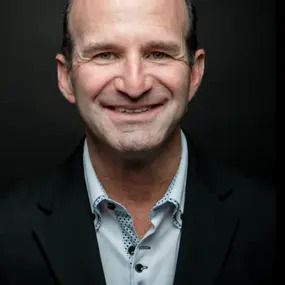
Co-Founder/ Convergence Collective/ Human-Centered AI Strategist
Dr. Eric Goodman is the author of the international #1 bestseller Business Before AI and the founder of Convergence Collective AI. He helps business owners put AI to work in ways that build a stronger company and a better life, while keeping the people who make the business run at the center.
Eric has spent his career leading organizations through major change. As a chief academic officer and business school dean, he led Western Governors University’s College of Business, one of the largest in the United States. He has launched online universities and, more than once, brought separate campuses together into one coherent system. He holds a PhD in Business Administration and is an NLP master practitioner, so his work draws on research and on a practical understanding of how people think, decide and change.
Today his firm pairs an AI business intelligence platform with hands-on training that gets teams using AI in their daily work. He also delivers keynotes on human-centered AI for leaders who want results they can see and measure. His message is simple: most AI problems are really leadership problems in disguise. Once leaders see that clearly, the path forward feels a lot more solid.
He also writes two LinkedIn newsletters: one that shares the book’s name, Business Before AI, and Confidence in Leadership. A Colorado native and lifelong skier, Eric has been married for 29 years and is the proud father of two daughters.