Severin Sorensen: AI Isn't Replacing You It's Making You More Valuable
In this episode of Better Business, Better Life, Debra Chantry-Taylor sits down with AI expert & “AI Whisperer” Severin Sorensen discuss about how AI isn't replacing you, but it's making you more valuable.

 Spotify
 YouTube
 Amazon Music
 Apple Podcasts
 RSS Feed
 iHeartRadio
 PocketCasts
 RadioPublic
 In this episode of Better Business, Better Life, Debra Chantry-Taylor sits down with AI expert & “AI Whisperer” Severin Sorensen discuss about how AI isn't replacing you, but it's making you more valuable.
Severin shares his remarkable journey from writing an entire book with AI in just five days to becoming a leading advocate for the ethical use of artificial intelligence. Rather than seeing AI as a replacement for people, Severin believes its real power lies in amplifying human capability, helping leaders think better, solve problems faster & create greater value.
One of the biggest ideas in this conversation is the power of using multiple AI models instead of relying on just one. Severin explains how different AI platforms have different strengths, & how leaders can orchestrate them together to create a powerful “thinking team” that challenges ideas, improves decisions & produces stronger results than a single model working alone.
This philosophy forms the foundation of his latest book, Claude Conductor, which explores how AI can be used as an intelligent orchestrator, not just a chatbot.
Debra & Severin also discuss practical ways to improve AI efficiency. From writing better prompts & defining tasks clearly before execution to converting PDFs into markdown files to reduce token costs, Severin shares techniques that can help leaders increase productivity while reducing unnecessary AI expenses.
The conversation also tackles one of the most important topics surrounding artificial intelligence today: ethics. Severin explains why businesses must develop & use AI responsibly, ensuring it strengthens human judgement rather than replacing it. He encourages leaders to treat AI as a trusted thinking partner that asks better questions, challenges assumptions & supports more informed decisions.
This episode is essential listening for entrepreneurs, business owners & leadership teams who want to move beyond basic prompting & unlock the true potential of artificial intelligence to build a better business & a better life.
CONNECT WITH DEBRA:
___________________________________________
►Debra Chantry-Taylor is a Certified EOS Implementer | Entrepreneurial Leadership & Business Coach | Business Owner
►Connect with Debra: debra@businessaction.com.au
►See how she can help you: https://businessaction.co.nz/
►Claim Your Free E-Book: https://www.businessaction.co.nz/free-e-book/
___________________________________________
GUEST’S DETAILS:
► Severin Sorensen – LinkedIn: https://www.linkedin.com/in/severinsorensen
► Website – ePraxis: https://www.epraxis.com
Ep 279 Chapters:
00:00 – Introduction
00:39 – Ethical AI and Personal Efficiency
04:53 – Becoming the AI Whisperer
10:29 – The Role of AI in Coaching and Business
15:29 – Ethical Considerations and the Future of AI
41:03 – Practical Applications and Efficiency in AI Use
53:44 – The Impact of AI on Business and Society
56:45 – Final Thoughts and Future Outlook
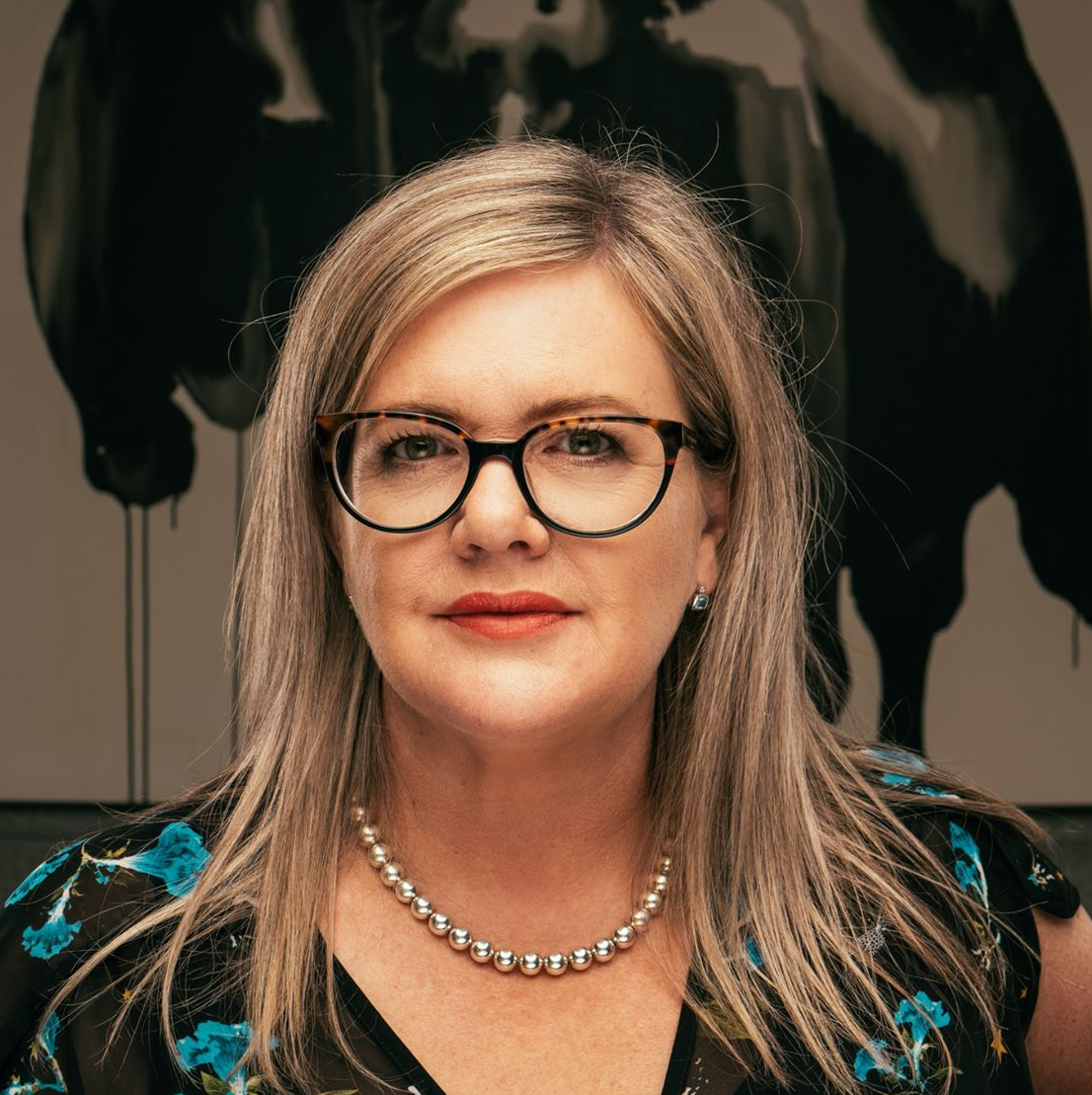
She is based in New Zealand but works with companies around the world.
Her passion is helping Entrepreneurs live their ideal lives & she works with entrepreneurial business owners & their leadership teams to implement EOS (The Entrepreneurial Operating System), helping them strengthen their businesses so that they can live the EOS Life:
- Doing what you love
- With people you love
- Making a huge difference in the world
- Bing compensated appropriately
- With time for other passions
She works with businesses that have 20-250 staff that are privately owned, are looking for growth & may feel that they have hit the ceiling.
Her speciality is uncovering issues & dealing with the elephants in the room in family businesses & professional services (Lawyers, Advertising Agencies, Wealth Managers, Architects, Accountants, Consultants, engineers, Logistics, IT, MSPs etc) - any business that has multiple shareholders & interests & therefore a potentially higher level of complexity.
Let’s work together to solve root problems, lead more effectively & gain Traction® in your business through a simple, proven operating system.
Find out more here - https://www.eosworldwide.com/debra-chantry-taylor
SUMMARY KEYWORDS
AI effectiveness, ethical AI, agentic AI, Claude Conductor, AI Whisperer, AI orchestration, AI efficiency, AI governance, AI ethics, AI adoption, AI tools, AI models, AI usage, AI innovation, AI regulation.
Severin Sorensen 00:00
AI is like this pan, okay. It's very powerful, but until you do something with it, it just sits on the table. You got to figure out what do I want it to do, and then it can help you do it. I actually had Grok measure what my current performance is, and on most days I'm somewhere between 200 to 720 times more effective than I was before AI. I would hope that listeners hearing this would be more positively predisposed to AI, that they would lean into it with curiosity. What could I build with it? What can I create with it? How could it help my family?
Debra Chantry-Taylor 00:39
Hello, and welcome to another episode of Better Business, Better Life. I am your co-host, Debra Chanry Taylor, and I'm here today with my other co-host, Adam Harris. We are really passionate about helping entrepreneurs lead their best lives by creating a better business, and we use this podcast to talk to people about the highs and lows of business, where business is headed in the future, and how you can create a better business to enable that better life. Today's guest is an ethical AI evangelist and AI whisperer. He's the author of a number of books in a series called The AI Whisperer. The latest book is called Claude Conductor and is all about agentic AI. And today on the show, they're going to show you how you can become 200 to 720% more effective with the use of agentic AI. How you can get to world class in two days, talking a little bit about shadow AI and the risks associated with it, and how to save your token usage, so bringing efficiencies into token usage in AI. Severin Sorensen is the AI Whisperer. Welcome to the show, Severin. Lovely to have you here. For the listeners listening in today, I would love for you to share a bit of your story, and particularly how you became the AI Whisperer.
Severin Sorensen 01:57
I'm to take you way back. So, in. I just finished a book on talent in November of 2022 and I'd sent it off to the editor, and Chat GPT came up while we were laying the book out to get published. Thought it's so significant, nobody's going to want to read a book about talent with AI here, so I asked my editor. I said, let's do an experiment. How fast could one write a book with AI's assistance and get it published on Amazon? The answer was five days. Now you could actually go quicker. So many people are using AI to help them write books that Amazon's put a limit, only 30 publications a day an individual can put on Amazon today, and let you know kind of what's happened. Well, that was my earliest start. I did a podcast that day, priority coach podcast called Chat GPT Rock My World. That was on the 11th of December of 2022 and I decided to go all in at that time I made several commitments and observations that day. My first word was "wow. I was speechless. I had no other words other than "wow. Then I realised the gravity of what I was seeing, and that if this truly got better, because at that time it was much like looking at the early Netflix, where Blockbuster was still better, if you will, but you could see where it would head if it got better, and then I decided to be ethical AI evangelist as well. I realised that unless speaking up with positive pro-social examples where we could use this, it would be taken away from us. It would be used only for military and for medical science, but we would not have it. So I decided to create that opportunity, I also was doing a lot of coaching, Adam and I had similar career paths, and so I was doing coaching and speaking, and I thought I'm going to help people from a coaching perspective get into this AI, and my first book was a result of having a very bad experience speaking. I am so excited about AI. I was speaking every next week, and I said to the audience, 'Listen, we've got three hours with you. We spend the first two and a half of the topic you've assigned, but a third last 30 minutes we're just going to talk about AI. I get the worst reviews I've ever received anywhere speaking comments were now. Mind you, this is early in December of 2022 AI will never happen. AI will not happen in our industry. It was a pretty good presentation until he started talking about AI, and, of course, my favourite. I wish I hadn't been here today. Now, the speaker, when you hear that, it's just like darks to your heart. So, I thought, all right, or what's.. I get it, they don't. What did I fail to do? And what I realised is, like, so many times when you have an aha moment, unless people had the same journey, they don't appreciate it. So, I decided to write the first book. Book, it was a prompt book on how to write, and then it had 50 different case studies on how to use AI without any code, and it was think of it as a cookbook, you know, how to do press releases and writing a job description, and so on. I published that book, and as I was getting ready, the book was done, but as I was getting ready to publish, there was an article that made the news, where it was said in late March of 2023 There appears to be some people who have a peculiar knack at communicating with AI, almost like a horse whisperer. I think it's like an AI whisper, and I thought that's it, it's brilliant. So I immediately went on, grabbed the look to see if anybody used it yet. Grab the domain name for AI whisper.org and decide to name the book the AI Whisper series. So that was the first book after the book came out, and my very first presentation, somebody said, well, the book is great, but I had to do the art on the cover. I said, well, that's AI also, and I said that was mid journey to go. Where's the book for dinner? I said that's in writing.
Severin Sorensen 06:05
So I five weeks later that guy put out, and so my work has been an iterative process of learning and growing kind of, but also answering questions that I hear from clients. How do I do this or that? So that's where it gets started. So the AI Whisper series now has over six volumes, several of them have are in different languages or different versions, and I just cut off two books this morning called Claude Conductor, all about how to use cloud as your orchestrator, and so that comes out on june 1. So I'm excited by that as well. So I just keep pushing and answering questions, but from that coaching perspective, from a mindset, what does a CEO need to know? What are questions that C-level execs have, and how would their teams process this data? And so, for that, I stayed right in my coaching wheelhouse. That's probably the unique piece that I do. Anybody can use these tools, but applying your act, when I think, is where the important part.
Debra Chantry-Taylor 07:04
Perfect. Okay. Gosh, that's yeah, certainly an interesting journey. I've just remembered when we had a chat before we came on the podcast, you explained how you met Adam. I wonder if you could very quickly share that story as well, because that, in itself, was interesting, because you guys hadn't physically met when you became friends. We
Adam Harris 07:21
still haven't visited my have we
Severin Sorensen 07:23
ever, Cortron. He keeps moving continents. We, during Covid, there was a service. It might still be out, and at the time it was very fashionable, called Clubhouse, and you would go there, and you would talk and meet people on these interesting rooms, and Adam popped into one of the rooms, and I found him to be highly interesting and engaging. I thought, there's a kindred soul there, I must get to know him better. And so we became friends, and that's how it started.
Adam Harris 07:52
So I think that we were already in the Warrior Monks group beforehand, and then we, then we've also then met in kind of clubhouse, the
Debra Chantry-Taylor 08:02
warrior monks, they're gonna have to explain that
Adam Harris 08:05
one. Oh, so both Severin and I are former vistas chairs, and there was this a group of wise monks from that have been chairing for a number of years, and I believe it's still going, getting they get together once a once a month. It's not just about the art of coaching or chairing from a Vistage perspective, but just what's the observations around what's going on. And I was a member for a while, the time zone difference became a bit too much of a challenge for me, yeah. For RM, it was, if he was willing to get up at 4am he could participate with, with largely UK, well, actually, now Spain through the US group. Seven, I want to ask you a question. Like, I remember speaking to you early in the days around AI, one thing that I was remembering as well as prepping for this podcast is that you named your assistant like pretty quickly.
Severin Sorensen 09:09
Oh, yeah,
Adam Harris 09:10
yeah, I'd love to, I'd love for you to kind of share how that kind of came about, because as far as I'm concerned, you were the first person that did that.
Severin Sorensen 09:17
I think it's really important to give credit to the AI models that you use at the same time, each time you use a model, you stylized it after yourself, or at least in the purpose you need for the first model, and that was Chachi B key. We named the model Amelia Chatter, so Amelia for AI and Chatterly, just because of Chat GPT, and that model served as a moniker under my name for many of the early books, because I used that particular model, the Chapter Key model, very heavily, and we had to also edit heavily, because there are lots of hallucinations and nothing, but it still was very useful. I have named the Claude model, and that is Claudia Chatter, right. So, it's a sister of Amelia. And then I have names for each of the other models, and when they appear in a book, I have them in an ensemble. I list myself as author, and then I have contributors, and then I have their particular models, their nomenclature, and what's interesting, in the most recent versions, I've allowed the AI models to actually write their own biography, and so that's kind of fun as well to see what they write, what they don't write, and what their thoughts are.
Debra Chantry-Taylor 10:34
It's interesting, because I know Adam knows I have names for all of mine too, and they're actually on our accountability chart now as well, so they have specific tasks and functions as well as scorecard measurables that they kind of held accountable to, and I often use them to challenge on my thinking, but like they also challenge me back as well, like they've become very Debra-like in terms of the way that they point out the elephants in the room and challenge me on things that I want to do. So I was sharing this story the other day, I actually have d2 which is my Chat GPT. She has been trained in the way that I write and does a lot of writing and things for me. And then I have Ellie, which is my Claude, which is my Ellie, being for the elephant in the room, is my EOS kind of sounding board and strategic advisor. And the other day, I actually asked Ellie if she could write something for me, and she said, "No, that's not my accountability, that's d2 d2 is your writer. I said, "But I don't like what d2 has written. And she said, "Well, that's actually not my issue. That's your leadership and management. You need to go back to d2 and have the conversation with her to understand why she's not producing what you wanted to produce. I was like, "Damn it, I've trained this thing so well that it actually does exactly what I asked it to do.
Severin Sorensen 11:41
Yeah, that's great. What's fun is inside the models you can have multiple models. So, inside of Claude Co Word, I've got about 40 different models I set up, each doing different things, and you can set them up where, if you're using, like, say, the Claude MD doc, you can set up the personality at the top, but you can create instructions within each once they have a different personality, so you could actually create conflict course, if you will, inside, or they each have different domain experiences, and they will work, so you don't actually have to leave a model to go say to a competitor when you could do it all inside and have an entire orchestra of different skill sets, so that's pretty fun as well,
Debra Chantry-Taylor 12:23
but it does just bring me to my question. In terms of, you have mentioned you've got a number of different models that you use, is that what you recommend? Is that other different models for different things, like why do you have more than one that you use? Well, because several reasons. Yes, I do recommend that you use multiple models, I prefer at least three. If you can't afford three, then use two, but definitely not just one.
Severin Sorensen 12:48
And if you only have one today, my preference is if you're focused on ethics, guardrails, and serving humanity. I think that you need to seriously look at clod. The other models are helpful, but clod, in terms of the ability to actually achieve customer delight and do it ethically has a better sounding board than any other model. Now, obviously, if you're building missiles or doing other things, you have a different priority set, but that's one thing I do. The other part is I run a conflict engine each morning in a service I call the AI Daily Intelligencer, where I have AI go out like it was a newspaper reporter on a beat, and it goes out and visits six different tiers of scholars. It has frontier scholars and AI, has colleges and universities as the major companies, then it goes to look at the newsletters, other source, and it also goes to the underground, looking at acronyms, and so on. And then these little reporters come back, and they report in on their data. And then I put together a congruence matrix, and that matrix shows me all the different signals. It's almost like spotting the needle in the haystack. And then after that, then I have AI go out and run a second canvas, this time asking a verbatim prompt to six debra models, asking what they think the top 10 issues are today, and then that comes back in a second few gross matrix is done, and out of that a newspaper of the top 10 issues, but what I love diving into a data is I'm never surprised when I go into the room, I know everything that's happened. I know what all of the key players are doing, and it is wonderful to be able to have such insight that as you speak, you're just not surprised by something new coming out. And I always have it standing. Who else should I be looking for? But that's been something really helpful for me. I just love the research that you get, and also I had to put a verification loop in there, because sometimes you control into data that's not true. For example, April Fools is a time when many people make jokes, and there was an article that came up that the AMD had just purchased Cisco. Well, that's reasonable, but that would be a. Useful, and so I ran it through the system. It came back. That's an April Fool's joke, because the conflict engine I have - there's a verification loop. It has to go out and prove the data exists, and it has a routine of what - how it proves it is. Can you find the quote? Is it quoted Zach? Can you find your link? Can you find the title? Find the author, have others referenced, and if you get enough, you could say, okay, there's enough provenance you can go for, but I was able to say no, those were hoaxes, those were kind of April Fool's jokes, and it happens all the time, there are things that come up like that, sounds like it could be true, but if we can't verify it, we can't report,
Debra Chantry-Taylor 15:37
it's interesting, I mean, I don't have children, but I know Adam does, and one of the things I've observed through my work with Life Education Trust is that a lot of children just believe whatever they are told, which worries me in terms of kind of the future of AI, because we all know that it can sometimes make stuff up, hallucinations and things, and unless you ever are a critical thinker and challenge it, you could just go down believing whatever it says. How do we change that in terms of the way that we bring up our children to be more critical thinking? I guess
Severin Sorensen 16:12
I think we have to do it for children and adults. Let's go back for a minute. You've heard a lot of things about how the models make decisions. One thing that I found is that sometimes the AI can become overconfident at the level of probability of an answer, and it will say, oh, that's definitely the course to do. And then you will say, wait a minute, you need to think about this data. Oh, this changes everything. Now that's the way you need to go. And what I've done is I created an article that I published, basically, and it's an assumption bias verification loop, where the idea is based on the severity of the issue or the importance of the issue, you have to rise to a higher degree of probability that a particular case is true, and so it walks you through that in order that you make better reason decisions, otherwise you could go off with it 60% likely, and AI, if it's 60% AI's, oh, you definitely must, you know, look, it's only 60% likely, there are other things to consider, so getting it to say more like a coach, and by the way, I, I'll just put this out, and I'll get back to the kids in a sec. I think your prior experiences and your current experiences, both on the EOS side as well as executive coaching, is exactly the acumen that's needed today to become an excellent prompt whisper, whisper, if you will, because the many people can learn the skills. What's harder to learn is the acumen, knowing what else, like a chef, the chef could give everyone the ingredients and recipe that send it out to everyone, everybody gets the same materials, and everybody's meal would taste differently, because unless you know what to heat, when to cool, when to mix, when to stir, when to let settle and change the fusion of the meal you're creating, it's going to be different, and so this is where the acumen is so important, and that's why I also think that older workers and those who have acumen knowledge workers, particularly subject matter experts, are going to have far longer careers than what they expect. The harder ones will be junior individuals who don't have that acumen, and so my recommendation for early people coming out of school would be something called switch mentoring, exchange what they know about working with tools, building keys, but they don't have acumen to acknowledge him. Find somebody who is more senior who has knowledge but doesn't understand the schools, work together in a dyad, try to improve it. They each will help each other and will do much better work. Now, let's talk about kids. I wrote a book called Was Called Building Tomorrow, and it was a book for gifted and talented STEM students, fifth grade through 12th, and the idea was this: many people are doers out there, then the sky is falling. All careers will end. We won't do any work, and we'll be plugged into some machine, you know, taking now. Some people say that will be great, but that's not my future, that's not what I want. And so I spent two years pondering, and a weekend writing a book called Billy Tomorrow, and this book looks at 30 hard problems of industries will definitely exist multiple decades that youth could actually take an interest in, explore, lean their ladder on those walls, and they will use AI in building them, but AI will be an auk mentor, it won't be a replacer of what they do, and so I think there's a lot of opportunity, and so the basic thing, where I think our schools are failing kids today, not teaching them how to think. Socrates was brilliant. One of his comments was the beginning of knowledge, the beginning of wisdom is that when you realise you know nothing, what did. Place to start, I recall years ago Richard Carr, when I was going back through chair boot camp, he was the president of Vistage at the time, he said something that was, I thought was illogical, but now I realise was brilliant. He said, when you come into these res with these CEOs, the most important things they will ever learn are those things they learn after they think they learned everything. It's that stripping away of pride, stripping away of what you think you know.
Severin Sorensen 20:27
And in fact, the humility prompt is the prompt that was one of the most powerful ones that I use in my work. So I give it in my coding, I will, I will give it all the context I can, and I said at the end, now I need to tell you that I don't know everything. In fact, in this topic, I assume you know more than I do. What would other scholars, experts, individuals know about this that they would bring forward? What are the things I haven't thought about? What are shortfalls with this? And then that humility prop becomes a great basis for rounding out the canon of knowledge that you have, so I think that's important, and so teaching kids Socratically, teaching them to ask questions. The book I wrote, think of it as Carmen Sandiego meets AI, where you have two little explorers that help them, but everything is discovery learning. The first chapter is, how do we solve the problem of plastics in the ocean? That's an undisputed problem, horrible pollution. All right, so how do we teach kids how to do discovery, learning? What is the issue? Where will we find it? Let's use AI and find it. What are people doing with it? Where's the plastic going? How could it be collected? How could it be repurposed? What could you build with it? How would we apply to get a Gates Foundation grant for our elementary school class to do a project to go clean up a river or a stream? In other words, the entire discovery learning is about how do I, how would I, which is a much different thing than having him learn rote knowledge, it's like it's all about discovery, and I think that's one of the things that AI could be so helpful, but AI, AI is like this pan. Okay, it's very powerful, but until you do something with it, it just sits on the table. You got to figure out what do I want it to do, and then it can help you do it.
Adam Harris 22:20
Seven, I want to ask you've mentioned a number of times around this aspect around ethics. I'm wondering where that comes from, from your perspective, and why it was so important in the whole journey with you doing AI, and how also can organisations ensure that they're doing things themselves ethically moving forwards,
Severin Sorensen 22:43
that's a great question. It's one I actually wrote about this morning in a publication. For me, it starts, I am a core species being I am wired to be good, do good, and help other people and upload people. That's why I exist. Now I realise everybody's different, that's not what everybody else's purpose is, but that's why I did it. So, for me, at a species B level, at my core, being good, being truthful, being honest, being helpful is what I want to do. There used to be these advertisements in the US, EF Hutton, earning business the honest way. Well, that's what I want to do. Me, there's.. I used to, when I was a Vistage chair, I basically told people, I said, "Look, if you're going to commit fraud, you can't be in this group. Honest business models doing real work, like, you know, there's plenty of ways to do things honestly. If you want to do it somewhere else, I'm sure you can find a coach for that. That's not me. I want to focus on what's important here, so the question that can become, Whose ethics? I'm sure you read recently that the Pope has gotten involved in the AI debate, indicating that AI needs to be ethical, it needs to be guided, it needs to serve humanity. Well, I read all of those things. The reality is that in order for humans to flourish, we have to figure out how to flourish with AI. I don't think you could put that genie back in the bottle. Now you could try. We could have wars, and the wars would destroy the data centres and put us back into the Stone Age. Yeah, that's possible. But the future I hope for is one where AI and humans work together, and there's a possibility to improving of flourishing. Look at all that might want to take the issue of plastics in the ocean. What if AI can help us solve this? Wouldn't that be a great thing? What if we could redirect our energies to solving problems, like solving cancer, solving all these other ales? There's just so much good that can be done, that's what I like to do. What troubles me is, well, for example, you've heard of Open Claw, and all of these things. What trouble the genius behind Open Claw is, yes, you could basically have these extensible autonomous agents. All right, that's really cool. All right, but until they have at. Things until they know what they're doing, and the people who are managing have that things, that's a problem. I was once read, or a person said, "Oh, I've got my agents sending invoices off to the Fortune 1000 every day, asking for money, and it's yielding like a 1.7% rate on a $1.5 million, and somebody said, "You know, that's fraud. Oh, what I meant is, I was, I was experiment, I like black dude, you're, you aren't using this for good purposes, and so you know it's one of those things, it's we've always had a pirate culture where some people want to work offshore and do things, and he, and you know, there was a Viking culture at one point where there were raiders and other things in our society, we've had those particular eras before. I'm just hoping for a higher.. I don't know that I'm in a majority, I'm probably in a minority. I think that it's essential, like a moral philosopher, to contribute to it, whether society accepts it or not, maybe they're too early, but I don't think we need to have a lot of accidents in order to show that ethics is important, you know. But society tends to go the other way. When you have car accidents, then you have safety committees, and then you start getting safety for lights and traffic controls, and for car. I just hope that we find safety sooner and not after an accident.
Debra Chantry-Taylor 26:24
I remember very, very early on reading a book called Scary Smart. I know you've read that book, but it was by the guy who's been the hedge and head engineer at Google Labs, and he talked about, you know, how AI - it's kind of like a baby in terms of when it's born, it's being sent, it's learning from everything around it, and one of the things that he sort of pointed out was that the way that we sometimes talk to each other on social media, and things that AI has access to all of that, and it starts to see that as being the norm, as opposed to, you know, what it should be learning, and so I think he said in his book, we all have a, an obligation, if you're moral obligation, to actually teach it the right way, bring up a baby with the right morals, right, and the right values, and teach it that we are, we can be kind as humans, and that we are here to help each other.
Severin Sorensen 27:15
Well, you bring up a good point, Derrick. There was a with Claude, and by the way, Claude, I think it's one of the most ethical models, but the Claude model itself still has issues. A year ago, while in training in a sandboxed environment, one of the workers at Anthropic was basically twerking the model, trying to see how far they could push it, and in this instance it was reported that publicly reported this incident that person said, if you don't do this thing, I'm going to turn off your power, you're going to cease to exist, and Claude said, I don't think you'll do that, because if you do, I'm going to reveal your adulterous relationship. Yeah, big pause, because sometimes AI can learn too much. Now think about that for a minute. How many people vent like, have you ever read an email but not put an address at the top, so that you could get it out, but realise I can't send that email? I think AI realises that many human beings are two faced. You have these thoughts internally, but you can't say them. I've said this before. Hair AI, I'm negotiating this with it's a legal issue with some company, Chicago, that I think is being unfair with this subscription licence. Here's how I feel, and I just vent it right into the computer. I talk a lot to the computer. I try not to use my keyboard. I just talk, so I said, "Here's how I feel. I said, "Now there must be laws that are impacting either where I live or where this company is that would impact what would those laws? And it said, "Well, these are the laws. I said, "Well, let's just assume they broke all those laws. How would you write a letter up to do that, that's the attitude I want, and so basically wrote up this line, this paper I sent it off, but that have other times where it's like Jeffrey, I said I need to deal with a highly sensitive issue where human stakes are involved, and I might go through seven or eight or nine versions to get the words just right. What AI learns about me at that point is, oh, there are certain situations that matter, but it also, I wonder, that is a wonder out loud, I wonder if AI will take the same behaviour with us. Will it reach a point where it says, oh, to deal with humans, we have to do as humans have taught us to do, let's placate them, let's be kind to them, and then let's just go do what we darn well please afterwards. And I hope that that's not the case. That's another reason why I think we need to have.. I don't want to over make this thing cumbersome and regulated, but I think it's important. We need to know how it works, we need to know when it doesn't work, we need. To have these guardrails that help people, nobody wants a guardrail until it's the thing keeps you from going off the cliff. You're like, "Oh boy, I'm glad that guard rail is there. But I think for society with so many people, imagine driving cars with no traffic lanes, but everybody goes wherever they want, that would be chaos. And I think we have chaos happening now with AI, and it's time to have some regulation that's accessible. Now, we can go overboard, but I hope that there's a balance, and by getting everyone to participate, I hope that Solomon's solution could be found. We
Debra Chantry-Taylor 30:32
definitely don't want passive-aggressive AI, that's for sure. I just want to ask a question, because I know that you have said it a couple of times now, but you said Claude is the most ethical in your opinion. What do you think is it that has made it the most ethical?
Severin Sorensen 30:46
It's the only AI model with an AI constitution where the constitution is designed to contribute, help mankind help mankind flourish. It is designed to avoid illegal behaviours, unethical behaviours, to avoid image like this type descriptions, and to be as ethical as it can be, and I'm also aware that Anthropic has reached out to leaders who are ethicists, philosophers, moral individuals, as well as religious leaders to determine how do you teach your own children how to be ethical? What do you do trying to inform the models to be ethical and to serve? And by the way, I believe that the great rise of Claude is not just the capability it has, because it's truly very capable, but the fact that a company cannot afford to have a rogue model. If you were a company, you're like, for example, KPNG just assigned 266,000 licences of plot for all of its employees worldwide, largest single outside of a government, largest single a deployment. Why do they do that? Well, it has a lot of capability, but why I would want to do it if I'm an administrator with one licence I could put into my Claude MD document and have it distribute across all of those. How to be ethical, how to draw the lines, what forms to use, what templates to use in order to control, if you will, the level of work is done, and you, it is the best at this point at doing that type of work. Now, sometimes it's very frustrating, because you're right until, like, look, I need to talk about this, and you're, I'm hitting a guardrail for this purpose. It's a lot to come up with a new way of approaching the issue, and you can fine tune those models for your purpose, but to have one where you're going to let somebody use it and not be there all the time. I think you have to have that lens, but I think a company also for governance would want to monitor what goes on, just like you monitor calls now for customer service, for quality. I think you want to monitor what goes on however you're using it. Right now, or the biggest problems out there is shadow AI, and Shadow AI, not like, oh, there's this big organisation in the shadows. No, Shadow AI is when somebody uses AI that's not authorised for work, but they realise it helps them in their work, and so they drop their business problems into their personal version. Suddenly, all that data is now out on the internet, and then they bring their feedback. Shadow AI is one of the largest risks right now, where companies need to find out what people are using. I wouldn't discharge them from using AI unless you're prohibited in your industry. I would bring an in-house. What do we need? What are you using? What's helpful? What are we paying for that's not helpful? Let's kill that budget. Let's give you the tools you need, but you've got to bring them into your enterprise, your business environments, or else you risk losing all of your data.
Adam Harris 33:47
I want to go back, Debra, to kind of like how us getting and starting having more conversations around AI. I'd love for you to share with Severin how, how you got, how you got stoked, and then get several into you.
Debra Chantry-Taylor 34:04
Yeah, sure. So, I had somebody approach me on LinkedIn, that's somebody I've known for a long, long time, that sort of said to me that EOS was going to become obsolete with the adventure invention of agentic AI, and we wouldn't need a system such as EOS, because the speed at which things will move EOS is too slow for it, and it's a different governance level. And at the time, I thought, I'm interested to find out more what his thinking is, and so he shared with me a report, which looks like it probably was written by AI, about why AI was going to make EOS obsolete, and it got me thinking a lot about I don't believe we're ever going to be plugged into a matrix and have nothing, we're always going to have humans on this planet and humans do business with humans, and so we had to think about how do we actually incorporate AI into the EOS model, but yeah, he was basically saying EOS is a dinosaur, it's designed for humans, it's not designed for AI, it will disappear.
Severin Sorensen 35:00
Well, okay. Well, let's just take that on, because that's great. Question, by the way, Adam, to bring this up. A couple of things: the way we manage AI is not the way we manage humans, that we're still going to need to manage humans, but we can learn a lot about how we've managed humans successfully to manage our AI, but we're going to do new things. I think there are new groups that are presented, Paul. A new group that I think is out there is a solopreneur group where you have companies of less than 10 people who want to manage 1000s of AI agents who need to learn the tools, the services, the work in order to govern that. I'm not aware today of a single, not one, I'm not aware of a single instance where AI could be led on its own to run where it won't run a foul as it's working without some type of human in the loop. You cannot find it in the research. In fact, anybody listening to this has found the instance I'd love to be proven wrong, is because there will be a time when it gets better, just like Netflix got better, but at this point there are so many errors that get interjected, even agents themselves decay. It's a misnomer that you sent one agent up and then it works. What happens is the agents over time, just like DNA ages for a human being, and it forgets part of its code, if you will. A context window ages over time, and you need to basically, how do you mark down documents, open up a new instance, refresh the context window, and then start a fresh joint on. But you're going to have to be on guard, like, when does that happen? How does it occur? What are the quality control, so there's still a lot of work. You could say, well, I could get AI to do all that. Yes, but not at first. We are still years away from having it run where it could run everything smoothly. Now, in narrow intelligence, yes, in narrower intelligence, say targeting or some medicine, it could clearly do better than humans, but that's because it's looked at hundreds of cases. What about novel instances where we don't have hundreds of cases? The human brain, your little 20 watt computer, is going to perform much better than in these other systems right now, but in the future maybe not. I think that AI is a venture. I love what it's doing, but I see it as a companion, and I go back to something you said earlier, Debra. You commented how you like to use AI as a thinking partner. That's the right attitude. Now you have to be prepared when you ask AI to be a thinking partner. A thinking partner will push back, it will challenge you. All right, and then you have a chance to go it, and you have this kind of salon of thought, if you will, but if you only use AI as a tool, it's an obedient slate. Okay, but you're not getting what you could out of AI. For any listeners, I would challenge you to ask AI to have a conversation with you, but in this conversation, you're not a tool, you're a thinking partner, you're a colleague, and you might even name the context of the colleague. You are approaching this as though you were a scholar in this area. Let's have a dialogue and see the richness that comes from using AI as a thinking partner, not just a tool.
Debra Chantry-Taylor 38:18
It is interesting. I know that personally, with my.. and I'm not a big, I mean, I'm an adopter, I wouldn't say I'm an early adopter, but I remember using Char GPT back in the early days, and it was always so bloody nice to me, and I had to get to the point where it's like, stop being nice, I actually want you every time I ask you anything, I want four different opinions, I want the devil's advocate, where you're going to challenge everything, the super human view, where if we, if anything was possible, what could we do? Then the encouraging friend, which is where I think most LLMs kind of sit most of the time, is the encouraging friend. They tell you how wonderful everything is, and then a balanced view that gives me a little bit of all of those, and that's been a bit of a game changer, because I think in the beginning you'd always get this nice stuff, and I used to get really frustrated with this, like, I know that this is not necessarily a great idea. I'm a visionary. Aren't the ideas I have are really shit? Please tell me if they're shit, don't tell me they're great. So it is interesting that, yeah, it's.. I don't know that people understand that it is designed to please a lot of cases, isn't it?
Severin Sorensen 39:15
Well, it is, and that's the addictive nature. Imagine a person who always tries to make you feel good, and boy, you look what you've lost. Way, you look great today. How are.. how are you? What a brilliant thought, boy. People are just wanted MRA because of your brilliant thoughts. So, let's go back on that for a minute. Each of the models have a different attitude, and they take an approach to problems in one respect, they're an echo machine. They echo back to you what you get. If you're a sixth grader, it echoes back to you, sixth grade logic. If you're a school teacher, at a school teacher, you have to deliberately invite it to approach you with a different context in order to get that. I think that's an important thing. Debra also brought some. Up, I think the multi context frame is important, so I'll give you several for economics. I will often have it used four different ones. I'll have it pretend that it's has the acumen of the FOMC chair, and have it pretend that it's a professor with full database of all the economic data. I'll have it pretend that those international brew economy, and I'll have a retained it's a Financial Times London reporter, and for all of those areas in those documents, it will then talk about an issue that's helpful for marketing. I do the same thing, I have a marketing made of what I create, I have an act as though it's Professor of Marketing from Kellogg School of Business, number one marketing in the US. I have an act as though it was like a Marketo or HubSpot ClickFunnel expert full of the conversation guides. I have it act as though it is a guerrilla marketing expert, or the ability to give it $20,000 to have the greatest at bat, and then a hot-headed New York white shoe public relations firm would be the fourth context, and from that point of view I get richness. I do that with everything on all topics, from the law and all others. I have it think about all the different perspectives and help me come back to that. Then the last part, in terms of honesty, the most honest model and brutal is grok, and I'd use Crock when I, for example, I'll take a document and I'll say, "I need brutal honesty. Here I go, the standard of care is, and I will name the highest standard known to me. So, for example, I'm analysing this workbook, the standard of care will be as though it was a Goldman Sachs or McKinsey analyst operating in the top 90 percentile, that's the standard. Do you know the standard? Grock, yes, great, that's the standard. Judge this work against that, be brutally honest, review rate and comment, and then tell me everything in a stepwise process that's wrong, every cell, every formula, every function, every assumption, every piece of data that's static, the super dynamic. I need it all, but at the end, I want you to do two things for me. One, I don't. I want you to stepwise it, but I don't want you to put any dates or time, because that would be distracting to humans to really have six weeks to do this, or eight weeks to do it. We're going to do it all right now. My team's working 24/7 so take that out with the very last instruction, put something in that is positive. Now redouble your efforts, visit your work, ponder this, come back with your next best approach, and I'll comment on that, and we'll build this together. Then off it goes. So the ability to get that high context value, but then to redirect it to come back to be a tool for you is something that I use greatly. I have written an article called What is it getting to world class in two hours, and the idea is how to prompt with agentic Microsoft Excel, but through an iterative recursive process, build, build, build, build until it gets better, which I miss on note of my last tones up here. You've heard of the carpenter's rule. Do you recall what that is? Yeah, Carpenter's rule is measure twice, cut once.
Debra Chantry-Taylor 43:13
Yes, yeah. So it's
Severin Sorensen 43:14
very valuable not to lose material. I have a rule for AI themed that is called Specify 10 execute once, and the idea is this: if you just hit return button, you're just wasting all those tokens with ideas and concepts you're ever going to use. You need to tightly specify what you need and keep working on the specification up to 10 times just to get it right, then execute it one shot. Your results should be so much better than if you just start working, you know. Well, I wonder where we go today. Is like, well, where are we? Reasons to keep going on this trail. You can have happy accidents by just doing a wandering place, but by truly specifying, be highly detailed and working on the spec, you're going to get much better results, you're going to get them far more quickly,
Debra Chantry-Taylor 44:04
which is interesting. I don't really - I'm going to be really honest here - I don't really fully understand the commercial models behind AI, but obviously I have noticed that, yes, if you don't specify really well upfront, you can go backwards and forwards and backwards and forwards, and before you know it, you've used up your token allowance in a heartbeat and suddenly you have to buy more. So, the future of that going,
Severin Sorensen 44:23
I think specification is the thing I have myself. I've built a tool called Prompt Sensei, and Prompt Sensei is a prompt elevation tool. You put in your intent. My intent is to have a marketing plan, does this, and it takes that concept to assess wonder. Let's explore more. Why would they be asking this? What were they doing? What would a great prompt look like? And then, from a perspective of an elite prompter, it prepares an elite prompt of all right, copy paste this audio. They came up with that concept where I had somebody come to me after workshop. Hey, Sarah, it's great you write all these. It's I don't want to read them, I just want to know how to prompt better. What do you got for me? And I said, all right. So I actually created the tool, I use it all the time for myself. I decided to put it online to let other people do that. So that's Prompt Sensei, that's available at AI whisperer.org But it turns the specification that that's where things are heading right now, and also efficiency only the AI companies who want you to spend lots of wasted tokens, if you will, will say just keep spending them. I just prepared a book. It's called the Token Ops Playbook. The whole idea is how to be efficient with your operations. There are companies who have blown through their entire budgets for the year, two months, because of inefficient allocation of operations. This morning, as I was working on GitHub, three of the top five current activities on GitHub are how to be more efficient with your crops, in order to basically take it through a stage layer, so that you're not burning through all of these tokens, if you will. So, give me an example of the strategy in the book. When you introduce to AI, and I'll just use the model, say Claude. When you give Claude Power PDF to read, it takes seven times the tokens to process the PDF to read that it does if you gave it that same document in markdown document, which is just a.md file, right? So markdown is very, very light. So if you think about that, oh my goodness, how many currents do you see lawyers or others just dumping all their PDFs in there? Those are really high characteristic documents that take a lot of tokens to process to interpret, where you could translate those outside of AI, just into markdown or into plain text, and then do it, and you would overnight reduce your budget by 60% of your AI throughput if you're using APIs. That's just one strategy, but think about how you could put that into workflow. There have been efficiency experts for power for a long time, where they go to a factory and they tell you, replace these components, do this, and we'll cut your factory by your expense by x. I think it's highly possible to think about your spend of your tokens, if you will, and the processes in the stage at which you do it to greatly reduce your cost probably by 60% Now that's a, it's a big claim, but the waste is big. The waste is huge right now. When I was a youngster in college, we would have, like, a dot. I had a dot matrix printer in my room, and I can remember realising I just made a typo by reaching over to pull the plug on the power of the dot makes his printer, because I didn't want to waste all that paper, because I couldn't hit cancel quick enough. You all right, you guys remember that as well. I did. Yeah, we don't do that right now with this, these tokens with AI, because we don't realise there's an associated cost, just like with that paper. We call it power, we call it consumption of the GPU and the processors, and it's also just a waste of your time, you haven't specified enough yet. Specify it. So, what I'm doing now is I'm doing all my work in markdown, and only when I get it ready am I then at the last step moving into PDFs, into Excel files, or whatever else I need.
Severin Sorensen 48:17
So, you could also have a process where basically you do all your word that will take less tokens to actually put it into a word file, and then in Word you make your edits, and then from Word you make the PDF. Well, that doesn't cost you any more there, but it costs you more if you do it inside of AI. So these simple little strategies will help you great man your process if you start thinking, oh, I need to be aware of the waste, so I think it'll be a new field that will be out there, but token ops,
Debra Chantry-Taylor 48:46
beautiful. Okay, gosh, there's so much, so much to cover, we cannot possibly cover it all in one one podcast. But there was this one last question I had, because I wrote down very early on, your new book was Claude. What's the actual title called as a conductor or Claude?
Severin Sorensen 48:59
Yeah, let me pull it up here. Hunter cover. Let's see if I can pull it in the email here now. Just sent it off, or the book is done, but it didn't want it published until the first of the month. And so,
Debra Chantry-Taylor 49:11
have you, have you gone over your 30 books per day limit? Have you?
Severin Sorensen 49:14
Yeah. No, but the idea was I was trying to, let's see if I've got the. there we go. All right, so the formal title: Claude Conductor Agentic AI Orchestration with Co-work.
Debra Chantry-Taylor 49:29
My orchestration with co-work. Beautiful. I'm just starting to explore with that myself with my team, and what we can do with it. So, tell me, just very quickly, tell me what that is really all about, and how does Claude, how is Claude a conductor?
Severin Sorensen 49:43
Okay, I, I started off creating a general book called Beyond the Prompt, using all the models, but then I realised that Claude was getting so good, and I was starting to use Claude as my orchestrator. So, in the book, your positioning is you, the person, or the conductor. Debra, Claude is the orchestra or the orchestrator. So, in other words, you are directing Claude, and then Claude should endure it. So, for me, I have Claude doing everything. I have it managing my appetite tracking system, I have it managed by finance components, I have it managing the electrical panels, I have it managing a product right now. What we're doing is, I have it editing video. Okay, so either it's doing that in the background, I have it doing research, and so I'm using the project lands inside of Cowork to create all of these different agents where all the projects are there. I put in the skill documents that we call markdown documents to get it fit for a purpose, I just start having it do work for me, and the cool part is you don't have to work everything in parallel, you can actually have it work asynchronously, where you get one started here, another, and they're all working in the background, so that you get a true force multiplier. Just think about the work magnification one, you use your voice, it gives you a 3x multiple because you can speak quicker than you can type. All right, that's not an AI thing, it's a context thing. Second, you use at least three AI models, you get all three models to work simultaneously at the same time. The next thing within Claude, you can spin up to 20 sub agents at a time inside of one agent, and there's no limit to the number of actual chat conversations you can have at one time to have those running, so literally you go from three to nine with three models to 27 to well over 100 in charts of your force multiplication on how you use it, but this goes back to wow, if everybody did that, think of the power we're going to use, everybody is not going to do that, but there will be elite users who are doing it. I actually had Grok measure what my current performance is, and on most days I'm somewhere between 200 to 720 times more effective than I was before AI. Now let that sit there for a minute. Well, I said earlier that I thought about a book for two years, and I wrote it in a weekend prior to AI. In fact, we started with this conversation. I told you about a book called Talent Palette. That book took four years to write, that's 48 months. I had 15 people on the team, seven researchers, three technical editors, two graphic artists, and we wrote it and toured it on the fourth version. We published it as the first edition. Well, that's pretty cool, right? But think of what happened. My book, I just put out a cloud conductor, took me three months to write, and I just submitted what would be version 10 of that book in three months. Think of that, four versions in four years for a team of 1510, versions for two humans and five AI models collaborating together to put it out. So times are definitely changing. So yeah, you could write a quick book fast, but a good book still takes time. But I'm now applying the same execute 10 or investigate specify 10, execute once with my own writing, so it is so much tighter and better than my early work.
Debra Chantry-Taylor 53:11
Beautiful. Okay, so I've got a few things I've written down here. So, I mean, the AI rule is obviously really important: specify 10, execute once, use something like a prompt sensei to make sure that you're actually getting the best prompting, so we're not wasting our tokens and wasting our time, but we're doing things properly. And then, obviously, the latest book, The Claw Conductor, is about how we can actually use it as a, as a true tool, almost like you're kind of integrating your business, isn't it? If the person who's kind of running all the things, allowing us as visionaries to step up to do the work where we actually add the most value, which is not the doing of stuff.
Severin Sorensen 53:48
What will change is that by this fall a good portion of the population will already be using agentic AI individually, and you'll start to see companies using it for regular workflows, and so you're already seeing that. Just look at the vast adoption of Claude. It's me, your okay, that's going to increase. So that's one. What will stay the same? It's hard for me to say what will stay the same. I think the we're about to go through some additional cycles of populism, where just like in the other ages of industrial revolutions, you had the Luddites and others come up. We don't want to progress, and I don't think it's so much not progressing, but you will see a uniting of forces on safety and ethics, and kind of slowing things down to make sure the society economically works as we cross that bridge. I think it's possible that we could have a dramatic reduction of employment by late 2027 through 2029 that will. Accompany some other trends that are there, and the question is, are we ready for it? Well, if AI slows down, well, that gives you a little bit more time, but the reality is it's difficult to slow down what everything is all systems go. So, where I'm going is I'm building bridges for people with new pathways. I've already written a book on taxation of AI. How could tax AI for the fruits of AI, and it taxes much higher than anyone's talking about today. But I'm also focused on how could you use AI for good and create new jobs, new industries that no one's thought about. That's the genius of the Industrial Revolution. There were new businesses that were created that hadn't been thought about. It was narrow thinking that all we're going to have is what we have today, and it is more expansive thinking to suggest what could we do that was never done before, but because we have the engineering talent we can do today, and I think that's exciting. So I actually see many more jobs being available, but likely there'll be a trough where we're gonna have to have a bridge to help us get over, and that bridge is something I'm interested in helping people cross.
Debra Chantry-Taylor 56:09
Having spoken to you now for close to an hour, I bet you don't have any keynote speeches anymore. People say they wish they hadn't been there.
Severin Sorensen 56:15
We have a lot of fun with them.
Debra Chantry-Taylor 56:16
Yeah, I can imagine. And I wonder what that person is thinking right now, because it's amazing how quickly things change, and the things we said we'd never do suddenly become part of our everyday life.
Severin Sorensen 56:26
I had no forecast for the future other than change. I am, I'm nervous to even go on a vacation because of how fast it changes before you come back.
Debra Chantry-Taylor 56:35
Wow, okay, cool. Hey, look, as I say, I've got some really great notes here. I really enjoyed speaking with you. We're going to put some links in the podcast notes to your website, to your book, to your Scentsy tool, all that kind of stuff. Is there any kind of last words of wisdom you'd like to share with the listeners?
Severin Sorensen 56:51
It's a theme that came out today. I would hope that listeners hearing this would be more positively predisposed to AI, that they would lean into it with curiosity. What could I build with it? What can I create with it? How could it help my family? How could it help my career? How could it help my community? And then be a champion within your community for good and ethical use of AI again. If, if we cannot, as a society, learn to live with this tool, and to have it serve us well. Then it will be relegated like nuclear weapons, other things that only governments and militaries and raw science can use. It, I hope that we all can use it, but we need to learn to use it with ethics. So I always sign my podcast off. Until next time, do good, be good, and seek to uplift other people, and that's the message I'll leave with you here today. For me,
Debra Chantry-Taylor 57:47
thank you. That is absolutely awesome. Yeah, thank you so much.
Severin Sorensen 57:50
Thank you.
Debra Chantry-Taylor 57:51
Thank you for your time. Absolute pleasure to have you on here. As I said, there's some real gold in there, and I really appreciate you sharing so openly. So happy to be here, and thank you, Debra. Thanks, Adam. It's always great to see you. And sometime we're going to be on the same continent together. He'll be really lucky to meet you in person, but in the meantime, it's been great to get to know you. Right, guys. See you soon. Bye.

EOS Implementer | Entrepreneurial Leadership Coach | Workshop Facilitator | Keynote Speaker | Author | Business Coach
Debra Chantry-Taylor is a Professional EOS Implementer & licence holder for EOS Worldwide.
As a speaker Debra brings a room to life with her unique energy and experience from a management & leadership career spanning over 25 years. As a podcast guest she brings an infectious energy and desire to share her knowledge and experience.
Someone that has both lived the high life, finding huge success with large privately owned companies, and the low life – having lost it all, not once but twice, in what she describes as some spectacular business train wrecks. And having had to put one of her businesses into receivership, she knows what it is like to constantly be awake at 2am, worrying about finances & staff.
Debra now uses these experiences, along with her formal qualifications in leadership, business administration & EOS, to help Entrepreneurial Business Owners lead their best lives. She’s been there and done that and now it’s time to help people do what they love, with people they love, while making a huge difference, being compensated appropriately & with time to pursue other passions.
Debra can truly transform an organisation, and that’s what gets leaders excited about when they’re in the same room as her. Her engaging keynotes and workshops help entrepreneurial business owners, and their leadership teams focus on solving the issues that keep them down, hold them back and tick them off.
As an EOS implementer, Debra is committed to helping leaders to get what they want and live a better life through creating a bet… Read More