Keith Gillispie: From Marine Corps to Real Estate Empire Builder
In this episode of Better Business, Better Life, host Debra Chantry-Taylor is joined by Keith Gillispie, co-founder of REI Automated, who shares his powerful journey from serving in the Marine Corps to building a multi-state real estate empire.


In this episode of Better Business, Better Life, host Debra Chantry-Taylor is joined by Keith Gillispie, co-founder of REI Automated, who shares his powerful journey from serving in the Marine Corps to building a multi-state real estate empire.
Keith opens up about the discipline and systems mindset he developed in the military, and how that foundation shaped his approach to business. From investing in 34 states to raising over 10 million dollars and helping more than 400 students pursue financial freedom, Keith credits much of his success to one thing: simple, clear, documented systems.
The conversation explores the critical role of Standard Operating Procedures in scaling a business, why clarity beats complexity, and how strong systems create both freedom and resilience. He also shares the reality of overcoming significant personal debt, the pressure of entrepreneurship, and how coaching and accountability helped him turn things around.
This episode is a practical and inspiring look at how structure, principles, and leadership discipline can transform both business and life.
Keith also generously offers his real estate courses free to podcast listeners, making this an episode packed with both insight and opportunity.
CONNECT WITH DEBRA:
___________________________________________
►Debra Chantry-Taylor is a Certified EOS Implementer | Entrepreneurial Leadership & Business Coach | Business Owner
►Connect with Debra: debra@businessaction.com.au
►See how she can help you: https://businessaction.co.nz/
►Claim Your Free E-Book: https://www.businessaction.co.nz/free-e-book/
___________________________________________
GUEST’s DETAILS:
► LinkedIn Profile: https://www.linkedin.com/in/keith-gillispie/
► Website: www.reiautomated.io
Episode 260 Chapters:
00:00 – Keith Gillispie’s Journey from Marine Corps to Real Estate Empire
06:24 – Transition to Real Estate and Building Systems
12:17 – The Role of Systems in Personal and Business Life
24:23 – Challenges and Successes in Business Growth
29:32 – Implementing EOS and Principle-Based Decision Making
47:41 – Keith’s Free Real Estate Courses for Listeners
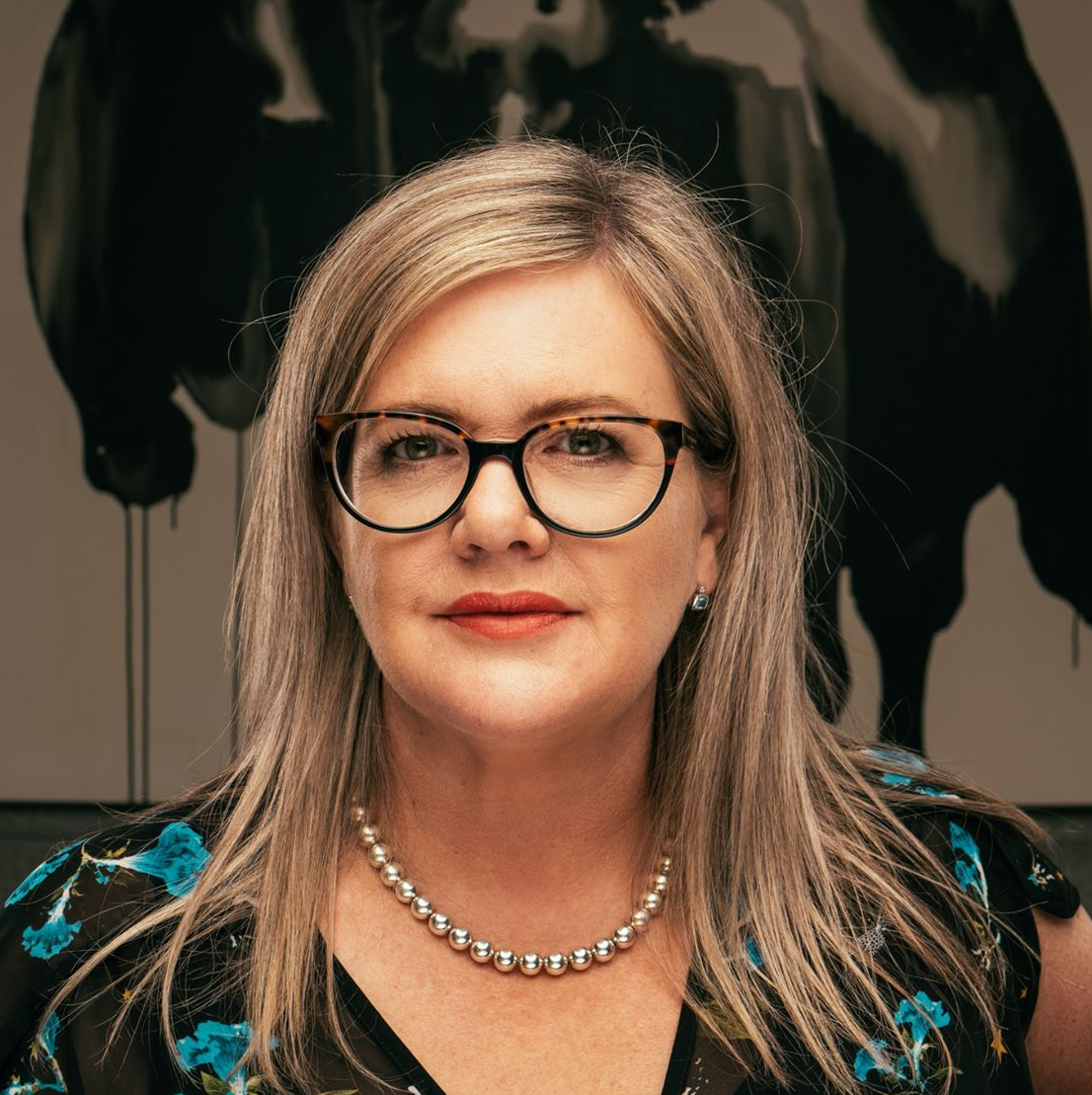
She is based in New Zealand but works with companies around the world.
Her passion is helping Entrepreneurs live their ideal lives & she works with entrepreneurial business owners & their leadership teams to implement EOS (The Entrepreneurial Operating System), helping them strengthen their businesses so that they can live the EOS Life:
- Doing what you love
- With people you love
- Making a huge difference in the world
- Bing compensated appropriately
- With time for other passions
She works with businesses that have 20-250 staff that are privately owned, are looking for growth & may feel that they have hit the ceiling.
Her speciality is uncovering issues & dealing with the elephants in the room in family businesses & professional services (Lawyers, Advertising Agencies, Wealth Managers, Architects, Accountants, Consultants, engineers, Logistics, IT, MSPs etc) - any business that has multiple shareholders & interests & therefore a potentially higher level of complexity.
Let’s work together to solve root problems, lead more effectively & gain Traction® in your business through a simple, proven operating system.
Find out more here - https://www.eosworldwide.com/debra-chantry-taylor
Keith Gillispie 00:00
You take these kids who are 17, 1819, and 20 years old, you break them down in boot camp for three months, then you shift them to Marine combat training. Seemingly, doesn't seem like a winning business model until you get into the inside and you realise that literally, every single thing that you do, there is an SOP. When you have an asset, don't sell it. Hold on to that asset. It's far better to borrow against the asset than it is to sell it. The moment you sell it, you've extinguished it.
Debra Chantry-Taylor 00:39
Welcome to another episode of Better Business, Better Life. I'm your host, Debra Chantry-Taylor, and I'm passionate about helping entrepreneurs and their leadership teams lead a better life through creating a better business. I bring guests on the show to share the experiences, the highs and the lows of entrepreneurialism, and the tips and tricks that they've learned along the way. Some of these people have been through some massive success and also some massive failures, and today's guest is definitely one of them, Sir Keith went from missing his kid's childhood while being overseas as an active duty marine to building a real estate empire that's let him coach Little League and never miss a family dinner. He's the founder of REI automated and a serial entrepreneur who's invested in 34 states, raised over $10 million in private capital and helped more than 400 students achieve time and financial freedom for real estate. He is also absolutely obsessed with systems and processes, and you'll see that, you'll hear that, I should say in the podcast today, he's going to share how he lives and breathes systems and processes and how they can actually set you free. I'd love to introduce Keith Gillespie, who is the co founder of REI automation. Welcome to the show, Keith, lovely to have you here from sunny Florida, I believe. Thank you very much for having me my absolute pleasure. As always, we've had a quick chat behind the scenes, but I want you to introduce yourself to the listeners and tell them a little bit about who you are, where you came from, and how you got to be in business.
Keith Gillispie 02:04
I'll start off by telling a story then. So I was in 2013 I joined the Marine Corps, and let's fast forward two years. So I joined the Marine Corps. I'm going through basic training, Marine combat training, shipped me off to a school, and I get stationed at my first duty station. I'm there for a year, and then, and then they ship me overseas. So I go overseas, and I come back. It's 2015 I try to unlock my door, and you know those little flippy doodads that hold door shut from the inside, try to open the door. Well, my wife had the thing on, so I'm like, and so I knock on the door. She comes over to the door, she opens it just through those little two inches, and she says, I need you to close your eyes. And I'm like, I've been gone for this whole time. Like, do we have to be playing games right now? Last thing I want to do is close my eyes. Are you kidding me? Give me a hug. And she's like, No, close your eyes. So I closed my eyes. She shut the door, she opened the watch, and she said, come in and and hold out your hands, but keep your eyes closed. So I, you know, I had my my left hand over my eyes, you know, I decided, okay, right, hold on my hands like this. And she places something in my hand, and I'm I start to feel it, and it's round. It's like a cylinder. And so, you know, I just got back from a Marine Corps trip overseas, it feels like a pipe bomb, you know, like one of the bad things that blows you up. And so I stop, and I go, it's not going to explode, is it? And and this is up on YouTube. If anybody wants to watch this video, my wife recorded it. Actually, it's not going to explode, isn't it? She goes, I don't think so. And so I feel around for another five or 10 seconds. I'm floundering. I have no idea what this is. She goes, Okay, you can open your eyes. So I look down, and I'm holding a baby bottle with a positive pregnancy test on it, and that was, that was her way of breaking the surprise that she had kept for me the whole time that I was gone. Oh, wow. And she didn't want to tell me over the phone. She wanted to tell me in person, right? So, so our daughter was born, and I was there for the birth, and the next month, I go back overseas, and I come home. Now it's 2017 and I come home, same exact thing happens. Try to get in the door. The latch. Do, the key is closing and knocking it. She opens and you do, close your eyes. Mind you. Like 18 months has gone by, like, I don't really remember that this has already occurred once. This is not deja vu for me. So, okay, fine. Close my eyes. And she recorded this one as well. And she she says, Open your mouth this time. So I opened my mouth. She sticks this cookie in my mouth. In my mouth and but there's like, a little bit of plastic in my mouth. I'm like, oh, there's plastic in my mouth. She goes, I'm sorry. And so I'm chewing it, and she goes, you can open your eyes. And she's holding this cookie, like this close to my face. And so I'm trying to figure out what in the world she just fed me. And I didn't realise that also in her hand was. A pregnancy test in a sandwich bag, and as soon as I saw that, you can see the realisation in the video, because I just dropped to my knees. And you can see the look in my face of like man, I screwed up twice now I have missed my wife's pregnancy two times in a row. And for anybody who has kids, or you know your wife has had kids, or you have had kids, your trimesters are kind of important, and I had missed them both, right? And so this was particularly difficult for me, because for the next several years, I went overseas 13 times and came back, and every time my wife had to reintroduce me to our children.
Debra Chantry-Taylor 05:47
I thought you were going to say for a moment, 13 pregnancies. I was thinking, that's
Keith Gillispie 05:53
a lot terrible. She had to reintroduce me to my children. And because I was always gone, they didn't really know who I was. And so this was really hard for me, because my dad died when I was eight years old, and I'm an only child, so it's just me and my mom. I wasn't raised. I was raised without a dad. And so here I am looking at my kids at the time, they were three and two years old, and looking at my kids, and I'm saying my kids are growing up without a dad, just like I did, except I don't have the excuse of being dead. I'm alive and I'm well, and I'm choosing to live this lifestyle. So that's when things kind of shifted for me, and in 2022 in 2016 is when we got started in real estate. So I purchased into a course. Well, it's way more than a course. It's called Fortune Builders. I paid a lot of money to be in a programme. And then I, you know, I write a book, Rich Dad, Poor Dad. Many people, maybe even yourself, a lot of people have read that book. Rich Dad, Poor Dad, by Robert Kiyosaki. Signed it for Fortune Builders, believe it or not. I even hired Robert Kiyosaki team with Rich Dad coaching, and then hired for, you know, John Martinez and Grant Cardone and Dean grazios and a whole bunch of big name people here to teach me how to do real estate. And to this day, I continue to buy courses. I literally just bought one last week. So I've done like 57 courses since I got started, in 2016 nine
Debra Chantry-Taylor 07:25
and a half years. Does the law of diminishing return ever come into this in terms of what do you still find? You get things from those
Keith Gillispie 07:32
I definitely get things from it. But yeah, I hit the law of diminishing return a long time ago. Now I'm really just looking for the one nugget that's going to return that you know, sometimes it's only a $200 course, sometimes it's a $20,000 course, right? But I'm looking for the one nugget. What's the one thing that you know better than I do that's going to save me hundreds of 1000s of dollars or years trying to figure that out that will make this investment worth it. So anyway, I'll fast forward 2026 is where we are now five years ago. 2021 is when we started Rei automated, which was the software and in education and coaching company that came out of my real estate investing. So we invested in real estate. We still, we still do invest in real estate, but it took me about four years to figure that out. Once I figured it out, my mentor was like, Dude, you're actually really good at systemizing this stuff. You should sell this as a software, and you should probably coach people with it as well, like, you'll make a killing and and we haven't made a killing from it, but it is a lot of fun, and we have served a lot of people because of that. And so now we have an education, software and coaching business that teaches people how to invest in real estate. And I've done deals in 34 states. Most people cannot say that. And and we've raised a little over $10 million that we put into put into real estate, and just recycle that money with every asset that we sell, and we teach people how to do it.
Debra Chantry-Taylor 09:08
And I want to pick up on something you said there, which you also shared with me before we came on the podcast. So you are the system and process guy, right? You, you have a natural affinity towards that. Where did that come from, and how do you use it?
Keith Gillispie 09:22
Now, this is gonna super crazy, but I think that I got it from the Marine Corps, which anybody who you know is stateside, who listens to you is gonna know what I'm talking about. Like the Marine Corps is kind of known as, like, we're the big buffoons of all the branches, like we're the dumbest bunch. We get made fun of all the time, that we are dumber than a box of rocks, and we, you know, we chew on crayons for fun. You know, red is always the best, by the way. But the the system of the Marine Corps is kind of crazy, and I'll break it down fundamentally in a way that nobody has ever heard before. War. 1776 is when we began as a nation in the United States, but the Marine Corps was actually the inception. Was November 10. 1775 we were birthed before the Marine Corps. And so if you were to think about it, we have been alive, if you will, for 250 years. That's a winning business. But let's talk about the business model. You take these kids who are 17, 1819, and 20 years old, they know nothing about life. They just graduated high school. You break them down in boot camp for three months, then you shift them to Marine combat training for another, you know, month or whatever their specialty is, right? And then you hand them an M for a rifle, and then you shift their ass to Afghanistan, and you say, Go fight America's battles. Seemingly, this doesn't make sense, right? They know nothing. They're brand new, like they're barely adults. They can barely take care of themselves. They make the stupidest decisions ever. Yet we're going to put the fate of America in their hand. Doesn't seem like a winning business model until you get into the inside and you realise that literally, every single thing that you do there is an SOP. It is written. It is visually illustrated. There are standards for how you do every single thing, and there's somebody who will jump down your throat if you're not doing it correctly. And so I've taken that principle of building systems for literally everything that I do in both businesses. Everything has a written SOP. It's visually illustrated with a mind map, and we have a video showing you, walking you through step by step. This is how to do it. And then we have a report on that person doing the thing, so that I can see on a weekly basis whether or not they did it.
Debra Chantry-Taylor 11:54
It sounds like it's just just straight out of the traction book in terms of process, but that's that's that's fantastic, and I think it, you know, it's the key to freedom. And it's a thing that a lot of entrepreneurs don't understand, because they say, Oh, but I hate process. I don't want to get involved in process. It's like, well, you're not going to get your freedom unless you actually have that.
Keith Gillispie 12:13
A lot of people think that systems or processes, or, dare I say, rules, you know, don't put me in the box. I don't like being told what to do. Hold up. So if I were to saying, hey, follow this is actually a guarantee of my business, follow my direction for the next four months. I will make sure that you get five properties under contract worth $150,000 or I will pay you back not only what you paid me, but also I'll match whatever you put into marketing. You spend no money, there's no risks to you other than your time. People who hear that, they go, you know, tell me what to do. Oh, everyone flipped real quick. You know, it's like, Hey, I know the path is successful. You have to do is follow me. People like to be told what to do, and that's what systems really is, here's the blueprint, do this, and good things will happen. Do that, and bad things happen. Pretty easy, choice, nice.
Debra Chantry-Taylor 13:10
Now I know that you said that you also like to bring processes and systems into your personal life as well. I'm keen to hear how you use them in your personal life. Just a bit of fun.
Keith Gillispie 13:18
Okay, well, let's go from one extreme to the other and just go really deep in the family life. So I have two children, eight and 10, and from ages one and two, we established three rules of our household. Rule number one is, be a good listener. Rule number two is, be careful. And rule number always is, love each other to this day, nine years later, 100% of the time that either of our children ever break, you know, do something bad, get yelled at, be disciplined, whatever, from either me or my wife, 100% of the time it's because they broke one of those three rules. And chances are you broke two of them simultaneously. So that's a that's a system. When it comes to, like, parenting of guys, it's really easy, right? Imagine it's a two year old, like, and then a two and a three year old, and then a three and a four year old, and then four and a five year old, like, they're always one, one year apart. Nonetheless. You're starting really, really, really young. You have to simplify it so it's something that they can memorise, and it needs to be so easily understood and so basic. People say it needs to be so easy. A fifth grader can can read it or understand it well, dude, what about when they're not even in fifth grade? What about when they're not even five? It needs to be so simple. A two year old can understand, hey, you're not being a good listener. You broke the rule. There's consequences when you break the rule, hey, you're not being loving to your brother. Hey, you weren't being careful when you just detch your sister. You know, you broke one of those three rules. You're in trouble. Let's go back to the rules. We still do.
Debra Chantry-Taylor 14:58
It's interesting. Listen to you. Or say all of this is all of this is so relevant in business too, right? There's simplification. We tend to over complicate things. We say that we don't want to sort of be put in a box or follow systems. But why would you bother reinventing the wheel when so many people have been there before you know how to do it, and they can say, hey, here is a framework, here is a proven process. This is what we do. We can guarantee it for you. And yet people still try and bend the rules and still try and do it a little bit differently. And I see it within my EOS practice. It's like, the EOS stuff works. It's simple, such a framework, but they go but we're going to add this, or we're going to fine tune this, we're going to do this a little bit differently. It's like, Why? Why do that? It's going to work if you just do it the way it's
Keith Gillispie 15:37
meant to be done. There's a ego part of it, right? The power, the control of I want to have my thumbprint on I didn't create this, and I want to make it, make it my own, at least. That's something that personally, I struggle with as I've gone through. And it's like, man, you know, I want, I want this to be mine. Well, at the end of the day, kind of like McDonald's, you know, like, I don't like their food, but their business model is proven. If you were to go to Melbourne McDonald's and order a big I'm assuming you have McDonald's, I don't know.
Debra Chantry-Taylor 16:05
Of course we do. Yeah, no, absolutely, yeah.
Keith Gillispie 16:08
Feel bad for you. They all ought it. But if you were to go get a Big Mac, and I was to go in Orlando, Florida, and get a Big Mac, and we were to compare it and we were to look at it and describe it, they're going to look the same. If we were to smell it and describe it, it's going to smell the same. If we were to bite into it and taste it and describe it, it's going to taste the same. Well, how, in the world, we live in two different parts of the country, how can they look the same, smell the same, taste the same? It's easy. It's the same ingredients, it's the same process, down to how long is the patty on the thing before it beeps, and what is the temperature of the skillet, down to how much freaking mayonnaise they squeeze out on your everything is exactly the same. That's what we need to do in our business. And I don't think it
Debra Chantry-Taylor 16:49
doesn't it doesn't mean that you can't have it with your own thumbprint, as you describe it as because that's your core values. That's the way you operate. So your systems and processes are the framework that keeps everything consistent and takes away the reliance on one person or a person to do something. It means it can be scalable, but it's the way that you operate the business. I think your core values and what you do is where it becomes your own unique thumbprint. I very much agree. Okay, I can't help myself, because obviously I'm passionate about the whole EOS thing, and you shared with me that you you hired a business coach. Many, many years ago, tell us a little bit about that story with your business coach.
Keith Gillispie 17:25
So from so I got started in real estate in 2016 and I struggled. I feel like I was just slogging my way through business for the first three years in 2019 hired this business coach. His name was Carlos, and I paid him $10,000 and I didn't even have the $10,000 even have the $10,000 I had to split it up on three different credit cards. And I was so embarrassed when he asked to take my money. And I was like, hey, so I have a negative net worth, and we're going to be putting this on credit cards, and I don't even have enough available credit on one credit card. So can you process three separate transactions. He's like, Yeah, dude, no worries. So of course he would say that, but when we got into it, it was his job over the next 60 days to tell me what I needed to hear and not what I wanted to hear. And we met two times per week for two months, and the first, I think it was supposed to be the first two sessions, but it ended up being the first three sessions. He was just asking me questions, just grilling me. I was in the hot seat. He was trying to discover everything that I was doing in the business. What was I not doing in the business? Why was I doing certain things over a different way? And on that third on that third session, Carlos was like, Dude, your your business is a wreck. You're a mess. I don't understand how you're getting anything done, because you're so busy doing nothing everything that you're you're quote, unquote focused on number one is unfocused. You don't have any direct reports. You don't have any processes of doing anything. Therefore, and we had eight people on the team. Mind you, there's eight of us all. I think this analogy even comes from the book Eos, but it's like eight people in a boat, all rowing separate directions. So the boat is just like spinning in a circle, or it's like, what are we doing? We all need to be rowing that way. That way is north. Let's go. We need to be in the same we need to be aligned. And so he said, you also you're not focusing on revenue, like you're focusing on all this stupid stuff, and nobody is held accountable to what they're doing. And he says, There's no way I can possibly coach you into fixing this like this is something that you're going to work for a year on. I need you to read this book, traction, and after you're done with traction, I need you to read what's the more
Debra Chantry-Taylor 19:55
basic book they've got the What the heck is us? But they've also got the. Yeah, he
Keith Gillispie 20:00
actually had me read traction first, and then what the heck is, you know, I don't know why it was, it was really, he said that it was so that I could read it myself and then pitch it to the team with, what the heck is EOS? It's super simple, you know, like this is how you need to say it, to get them bought in, and then have them read EOS. And actually, to this day, it's still required reading material in my company. We, we all read it once a year, and we're and we've been doing that for this year will be the seventh year we've done it for six years previously. So So I paid him $10,000 we met twice a week for two months, and my biggest takeaway was retraction. And I'm certain that he gave me other resources, and I'm certain that he told me other things, but I remember a single one of those things, the most important thing that I took out of that was read EOS. And I think that year, I read it three times, back to back, and like, when I say I'm like a disciple of Eos, we have our level 10 meetings, and it is the same exact, exactly what is in the book. Here's the number, here's our win. We're going to go over our core values. We bring up the VTO. You know, we help homeowners? Well, depending on which business I'm in, we help homeowners sell their house, or we help real estate investors build and scale a profitable business by implementing education systems and support. And we do that by and then we go popcorn. We go our core values. They say, core value, core value, core value, core value, core value that we've gone through our six core values. And then we jump into, you know, the regular meeting. We have our quarterly meetings, we have our off site annual meetings. Everything to this day is just the same as when I read the book in 2019
Debra Chantry-Taylor 21:46
so I need to ask you, because I have to be honest, and I've said this a couple of times on this, on the podcast, when I first tried to retraction, I actually find it boring as batshit. And maybe it was, Well, I think it was the headspace I was at. I was I was running an Event Centre, and there was a few things going on, I just couldn't get into it. And so I but I got hold of Get a grip instead, which is a business fable. And being a Patrick Lencioni girl fan, I love the business fable stuff, so I, so I got, I got hold of, get a grip, and I literally consumed it in two hours. Because I was like, Oh my God. It's just like, well, this and then then I got hold of traction, because then I understood what it was about, and then it became the Bible that I, I fell in love with and ended up implementing, and then becoming an implementer. But what was it that kind of grabbed you in the traction? But what was it that was the aha moment, I suppose
Keith Gillispie 22:33
I would say system. But then if we were to drill down, it would be organisation. If we were to drill down further, it would be KPIs. And if we were to drill down further, it's splitting. When I look at the KPI, there's two things that are that really has made a difference for me and grabbed on to it, and I haven't let it go, because it's been pivotal to the success of both of our companies. When I look at the KPI number one, I know exactly what needs to be done in order to make that KPI get better. So no longer is it. Hey, something's wrong in my business and like, I don't know what's wrong now I know exactly what's wrong, and I know how to fix it. And then one step further is, not only do I know what, what is the actionable, executable item that I need to do to fix this, in order to drive this in the right direction, but also, who's the direct report? Who's responsible for this? Is this the lead manager? Is it the Acquisition Manager? Is it the transaction coordinator? Is it the discipline manager? Whatever it is, right? Because each person is tied to a number, right? And that's their KPI. That's the number that they're they're in charge of reporting, and whenever it's messed up, we know who's going to be in the hot seat for IDs that week.
Debra Chantry-Taylor 23:51
That's perfect. I describe them as the levers. You know, you start to understand the levers, which means you can actually slow down and speed up your business depending on what you want or need at the time. Once you've got that level of understanding, business becomes easy. We've got the rules of the game, we know how to win. Let's just do do more of that. Perfect. Okay? And so the businesses you've got now, so you're still running on Eos, that's fantastic. Businesses don't grow the way we think they're going to grow, though, right? I know I always draw when I first work with a client, I draw the beautiful hockey stick curve on the board. Curve on the board, and I say, who's actually worked in a business that grew like this? And because I did a lot of work with startups for many, many years, and now with established businesses, you know, I can hand on heart, say, big businesses, small businesses, startups, no business ever grows in that beautiful hockey stick curve without their ups and downs. So what have been, what's been the biggest kind of, I won't call it a failure, but the biggest challenge for you in growing the business,
Keith Gillispie 24:46
they would be one in the same. Actually, this would go back to late 2019 when I had hired that coach, and it bled, it definitely bled into 2020 but basically, I. Bankrupted myself at the time we had, oh, actually, it kind of goes back to the very beginning, when I told that story of coming home and getting the baby bottle. That was the moment that we started working on our credit. And both me and my wife were super young. We didn't really have good established credit, and so we got, like, on other people's credit cards, like I got on my aunt's credit card and my adoptive grandmother's credit card, just as, like, authorised users, right, not actually having the physical plastic, but we got our credit scores up to, like, 820 or so, and that allowed us to get 20, I think it's 24 credit cards with about 350 it was almost three, maybe like 320 $330,000 of utilisation. And by 2020, I had maxed that out. And I don't know, I don't know if you know what the month the minimum monthly payment is on $300,000 of credit cards, but it's a lot. Here's the thing, when it's 0% interest, it's really easy to calculate, because it's 1% of the debt, so it's $3,000 per month. But then, after six months, nine months a year, I even had one credit card that went 18% once those popped over from 0% to, I think our lowest one was probably like 18.99% and they went all the way up to 29.99% at $3,000 payment, it went up to like $13,000
Debra Chantry-Taylor 26:36
just to pay the interest, just to pay, well, that was
Keith Gillispie 26:39
principal and interest, but it's not very much principle, right? That's just minimum monthly payment. So we were at the time, we were flipping houses. We were Wholesaling Houses and and my wife was a realtor, so she was listing the houses as well. We were kind of double dipping on these deals, but we could not do enough deals consistently to pay for that every single month and and that's when I realised, like, okay, so on paper, I'm I have a negative net worth, and I have negative cash flow, and we have savings, but it's because we've been putting our cash towards the savings, not towards the debt, and That's the only reason why I was able to float myself was because we had a little bit of cash and we had a whole bunch of debt, and we're throwing my active income and my wife's active income towards these monthly payments. But when you have north of of $10,000 just for your not even including your living expenses, then we had rent and kids and food and blah, blah, blah. It made it very, very difficult. And so I think 2020 that was also the year that I was getting out of the Marine Corps. I got out of the Marine Corps in December of 2020 and so I here I am like, I've been on struggle bus for four years now, 2016 and 2020 and we've just been accruing debt, accruing debt, accruing debt, accruing debt. And now I've made the decision, I'm going to get out of the core in December of this year. I have 11 months. December 1 is when I got out. I have 11 months to figure my life out. And believe it or not, we paid off 100% of the debt. It was $330,000 and we paid off $330,000
Debra Chantry-Taylor 28:21
that year. Congratulations, yeah,
Keith Gillispie 28:25
but that was, that was my lowest of lows. Actually, was January of 2020, at that time, that was my lowest of lows in my whole entire life. Of like I'm just drowning and I see no way of getting out of this. And just like, going back to what my business coach Carlos said, you're just sitting there spinning your wheels, doing a whole bunch of busy work, but not really getting anything done. That was the truth, that I needed to eventually get out
Debra Chantry-Taylor 28:51
of debt. That is a great story, and I think it's important to think about that is we all go through tough times. I had a similar kind of situation, not a dissimilar number, actually. So I had an Event Centre in Auckland, unfortunately, had to close due to covid, because you can't really run events when you're not allowed to leave your house. Yeah, and it had a massive, you know, massive day, massive weekly, monthly rent as well as other expenses. And we'd spent a lot of money refurbing The place, everything else. And by the time we closed it, I owed about $340,000 and at the time it was, it was it was devastating. And I never thought I'd ever get to pay it off, but it has all been paid off. And I think it's, it's almost like, use it. Dr Benjamin Hardy talks about using time as a tool. It's like, when you know you have to do something within a timeframe, you just have to change your thinking and go, not, I not. I can't do it. How can I do it? What do I need to do differently to actually get it done? And I'm guessing that's how you and your wife approach things. Approach things as well.
Keith Gillispie 29:43
Yep, just as Tony Robbins says, you know, there's a big difference between having a disempowering statement versus an empowering question. And so he uses the, you know, the bad example, people ask themselves, why am I so fat? Well. That's a horribly disempowering question, and your brain is literally wired to answer it, so if you ask a bad question, you're going to get a bad answer, whereas or you can even it's even worse to make that a statement, rather than asking a question making it a statement. But he talks about the separation between a disempowering statement and an empowering question. Well, what's the single most important thing that I can do today to live a healthier lifestyle? That's a great question. So, yeah, how you just said? Well, no use to me to say I'm not going to get out of this. The question is, how do I do that? I know it may be hard, you know, let's figure
Debra Chantry-Taylor 30:40
it out how and who as well, right? Yeah, and I think it's actually part, it's part of the IDS process in the US as well. I think that a lot of teams, when they're looking at an issue, particularly a negative issue, as opposed to an opportunity, they automatically jump to it's an issue, and that is what's causing it. Rather than remaining curious about, hey, look, our sales are down. I wonder why our sales are down? What's causing ourselves to be down? As opposed to going straight into our sales are down? Oh, it's the economy or the sales are down. Oh, it's the marketing team. You know, if you just reposition and approach it from a curious child perspective and keep open minded about what could possibly be happening, I think it gives you a much better chance of finding out what the real root causes and getting to a good solution that will get rid of that.
Keith Gillispie 31:22
Yep, agreed, that's actually one of our core values. So we have six core values, and one of them is, be curious, ask more empowering questions. Okay, so you've done
Debra Chantry-Taylor 31:32
a great job of turning things around. And congratulations on that. And I have to say, you must say congratulations to your wife for sticking by you through being away at the Marine Corps, having babies on her own, all that stuff and and living through debt with you as well. I'd love to meet her. She's obviously a very, very good lady. What are you most proud of in the business?
Keith Gillispie 31:50
Now, there's two things that immediately come to mind. The first is the business can more or less operate without me. And the second is, I feel like I have control. I realise that it's an illusion of control. You don't actually have control, because you don't have control over macro, things like timing or market or technology or, you know, like AI is going crazy and the real estate market is doing different things. I don't have access to change the cycle of the real estate market, for example, but, but when it comes to the business, you were talking about levers, I think that's the word that you used earlier, I feel like I have control over the business, and that there's actually a steering wheel. When before it was kind of like, you know, those old robot things that you could turn them on and they would, they would go until they hit the wall, and then they flip over and they just go in whatever the opposite direction was. That's kind of how I felt, like my business was, like, we're just running, we're just ramming into walls and continuing to go. But I think that's what's what's really cool is I don't, I don't really do anything in the business, and I don't mean to say that I don't work. I'm on. I'm on hour 11 right now. I got up at 5am and it's 614 for me, you know, like I'm working my tail off. I'm not saying that I don't work. When I say I don't do anything. All of the inter workings of the business, all of them, if I cannot think, I genuinely cannot think of one single thing that I do in the business that is necessary for it to continue working. It is all done. It is 100% systemized by other people. We have 13 staff members that work behind the scenes, and everybody gives me the credit for it, because I'm the face of the company, but really it's not me at all. The thing that I spend my time on, what I really love doing, is innovation. Like, what are the creative things that I can be doing right now that's gonna like, I'm not talking a 10% increase or a 50% increase. What is the drastic shift that I can do that will take the business to a 2x or a 3x trajectory one year from now? Those are the things that I like spending my time on. And as a means to an end, I create systems and processes and SOPs and documentation. As I'm finding new things, I'm like, oh, we should add this, and, oh, we should add this. And it's all of that incremental things that add up over time. The problem is, I'm not really good at doing repetitive tasks. I don't know if you kind of feel that sentiment. I hate repetitive tasks. Maybe I'm not disciplined, but I'm disciplined in my own areas, just mundane, stupid, minutiae tasks. I'm going to pass that off to to an assistant. I'm not going to do it. I have a rule of three and if I have to do something three times, I will, and I'm going to I'm going to get really good at it. I'm going to get as good as I possibly can. And then on the fourth time, before I do. And I'm going to write down the process, like, I'm going to type it out, and then I'm going to visually illustrate it, to get really clear on the process and see if there's any weird edge cases on, like, what if, what if this happened and and what if she does it this way, or whatever? Right? I'm going to map it all out. I'm going to go back to that documentation that I just wrote out and revise it. And once I have this ironed out, shoot a video walking through the entire thing. And now we have the SOP. And after that fourth time, that Fourth time's the last time I will ever do it, ever, ever, ever. And at this time you have, we have about 300 SOPs that run the business every from the tiniest things to the biggest things.
Debra Chantry-Taylor 35:40
Does that become overwhelming for the team? Or how do you get them to actually take accountability with these things and want to follow them? Because, just like we said earlier, humans want to put their own personal stamp on things, and they've got, oh, I could do better, or I could do it differently. So how do you how do you keep that system and process alive in the business and ensure, I mean, they obviously have to be changed at times when when things change, but just making sure people actually people are
Keith Gillispie 36:03
actually following them, sure. So something that I consistently challenge the team members, well, it's that thing that I was just I have. There's several core values, but there's two of them that I'm going to bring up. Number one of them is Be curious and ask more empowering questions. And the second one is become the best version of yourself and live an exemplary life. So if we were kind of to smush these two core values together, I am always asking myself questions on what can be better so that I can turn this thing into the best thing possible, not just for me, for the sake of me doing this task, but also for the good of the company, also for the good of the team members, right communication needs to be had. I need to be hooking up the next person that's down the pipeline, so on and so forth. And so how do I get them bought in? Well, to be honest, I hire people that like following direction that are not if we were to think about like, not just a DISC profile, a lot of people do disk I like using predictive index, and so when I'm hiring for specific assistant jobs, I hire for profiles that they're not captains, they're not Mavericks, they're not the ones like me who are leading the charge. Instead, they're the scholar, or they're the what's the one that like, protects things and makes sure that everyone's abiding by the rules? Guardian is what it's called The Guardian. There's different like psychological and sociological. So, so I don't know the right word, there's profiles of your brain. And basically, I'm going to hire the person who is best positioned for this, for this job like you are. You're wired to do that. So I think that I set people up for success by first hiring the right types of people for the job, but then after that, those, those SOPs, I keep them really short. If there's a big task I just did one yesterday, whole task is probably about a 15 minute task, and it needs to be done monthly so we separate all these things into daily tasks, weekly tasks, monthly tasks, quarterly tasks, annual tasks. So this one goes into the monthly column, and it's a 15 minute task, but I broke it up into three separate tasks. And one of those separate tasks was probably about six minutes. So I broke it up into three and three, right? So in total, you have a three minute video, three minute video, two minute video and a two minute video, something like that. They're really, really short. And in the SOPs, I don't know, maybe the most complicated one at seven steps. So when I say, you know, we have a, I think it's an old army term, kiss. Keep it simple, stupid, you know. But I even take that to an even more elementary, literally school, a more elementary, kindergarten brain of I want to teach my kids how to do this stuff. And so a little proud dad moment for a second. So here in Florida, we love outdoors, and as a Marine, I love guns. So you put those two things together, you're hunting, right? And so I take my son hunting. He's eight years old. And this kid, if I were to, if I were to bring him in here right now, live on the podcast, and ever say cold Alex, do 20 push ups, you know? Do 50 jumping jacks. He's gonna be all riled up and say, Tell me your weapon safety rules. He's gonna go before he states it. He's gonna go treat. Never keep, keep. No now to you, that means nothing. Treat, never, no. What are you like? Just naming random words? Well, it's the first word of each of those weapon safety rules. Treat is for treat every weapon as if it were loaded. Key, keep your finger straight and off the trigger till you're ready to fire. Key, keep your weapon on safe. Safety until you're ready to fire. So each one of those who tree never keeps you No. Tree never weapons. If we're loaded, keep it from your train off the trip where you've heard, I mean, he says it faster than Marines say it. He's so good at it and and so when we got done with our last hunting trip, I was pressed for time, and I was making dinner for everybody, and the weapons were all dirty, right? There's a lot of sand here, and we have a trailer that's behind the bike, and that trailer throws dirt up on the guns, and there's just sand everywhere, all over our guns. Said Alex, mind you again. He's eight years old. I said, Alex, disassemble the weapons, clean them off when you're ready for inspection. Call me out. Call me inside, because I'm man and a girl. Got it 20 minutes later, Dad, I'm done. The fact that he can disassemble an m4 it's not really an m4 but it's an m4 type ar 15. The fact that he can disassemble this as an eight year old kid, the fact that he knows his weapon safety rules. Why? Because we've broken it down so simple, whether I'm doing it with my kid in like a hunting environment, or whether I'm doing it with a virtual assistant, with an SOP, breaking it down to the simplest, most elementary school level is so important. You're not patronising people. You're not making them feel stupid. You are absolutely 100% of the time setting them
Debra Chantry-Taylor 41:23
up for success. I love it. It goes back to your three roles for the kids as well. It's simple. It's easy. People just get it, yeah. Okay, fabulous. So we can see that. Well, actually, what I love about this conversation is, I think it's helped people understand that even though you might think that you're not a systems person, actually, most entrepreneurs are because we do look for better ways to do things. It's kind of like going to business and why we start the things that we do. I think we just tend to over complicate it, and we get scared of it because we over complicate it. If you treat it the way that you do, and say, hey, look, once you repeat something more than three times, there should be a process for it. It gives you that, that trigger point, okay, right? That the fourth time we're writing something down and then keeping it simple. It doesn't have to be rocket science, yeah? Another system for making a system. Yeah? And I think, I think there was a guy from the four seasons, I think his name was Theodore sharp, but he talked about systemizing the predictable so you can humanise the potential. And we've been talking about that the whole, the whole thing, right, where we're systemizing it. So the stuff that needs to be done that's really important. Just becomes the way we do it, and then you bring your humanity into it through the way that you act, the way you engage with people, your core values, all that beautiful stuff around it,
Keith Gillispie 42:30
yeah, absolutely agree. That's a really cool quote. I like that. Yeah, not
Debra Chantry-Taylor 42:33
mine, unfortunately, but it's one that I remember. Okay, three top tips or tools for listeners. I hate people, you know, I love, I love these podcasts, but I love these podcasts, but I want them to go away and kind of go, what can I do with this? So what would you give them as the three top tips or tools from your experiences?
Keith Gillispie 42:47
I don't know if this is going to be applicable to your whole audience. However, I am an investor, right? Specifically, I'm a real estate investor. However, I invest in not just in real estate, but I invest in people I have, I invest in software. So something that I think I see, and I'm also trying to bring in that you have, maybe not just us based listeners as well. It's cool that you travel all over the place, and EOS is global, right? So I'll try not to be too specific with this, but something that also I've travelled to a lot of countries. I have had an amazing opportunity to go to really cool countries that they're living a wonderful life. And I've also gone to the most run down, terrible third world countries. There's no running water, there's no electricity and and there's illness that's rampant. And what I see consistently is that people don't manage their finances. And I really am going to target the United States, because obviously, that's where I live, and that's where most of your listeners probably are. When you have an asset, the definition of an asset is, it puts money into your wallet. The definition of a liability is it takes money out of your wallet. When you have an asset, don't sell it, hold on to that asset. It's far better to borrow against the asset than it is to sell it. The moment you sell it, you've extinguished it. It's no longer there. You have to work really, really hard to go find another asset instead, if you really need the money, then borrow against it. Because the cool thing about debt is it gets paid back over time, and then guess what, if you really need the money again, you just borrow from it again. Just never borrow more than what it's worth. The second thing would be on a lifestyle basis, and that's to be a principle based person. I have a couple of favourite books, traction being one of them, but another one of them is called Principles by Ray Dalio. I do not recommend you reading it. I don't recommend anybody reading it. Matter of fact, you should definitely listen to it. It's. Literally as big as a dictionary, and it is the driest book I have ever read in my life. You said that you could hardly get through traction. That's how I feel about about principles. It is a huge book, two and a half inches high, maybe. And Ray Daly, if you don't know who he is, he's the owner. I don't know if he's the owner, but he's definitely the manager of the largest hedge fund that's ever been in existence in the world, like billions of dollars. And he wanted to create, this is long before AI, by the way. He wanted to create a system by which the computer would trade better than he did. And at the time, this was very hard. This was extremely complicated, and it took him years to develop this. But every time he made a trade, he would sell a stock, he would buy a stock, he would ask, Well, why did I sell it? It sounds really too basic sometimes, but why would I sell it? And he would write down why he sold it. And then he would say, well, why'd you sell that much of it? You sold 2000 units. Why two? Why not 1500 Why not 2500 Well, it's because of because of this, right? Well, when would you buy it back at what? What would the market have to do for you to buy that back? And he would write that down. Okay, so he asked for years on every trade Debra, he asked himself these questions, and he wrote them all out, and he coded his brain. He literally took these at the time. He called them rules, but a rule can be bent, a rule can be broken, and it doesn't create like a tear in the fabric of your your decision making process, because you can always justify why the rule was bent or why the rule was broken. However, when those rules are correct, 100% of the time, they cannot be bent, because if bent or broken, it would completely destroy your like, your fundamental like, the foundation of how you trade, how you make decisions, it's broken. That's no longer a rule. This is a principle. That's why he called the book principles. So he he started off with just making this a training thing, then he turned it into his business thing, then he turned it into his life thing. This is kind of what Ray Dalio has, like, left on the world, if you will, become a principle based person. And so I don't have all the time to go into this, but I find myself constantly asking myself, like, how can I be a more principal based person? Right? I'm I'm relatively young. All of our employees, except for like one, are older than me. Some of them are definitely old enough to be my parents, if not, my grandparents. Yet they come to me to make the decision. And so there's a lot of weight on my shoulders here to to take care of my staff. And when I when I ask myself these questions, you know, how am I going to sell this house? Am I going to buy this one? Whatever it is in real estate or in software? Are we going to go this way with AI, or are we going to have ai do this right? There's all these forks in the road. Well, if you've never done it, how can you know what the right answer is? There's really only one answer to that question. If you've never done it, how can you know what the right answer is? It's to have a principle that guides you love it. I don't think that I have a third one. I think those are the two things that I'm most passionate about.
Debra Chantry-Taylor 48:31
I can I can see that, I know that you do have some stuff to share with the listeners, though, right? We've got a link that we're going to pop into the the podcast notes. Do you have the link or you? Am I sending? Am I putting it? I've got the link, so we will put it in, or get that here.
Keith Gillispie 48:45
If anybody is interested in real estate investing, I I have 12 different courses where I teach people how to do marketing, sales and negotiation, deal structure, like creative financing, deal analysis, raising private money, so on and so forth. These are the 12, undoubtedly, these are the 12 things that you have to be competent in in your business as a real estate investor, otherwise you will fail, meaning, if you were to make a lasagna and forget the cheese, or bake a cake and not have the sugar you don't have. Like, the crucial ingredients to make this, it's going to come out tasting weird, you know, like your business is not going to operate. Well, without these things, there's 12 things as a real estate investor that you must be competent at. I have a course for each one of them. I think that I had said this while we were recording, but maybe I didn't. From 2013 to today, I have signed up for 57 apprenticeships or courses or masterminds, or whatever you want to call it, right? I've paid a lot of people a lot of money, the greatest of. Rates that I can find in the United States, hopefully, to one day myself, be a little bit great. And I've taken everything that I've learned, I've distilled it down with simples and basic principles and outlines and created systems go figure. And I've put those in those courses. I sell those courses anywhere between like $27 up to $1,000 however, anybody who listens to your podcast can get them absolutely for free. They can choose one these courses. It's your choice, by the way. Choose your own flavour. Choose Your Own Adventure, whatever you want to call it. You can go to to that length, and I just gave Miss Debra. And you can choose any course, if you need any help deciding which one, you can just scroll down and you can see a little description about what's in the course, how long the course is. Some of these courses, some of them are quite long. I think I have like, a 20 hour course in there. I mean, this is full blown. This is not thrown together. Thing that I did in the weekend, I actually spent a year and a half, almost a year now, 16 months, taking and building the core curriculum before I even press record on the first one, I took this very seriously in building this curriculum. It's built like a college course where you're building a fundamental 101 and then you're building 201 you're putting that block on top of the one on one. So great courses. Choose anyone that you want, absolutely
Debra Chantry-Taylor 51:25
for free. That is absolutely, very genuine selfie. They can choose anyone. And I already think you're a little bit great, so I wouldn't get too worried about that. And yeah, and from my point of view, you know, it's wonderful to hear that Keith also gives out traction books for his clients as well. And if anybody wants a traction book. They can also get in contact with me, and I'll make sure they get a traction book for their business. But yeah, so thank you. Hey, so much, so much gold in there. I've written so many notes and things here, but I think it really comes the things that really stood out for me is that systems and processes will set you free, and you just want to keep them simple as you possibly can, so even a toddler can understand them. That's the key to it all. Yes, beautiful. Thank you so much for your time, Keith, I really appreciate it.
Keith Gillispie 52:04
You're wonderful. Greatly appreciate it.

EOS Implementer | Entrepreneurial Leadership Coach | Workshop Facilitator | Keynote Speaker | Author | Business Coach
Debra Chantry-Taylor is a Professional EOS Implementer & licence holder for EOS Worldwide.
As a speaker Debra brings a room to life with her unique energy and experience from a management & leadership career spanning over 25 years. As a podcast guest she brings an infectious energy and desire to share her knowledge and experience.
Someone that has both lived the high life, finding huge success with large privately owned companies, and the low life – having lost it all, not once but twice, in what she describes as some spectacular business train wrecks. And having had to put one of her businesses into receivership, she knows what it is like to constantly be awake at 2am, worrying about finances & staff.
Debra now uses these experiences, along with her formal qualifications in leadership, business administration & EOS, to help Entrepreneurial Business Owners lead their best lives. She’s been there and done that and now it’s time to help people do what they love, with people they love, while making a huge difference, being compensated appropriately & with time to pursue other passions.
Debra can truly transform an organisation, and that’s what gets leaders excited about when they’re in the same room as her. Her engaging keynotes and workshops help entrepreneurial business owners, and their leadership teams focus on solving the issues that keep them down, hold them back and tick them off.
As an EOS implementer, Debra is committed to helping leaders to get what they want and live a better life through creating a bet…Read More


