Debra Chantry-Taylor: Another Year on the Scorecard: Why We Need to Get Better at Celebrating Success
In this episode of Better Business, Better Life, Debra Chantry-Taylor explores why another year on the Scorecard should never be treated as just another set of numbers

 Spotify
 YouTube
 Amazon Music
 Apple Podcasts
 RSS Feed
 iHeartRadio
 PocketCasts
 RadioPublic
 In this episode of Better Business, Better Life, Debra Chantry-Taylor explores why another year on the Scorecard should never be treated as just another set of numbers. Instead, it can be an opportunity to recognise progress, strengthen culture & understand what is helping a business succeed.
Debra challenges the tendency for leadership teams to focus almost exclusively on what is going wrong. Red numbers, missed targets & Rocks that have fallen off track naturally attract attention, but when leaders only notice failure, they can unintentionally teach their teams that problems get recognised while consistent success simply becomes expected.
As her own business approaches its 21st anniversary, Debra reflects on the years of decisions, challenges, mistakes, relationships & achievements that build a business over time. She explores why celebrating success does not mean lowering standards or handing out praise for the sake of it. Genuine recognition is about noticing meaningful results, incremental improvements, courageous behaviours & people living the organisation’s Core Values.
The conversation also looks at how leaders can use their Scorecard differently. Instead of treating it purely as an exception report for problems, Debra encourages teams to examine what is going well & ask why. When a person or team consistently delivers strong results, understanding what they are doing differently can help turn individual success into a repeatable system that others can learn from.
Debra also explores what success looks like in family businesses, where commercial results are only one part of the picture. Healthy succession conversations, clearer boundaries between family & business, and next-generation family members earning their roles through merit can all represent significant wins that deserve recognition.
At the heart of the episode is Debra’s idea of carefrontational leadership. Great leaders need the courage to address underperformance, but they also need the awareness to acknowledge excellence. By asking questions such as “What are we proud of from the last 90 days?” & “What are we doing now that we used to find difficult?”, leadership teams can create a culture where progress is noticed as well as problems.
This episode is a reminder that another year on the Scorecard is more than a collection of targets & results. It is a story of what the business has learned, what its people have achieved & what can be celebrated as it continues to grow.
CONNECT WITH DEBRA:
___________________________________________
►Debra Chantry-Taylor is a Certified EOS Implementer® | Entrepreneurial Leadership & Business Coach | Business Owner
►Connect with Debra: debra@businessaction.com.au
►See how she can help you: https://businessaction.co.nz/
►Claim Your Free E-Book: https://www.businessaction.co.nz/free-e-book/
___________________________________________
Ep 286 Chapters:
00:00 – Introduction
01:23 – The Importance of Noticing Success
05:00 – Lessons from Twenty-One Years
06:50 – Defining Genuine Recognition
08:19 – Using the Scorecard Effectively
12:41 – Building Culture Through Values
14:03 – Success in Family Businesses
16:36 – Implementing Better Leadership Habits
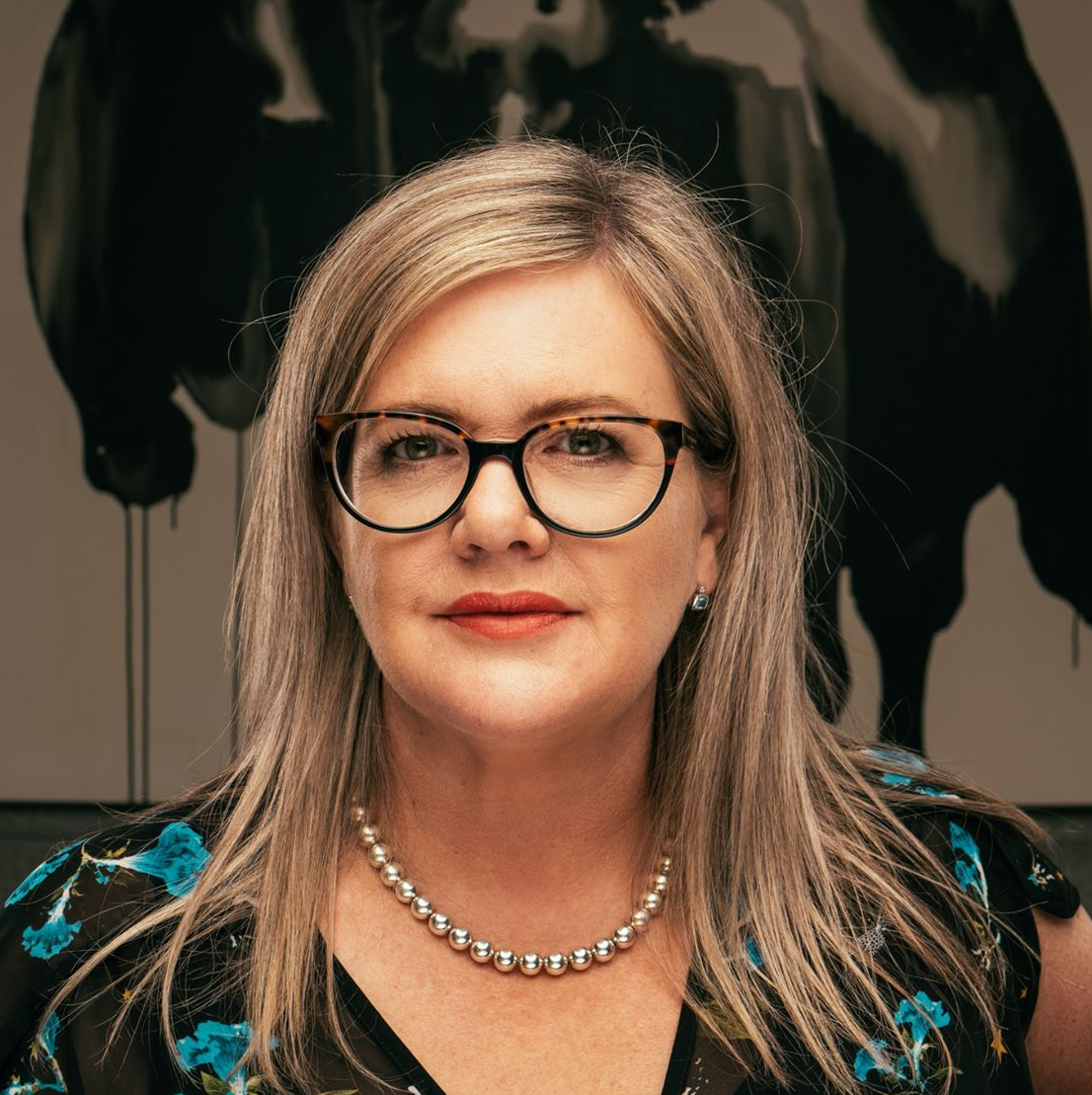
She is based in New Zealand but works with companies around the world.
Her passion is helping Entrepreneurs live their ideal lives & she works with entrepreneurial business owners & their leadership teams to implement EOS (The Entrepreneurial Operating System), helping them strengthen their businesses so that they can live the EOS Life:
- Doing what you love
- With people you love
- Making a huge difference in the world
- Bing compensated appropriately
- With time for other passions
She works with businesses that have 20-250 staff that are privately owned, are looking for growth & may feel that they have hit the ceiling.
Her speciality is uncovering issues & dealing with the elephants in the room in family businesses & professional services (Lawyers, Advertising Agencies, Wealth Managers, Architects, Accountants, Consultants, engineers, Logistics, IT, MSPs etc) - any business that has multiple shareholders & interests & therefore a potentially higher level of complexity.
Let’s work together to solve root problems, lead more effectively & gain Traction® in your business through a simple, proven operating system.
Find out more here - https://www.eosworldwide.com/debra-chantry-taylor
SUMMARY KEYWORDS
Celebration, Accountability, Success, Scorecard, Leadership, Performance, Recognition, Business, Culture, Values, Resilience, Growth, Motivation, Management, Achievement
Debra Chantry-Taylor 00:00
Celebration and accountability are not opposites; they actually make each other more credible. We're conditioned to find the gap. We know what didn't happen. We know what's on the issues list. We know which rock is off track. We know which number we missed. But what are we actually proud of? What did the team do brilliantly? No amount of money will cause a person to lay down their life for you, but they will willingly do so for a yellow ribbon. This is what Gino Wickman taught us. Every 10 years, you get two brilliant years. You'll get six kind of average years, and then you'll get two years which will potentially put you out of business. I'm your host Debra Chantry-Taylor and I'm passionate about helping entrepreneurs lead their best lives by creating a better business. I'm a certified EOS implementer, an accredited family business advisor, and also a trained leadership coach. And my passion is just helping people lead a fabulous life. By the time this episode goes out, I will have just turned 56. My birthday is on the 21st of August, and yes, you heard me correctly. 56 years old, and I'm really quite happy to tell you my age because I've never really understood this obsession with pretending we're younger than we are. Because actually, I'm incredibly grateful to be 56. All of my immediate family have passed away, and they all passed away way too soon, so I don't take any year or any other birthday for granted. For me, every year is another year on the scorecard, and if it's something I teach businesses, it's that when something good shows up on the scorecard, you bloody well notice it and you celebrate it. So 56 for me, that's a win. I'm here. I'm healthy. I'm still working. I'm still travelling. I'm still learning. I'm still annoying people by asking them the questions they occasionally wish I wouldn't ask. I've got people I care about. I've got my animals, Morpheus, Hermes, and Apollo. I've got my chosen family. I've got a business that I love, and I get to it with some extraordinary people. And yes, I've got another year, and that is absolutely worth celebrating. So birthdays have got me thinking about something we're generally not very good at in business, and that is celebrating success. Particularly, I think in Australia and New Zealand. Although one of my US colleagues did tell me that they're also not so great, but I can only speak for Australia, New Zealand, and where my clients are based. And I can say quite frankly, we're bloody terrible at it. We'll celebrate birthdays, we'll celebrate weddings, we'll celebrate anniversaries, we'll celebrate somebody buying a house, having a baby, getting engaged, finishing a degree-all of those things. We'll celebrate the Melbourne Cup and sporting events. We'll find any excuse to open a bottle of wine, but put us into a business environment, and suddenly celebrating success can feel a bit awkward, maybe a bit American, maybe a bit showy, a bit oh, don't make a fuss. The tall poppy syndrome seems to kick in, and yeah, yeah, we've had a good quarter, but we missed this. Oh yeah, we won that client, but what about the three we didn't win? Yeah, we hit the revenue target, but our margin could have been better. We've completed eight out of 10 rocks, but what happened to the other two? And I'm not suggesting for one second that we ignore what didn't work. Absolutely not. If you know me, that's not going to happen. I believe in accountability. I believe in telling the truth. I believe in looking at the numbers, the data. I definitely believe in having the difficult conversations. I believe in identifying issues and actually solving the bloody things rather than discussing them for six months, and I believe in challenging people because we care about them and the results that they want. I'm a big fan of radical candour, but here's the problem: if we only pay attention when something goes wrong, then what are we teaching people? We're teaching them that success is expected, but failure gets attention, and human beings pay attention to what gets attention. So let's face it: we're brilliant at finding what's wrong. Think about your own business. When you look at your scorecard, where do your eyes go first? Probably to the numbers that are off track-the big red numbers.
Debra Chantry-Taylor 03:57
They're missed. They're under target or over target where you don't want it to be something that needs fixing, and that is exactly what a scorecard is supposed to help us do. It's designed to be our dashboard, give us an early warning system. It tells us that something is happening before it becomes a much bigger problem. So in that respect, it's brilliant. But what about all the numbers that are on track? What about the person who's consistently delivered their number for the last 12 or 13 weeks, what about the team who improved something from 72% to 94% What about the salesperson who finally cracked the conversion rate they've been working on? What about the operations team who quietly got the backlog done? What about the accounts person who reduced the debtor days? What about the person who solved a problem before anyone else even knew there was one? Do we notice that? Do we say anything, or do we just move straight on? Yep, on track next, because there's an enormous difference between measuring performance and recognising performance, and to be honest, we need both. This is particularly front of mind for me because in October. My business, our business, turns 2121, years old, and that's a proper birthday. If the business were a person, depending on where we live in the world, it would be allowed to drink, vote, drive, and make a whole series of questionable life decisions. And actually, that sounds quite like some businesses I know. But 21 years is significant, and I intend to celebrate it because when you've been in business for 21 years, you know it hasn't been all champagne and perfectly executed plans. There have been fantastic years. There have been difficult years. There have been decisions that worked brilliantly. There have been decisions where, looking back, you think, "What the hell was I thinking? And there have been people who've made an enormous difference. There have been people who weren't right for the business. There have been opportunities we absolutely grabbed, and there's opportunities we also missed. There's been things we've changed, things we've stopped doing, things I've probably held onto for far too long. Sure, you can all relate to that because that's business. And let's face it, we know that every business goes through a 10-year cycle. This is what Gino Wickman taught us: 10 years. Every 10 years, you get two brilliant years where you think you are absolutely sailing. You'll get six kind of average years, and then you'll get two years which will potentially put you out of business. That's just what business is about: is actually getting through those cycles and coming out on the other side. But sometimes we're so focused on where we're going next, that we forget to look behind us and see how bloody far we've come. 21 years ago, this business didn't exist. Think about that. Every client we've helped, every person we've employed, every relationship we've built, every mistake we've learned from, every problem we've solved, every family business that now works better because somebody was brave enough to have a difficult conversation, every leadership team that has more clarity, every owner who sleeps better at night, every employee who actually knows what is expected of them-all of that has happened because the business exists, and that deserves more than a right. What's next? And let's be honest: celebration isn't about trophies for turning up. This isn't about everybody gets a trophy. Everybody who participates is good. Whenever I talk about celebrating success, there'll be someone thinking, "Oh God, here we go. Are we giving everybody a trophy? And the answer is no, absolutely not. I'm not talking about manufacturing praise. I'm not talking about telling people they're wonderful when they're not performing. I'm not talking about lowering standards. We all know that the standard we walk past is the standard we accept. I'm talking about high standards, and I'm definitely not suggesting we clap because Bob answered an email. Celebration means recognising something that is genuinely worth recognising. That might be a massive result. It might also be consistent performance improvement. That 1% every week. It could be courage. It could be living a core value when it would have been easier not to.
Debra Chantry-Taylor 07:48
It could be owning a mistake, having a difficult conversation, helping another team member, solving a recurring problem, hitting a number, delivering a rock, winning a great client, losing a client, but learning something important from it. Sometimes success is the outcome. Sometimes success is a behaviour that will eventually create the outcome. And as leaders, we need to be good enough to recognise both. So let's talk about champagne. I have a very simple tradition with my own clients and with our team. If we get an A grade quarter or an A grade year, I buy champagne. And an A grade quarter or an A grade year is where you've hit your measurables and your numbers. You've hit your revenue. You've hit your profit. You've hit your high level measurables, and you've achieved 80% of your rocks. And that is super, super important. It's really significant. You don't want to just go past that and go excellent. Moving on, we got an A. I want to mark it, and so does champagne, because I want them to remember that moment, not because champagne somehow makes the result more valuable. It doesn't. It creates a marker. It says this happened. It says we did this. It says we achieved something, and we're stopping for a minute and actually acknowledging it, and your version doesn't need to be champagne. It might be lunch. It might be cake. It might be a message to the whole team. It might be ringing somebody rather than sending them an email. It might be a handwritten card. It might simply be saying in front of the team, "Do you know what? That was outstanding. Thank you. The cost or the investment or whatever you give them is almost irrelevant. It's the recognition that matters. I can never quite get this saying right, but there is a saying somewhere that says that no amount of money will cause a person to lay down their life for you, but they will willingly do so for a yellow ribbon, and that talks the fact that it's actually about the recognition and not about the finances. So, how do you find the wins and how do you celebrate them? It's all in your scorecard. If you go back to the scorecard, I think this is one of the easiest places to start. Most leadership teams use their scorecard primarily as an exception report. What's off track? What needs attention? What do we put on the issues list? And absolutely keep doing that. We need to do that. But every now and again, look at it differently. Ask what is really going well. Which numbers have improved? Where have we had sustained performance? What's changed? Who contributed? What behaviour created that result? And most importantly, how do we do more of it? Because success contains data too, and we're fascinated by analysing failure. Why did we miss the target? Why did the customer leave? Why did the project go wrong? Why didn't we hit the number? But when something works, we often just congratulate ourselves briefly and move on. Or sometimes we actually fail to recognise it altogether. And I wonder why. If something worked, surely we should be just as curious. Why did we win that client. Why did conversions suddenly improve? Why are our complaints down? Why did that project finish early? Why is this team performing so well? What are they doing differently? Can we repeat it? Can we teach it? Can we systemize it? Can we use it elsewhere? Because celebrating success doesn't just simply mean shouting "woohoo" and giving a high five. Although I'm a big fan of high fives. It just means paying attention to success, and that can be incredibly commercially valuable. Sometimes in your scorecard, if you see one of the team, let's just take a sales team for example. You may have six or seven salespeople in your sales team. Maybe five or six of them aren't doing so well, but one or two of them are doing really well.
Debra Chantry-Taylor 11:19
Why not drop that down to the issues list and ask them to tell you how they did it, tell you how they're getting the results, tell you how they're achieving it, congratulate them on actually achieving what they're achieving, because that story that they might tell will give you some insight into what is going on, and it tells the rest of the team this is possible, and it does it without you having to tell them. So you have another member of the team actually supporting your scorecard and supporting what's important. So, don't just pick out the the negatives, but pick out the positives too, and let's use that. And let's remember, there's another reason I think this really matters. Adam and I always talk about clarity creates confidence. When people know what success looks like, they can work towards it. When they see themselves achieving it, the confidence grows. And when somebody actually acknowledges that they've achieved it, it reinforces the whole thing. Imagine working somewhere where you only ever hear about your performance when something goes wrong. Eventually, you start to believe that nothing you do is quite good enough, or worse, you stop taking risks because mistakes attract attention while success disappears into the background, and that's not the culture most of us are trying to create. We want people to take ownership, who make decisions, who solve problems, who stretch themselves, who care, who think, who contribute. So when they do those things, please notice it. And core values should be celebrated too. One of my favourite opportunities for recognition is core values, because your core values are supposed to describe the behaviours that define your culture. They're not words painted beautifully on a wall. They're not something that HR came up with during a workshop in 2017. They're actual behaviours. They're how we do things around here. I say live, breathe, and bleed around here. So, if somebody demonstrates one of our core values brilliantly, one of your core values brilliantly, say it. Tell the story. Hey, Sarah did this last week. This is exactly what we mean by this core value. Now everybody understands the value better, and you've just turned an abstract phrase into a real behaviour, and that's powerful. Shoutouts work brilliantly for this. At your weekly meeting, quarterly meeting, company meeting, state of the company, wherever it makes sense, ask who has demonstrated one of our core values this week, and don't just give the name. Tell the story. What did they actually do? Why did it matter? Which value did it demonstrate? Because recognition teaches culture, and the great thing is, it doesn't always have to come from the boss. Peer-to-peer recognition is incredibly powerful. I would say sometimes more powerful than the boss saying something. When somebody sitting next to you says, "I want to recognise what you did this week because you helped me when you absolutely didn't have to, that is what matters. So remember that meetings aren't just about problems. Think about your weekly leadership meeting. You're looking at the scorecard. You're reviewing the rocks. You're checking the to-dos. You're looking at customer and employee headlines. You're solving issues. But there are opportunities for recognition all the way through that meeting. Was the rock complete? Great. Let's acknowledge it, not with a 20 minutes acceptance speech, not with everything we did to do it, but we've still got a meeting to run. But do recognise it. If someone has been consistently completing their to-dos, notice it. Great customer headline. Talk about who contributed. An issue that's been hanging around for ages finally gets solved. That's a win. Sometimes even putting something on the issues list deserves recognition, because somebody has finally said the thing that everyone else was thinking about, and that takes real courage, particularly in a family business, because as we know, celebration in a family business can be complicated, and this is where family businesses get particularly interesting, because you're not. With just one system, you've got family, you've got ownership, and you've got the business. And those three circles, as we know from the Harvard family business model, are overlapping. And so, what counts as success can look very different depending which circle you're standing in. The business might be having its best year ever, brilliant, but the family might be barely speaking, and that isn't success.
Debra Chantry-Taylor 15:20
Or the family might be wonderfully harmonious because nobody ever challenges anybody. Everyone gets on beautifully, but the business is haemorrhaging money. That's also not success. Or the owners might be getting excellent returns while the next generation has absolutely no idea what the future looks like. Again, we need to look at the whole picture. So, in a family business, what could you celebrate? Yes, commercial results, but also successful succession conversations. A next generation family member earning a role rather than simply being given one. A founding letter go is something they've controlled for 30 plus years. Family members learning how to disagree without turning Christmas lunch into World War Three. A family council actually functioning, clearer boundaries between family ownership and management, a difficult decision being made fairly, a family member deciding the business isn't right for them and being supported in building a life elsewhere. Those can all be enormous wins, and sometimes the biggest success in a family business won't appear on the P and L, but it may protect that P&L for the next generation. So let's remember, accountability and celebration belong together. And here's something I feel very strongly about: celebration and accountability are not opposites. They actually make each other more credible. If I tell you when you're doing a great job, you're far more likely to believe me when I tell you something isn't good enough, and if I challenge you when you're underperforming, my praise means something more when I tell you you've done brilliantly, and that's what being carefrontational is all about. We challenge people because we care about them and the results they want, but care frontational leadership isn't just having the guts say the difficult thing; it's also having the awareness say the good thing. Sometimes leaders think they know I appreciate them, but do they? Do they really? And how did you tell them? Because unless you have somehow developed telepathy, I'm not sure they're supposed to know how. And if your answer is, "Will I keep paying them? To be honest, that's not quite the same thing. So please don't wait for the huge wins. One of the mistakes I often see is waiting for something enormous before we celebrate the $10 million milestone, the massive client, the sale of the business, the record year, the 20th anniversary, the award. These things are fantastic, and of course we should celebrate them. But business is mostly built in the space between those enormous moments. It's built through hundreds of small things done well, week after week, month after month, quarter after quarter. Somebody improves a process. Somebody fixes a customer problem. Somebody coaches another person. Somebody owns a mistake. Somebody delivers a project. Somebody hits their number. Somebody has a difficult conversation. Somebody finally says no to a client who is completely wrong for the business, and that last one, in my opinion, deserves two bottles of champagne, because those things accumulate. And if you only celebrate the massive outcome at the end, you've missed hundreds of opportunities to reinforce what created it. So here's something you can do immediately: ask better questions. At your next leadership team meeting, ask what are we proud of from the last 90 days. Then shut up, give people time to think, because I can almost guarantee that some teams will struggle with that question initially. We're conditioned to find the gap. We know what didn't happen. We know what's on the issues list. We know which rock is off track. We know which number we missed. But what are we actually proud of? What did the team do brilliantly? What changed for the better? Who stepped up? What difficult thing did you handle well? What have you achieved that 12 months ago you weren't sure you could achieve? And if you want another good question: What are we doing now that we used to find difficult? Because that one's really fascinating. Because progress becomes normal very quickly. The thing that was incredibly difficult two years ago is now just Tuesday. We forget, so please notice it. One of my favourite books is *The Gap in the Game* by Dan Sullivan, and he talks about looking back. It's very easy to forget where you were when you look back 12 months ago, and you see where how far you've come. You really start to notice the things that are important. So please go back and take a look.
Debra Chantry-Taylor 19:33
And as we get ready to celebrate 21 years in business, I'm going to do exactly this. I'm going to look back not just at the revenue, not just at the clients, not just at the obvious milestones. I want to think about the people, the conversations, the decisions, the mistakes, the adventures, the things that frightened me at the time, the things that really, very nearly broke me, the things that made me laugh, the people who believed in me, the people I've learned from, the. Clients who trusted me enough to let me challenge them, and the moments where I can genuinely say we made a difference there, because that's what matters. And then, of course, I'll look forward because I'm still me. I'm not going to spend the next year sitting around gazing lovingly at the past. There are more things I want to do, more people I want to help, more family businesses I want to work with, more things I want to learn more. Places I want to go. I'm not sure if I've shared this before, but I have a bucket list. By the age of 70, I want to have gone to 77 countries and all seven continents, and I'm a fair way along that track. But I still got places I want to go to. There's more adventures I want to have. There is definitely more champagne I want to open. But looking forward doesn't mean we have to ignore what we've already achieved. So now it's your turn. Here's my challenge for you: Think about the last 12 months in your business. What have you achieved? Not what did you miss. We can talk about that tomorrow. But what worked? What improved? Who grew? What problem did you finally solve? Which numbers got better? Which core values did you see people genuinely living? Which customers are better off because your business exists? What did your team achieve? What did you personally do that was difficult? What are you most proud of? And when you've answered those questions, do something about it. Acknowledge it. Tell somebody. Thank somebody. Buy the cake, book the lunch, open the champagne, give the shout out, ring the bell, do the chicken dance if that's your thing. I don't care how you do it. Just don't let success pass unnoticed because you're already chasing the next thing. There's always going to be another target, another issue, another quarter, another problem, another rock, another number, another mountain to climb-that is business. But if you spend your entire life staring at the next mountain, you miss the bloody view. So back to one more year on the scorecard. It brings me back to birthdays. I'm 56 years old, and I'm bloody celebrating it. Not because everything in my life has gone perfectly. It certainly hasn't. I mean, there have been times. Let me tell you. I think I've shared some of these over the podcast. There have been times when, honestly, I wondered what on earth I was doing, and it's also not because I've achieved everything I want to achieve. I haven't, and it's not because getting older is always fabulous. There are definitely mornings when various bits of my body lodge formal objections. There are times when I feel every single one of those years, but I'm celebrating because I've got to another year. And as I said before, all of my immediate family have passed away, and that really changes your perspective on birthdays. Getting older is an absolute privilege. Another year of life is not something I'm embarrassed about. It's something I'm truly grateful for. So I'll happily tell everybody that I'm 56 years old. Another year on the scorecard. Another year of experiences. Another year of learning. Another year of people. Another year of mistakes. There's been a few this year. Another year of successes. Been a few of those too. Another year of adventures, and I love my adventures. And another year to make a difference. And in October, on the fifth of October, I'll raise another glass to 21 years of the business, 21 years of getting something spectacularly right, something spectacularly wrong, and hopefully being wise enough to learn the difference.
Debra Chantry-Taylor 23:12
So, whatever is happening in your business right now, yes, look at what isn't working, deal with it, hold people accountable, have the difficult conversations. Look at the numbers, solve the issues, raise the standard, but please look at what is working too. Notice it, understand it, recognise the people behind it, learn from it, and celebrate it. Because success deserves our attention too. And if you've got something genuinely worth celebrating, you know my preferred solution. Put the champagne in the fridge, and cheers to you.

EOS Implementer | Entrepreneurial Leadership Coach | Workshop Facilitator | Keynote Speaker | Author | Business Coach
Debra Chantry-Taylor is a Professional EOS Implementer & licence holder for EOS Worldwide.
As a speaker Debra brings a room to life with her unique energy and experience from a management & leadership career spanning over 25 years. As a podcast guest she brings an infectious energy and desire to share her knowledge and experience.
Someone that has both lived the high life, finding huge success with large privately owned companies, and the low life – having lost it all, not once but twice, in what she describes as some spectacular business train wrecks. And having had to put one of her businesses into receivership, she knows what it is like to constantly be awake at 2am, worrying about finances & staff.
Debra now uses these experiences, along with her formal qualifications in leadership, business administration & EOS, to help Entrepreneurial Business Owners lead their best lives. She’s been there and done that and now it’s time to help people do what they love, with people they love, while making a huge difference, being compensated appropriately & with time to pursue other passions.
Debra can truly transform an organisation, and that’s what gets leaders excited about when they’re in the same room as her. Her engaging keynotes and workshops help entrepreneurial business owners, and their leadership teams focus on solving the issues that keep them down, hold them back and tick them off.
As an EOS implementer, Debra is committed to helping leaders to get what they want and live a better life through creating a bet… Read More